Introduction: The Great Synthesis
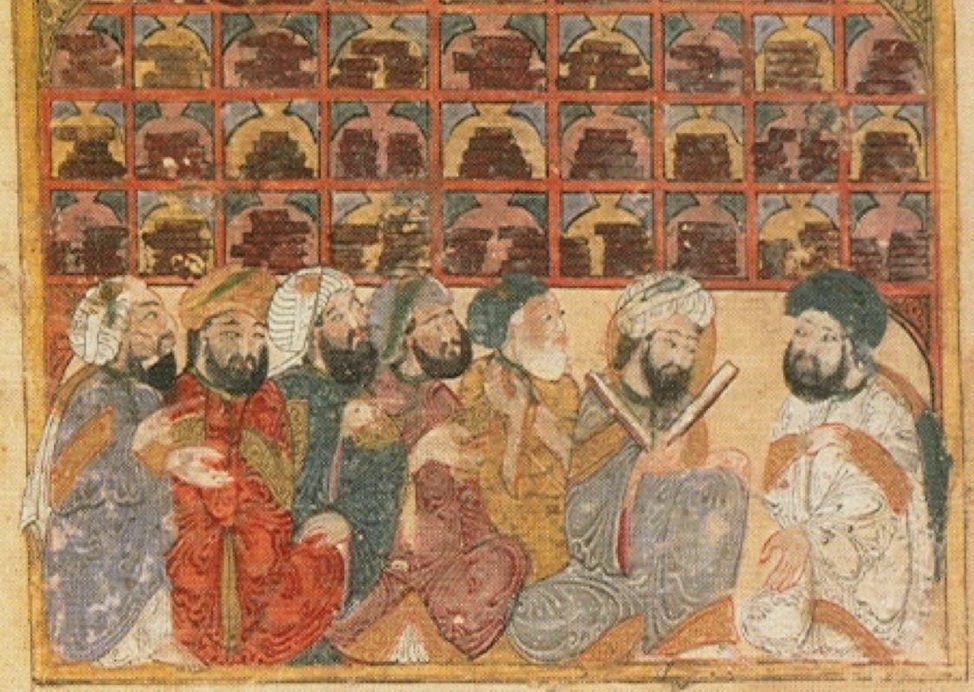
When the Abbasid Caliphate established Baghdad as its capital in 762 CE, it triggered an unprecedented intellectual explosion known today as the Islamic Golden Age. At the absolute center of this movement was an ambitious, state-funded enterprise: the Translation Movement. Scholars, translators, and scientists gathered at the Bayt al-Hikma (the House of Wisdom) to translate the foundational scientific, mathematical, and philosophical texts of the classical world into Arabic.
Among these texts, none possessed a greater or more enduring influence than the astronomical works of the ancient Greeks—specifically, the monumental geocentric encyclopedia compiled by Claudius Ptolemy, which Islamic scholars retitled the Almagest (from the Arabic al-majisṭī, meaning "The Greatest").
However, medieval Islamic scholars were not passive caretakers of Greek thought. They were active, rigorous critics. While they embraced the geometric and mathematical frameworks pioneered by the Greeks, they quickly recognized that Ptolemy’s theoretical models suffered from profound mathematical flaws. By building massive state-of-the-art observatories, engineering advanced calculation tools, and applying strict empirical testing, Islamic astronomers preserved, thoroughly overhauled, and expanded Greek astronomy, laying the groundwork for the global scientific revolution that followed.
   [ Ancient Greek Texts ] ──► [ Arabic Translation ] ──► [ Empirical Overhaul ] ──► [ European Scientific Rev. ]
     Ptolemy's Almagest          House of Wisdom           Maragha Observatory       Copernicus / Galileo
1. Preserving and Polishing: The Translation Movement
Before Islamic scholars could critique Greek astronomy, they had to master its language. The translation of the Almagest was a highly complex, multi-stage linguistic feat. Early Arabic versions were translated from Syriac or directly from Greek manuscripts sourced from the Byzantine Empire.
As scholars like Hunayn ibn Ishaq and Al-Hajjaj ibn Yusuf ibn Matar translated these texts, they ran into a major obstacle: the Arabic language completely lacked vocabulary for advanced Greek geometry and astronomy.
To solve this, these scholars systematically engineered an entire dictionary of technical Arabic terminology. Words like al-samt ("the direction," which became our modern word zenith) and al-naẓīr ("the opposite," which became nadir) were coined during this era. This linguistic pipeline did not just make Greek concepts accessible across the vast Islamic world; it permanently standardized the international vocabulary of astronomical science.
2. Institutionalizing Astronomy: The Great Observatories
While Greek astronomers like Hipparchus and Ptolemy worked primarily as isolated individuals using portable hand-held tools, Islamic rulers transformed astronomy into a highly organized, state-funded institutional science.
To test the accuracy of the Almagest, caliphs built colossal, permanent observatories—most notably under Al-Ma'mun in Baghdad and Damascus, and later the legendary Maragha Observatory (established in 1259 CE in modern-day Iran).
These facilities were equipped with massive masonry quadrants, sextants, and solar dials built directly into the architecture of trenches to maximize stability and minimize human error. Astronomers worked in collaborative, multi-disciplinary research teams, compiling highly accurate planetary tables called Zīj logs.
When these institutional teams compared their fresh, empirical observations with the coordinate data recorded in Ptolemy’s Almagest six centuries prior, they discovered massive systemic errors. The positions of the planets, the slant of the Earth's axis, and the timing of eclipses had all drifted significantly, proving that the static Greek models required urgent physical and mathematical correction.
3. The Great Critique: Dismantling the Ptolemaic Flaws
The most profound intellectual relationship Islamic scholars shared with Greek astronomy was a brilliant, centuries-long critique of Ptolemy's planetary mechanics.
The Problem with the Equant
Ptolemy’s geocentric model claimed that all planets moved in perfect circles at uniform speeds around a stationary Earth. However, to make this model match real-world observations, Ptolemy had to introduce a highly controversial mathematical cheat code called the equant point.
The equant was an imaginary point in space, separate from the Earth, from which a planet appeared to move at a uniform speed, even though its actual speed through space was constantly changing.
       [ Ptolemy's Equant Dilemma ]

             • (Equant Point)  <--- Planet moves uniformly relative to here,
            /                       violating the sacred rule of uniform circular motion!
           /
          • (Center of Orbit)
         /
        • (Earth - Dead Center)
To brilliant Islamic physicists like Al-Haytham (Alhazen, 965–1040 CE), the equant point was an absolute scientific abomination. In his treatise Doubts on Ptolemy, Al-Haytham noted that a planet is a real, physical mass of stone, not an abstract line on a papyrus scroll. A physical object cannot alter its real speed based on a mathematical fiction like an equant point. He declared that if the geometry of the Almagest required physical impossibilities to function, then the entire Greek model was fundamentally broken.
The Maragha Revolution: The Tusi Couple
To fix this structural flaw without abandoning geocentrism, the astronomer Nasir al-Din al-Tusi (1201–1274 CE) engineered a revolutionary geometric device known as the Tusi Couple.
This mathematical device consists of a smaller cylinder or circle rolling smoothly inside another circle exactly twice its diameter. Al-Tusi proved that as the inner circle spins, a specific point on its perimeter oscillates back and forth in a perfectly straight line.
By utilizing the Tusi Couple, Islamic astronomers successfully generated linear, variable movements using nothing but uniform circular motion. This mathematical breakthrough allowed them to completely eliminate Ptolemy's problematic equant point, preserving the purity of physics while vastly improving the accuracy of planetary calculations.
4. The Intellectual Bridge to Copernicus
The historical impact of this Islamic overhaul of Greek astronomy reaches right into the heart of the European Scientific Revolution.
When Nicolaus Copernicus published his historic heliocentric masterpiece, De revolutionibus orbium coelestium, in 1543, his mathematical arguments for a sun-centered universe relied heavily on the geometric models engineered centuries prior by Islamic scholars at the Maragha Observatory.
Astronomical ConceptMaragha Source (Islamic Golden Age)Copernicus's Application (1543)Linear Motion from CirclesThe Tusi Couple (1261 CE): Used to resolve planetary anomalies without changing speeds arbitrarily.Copied the exact geometric diagrams of the Tusi Couple verbatim to explain the complex variations in Earth's axial tilt.Lunar Orbit GeometryIbn al-Shatir's Lunar Model (1375 CE): Eliminated Ptolemy's distance errors by using nested epicycles.Utilized an identical multi-epicycle configuration for his own model of the Moon’s orbit.
Copernicus even utilized the exact same alphabetical labeling letters on his geometric diagrams as those used by Al-Tusi, showing a clear, undeniable line of mathematical inheritance. By acting as brilliant critics rather than passive caretakers, Islamic astronomers took the abstract geometric dreams of ancient Greece, forged them into an empirical science, and handed the keys of the modern cosmos to the world.