Perched on the steep, dramatic slopes of Mount Parnassus, the Sanctuary of Apollo at Delphi was considered by the ancient Greeks to be the Omphalos—the literal navel of the world. For over a millennium, kings, generals, and ordinary citizens traveled to this breathtaking mountain landscape to consult the Pythia, the high priestess who served as the direct vocal mouthpiece for Apollo.
Consulting the oracle was not a matter of simply walking up and asking a question. It was a highly structured, emotionally intense, multi-stage religious operation. The oracle only operated on one specific day of the month (the seventh day after the new moon) for the nine warmest months of the year. Because time was scarce and stakes were monumental, a rigid sequence of rituals had to be executed perfectly to unlock the god's wisdom.
1. Ritual Preparations: Purifying the Channel
Before any questions could be uttered, both the Pythia and the sanctuary itself had to be ritually cleansed.
Early in the morning, the Pythia would fast and bathe her entire body in the nearby Castalian Spring, a sacred mountain source. She would drink from the holy waters and chew on fresh laurel leaves (the plant sacred to Apollo). Meanwhile, the male priests of Delphi performed a preliminary test to ensure Apollo was actually willing to speak that day.
 [ Cold Water Splashed on Goat ] ──► Trembles Shivers ──► God is Present ──► Sacrificed on Altar
                                           │
                                           ▼
                            [ If the goat stands completely still ]
                                           │
                                           ▼
                            Consultations Cancelled Immediately
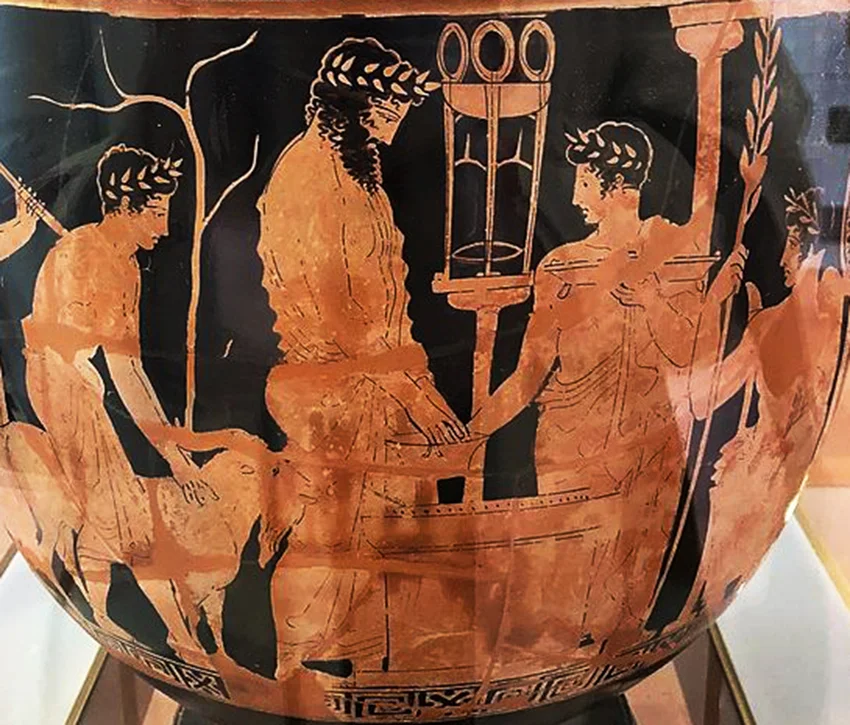
They brought a young goat to the great altar outside the temple and splashed it with ice-cold water. If the goat stood frozen, it was an omen that Apollo was distant, and the session was cancelled. If the goat shivered and trembled violently from head to tail, it signaled the god’s divine compliance. The goat was promptly sacrificed, and its fat and bones were burned to open the session.
2. The Lineup: Buying Your Way to the Front
The crowd of petitioners (consultants) waiting outside the temple gates was massive. To determine the order of who got to speak, the priests enforced a strict social hierarchy.
First priority was given to states or individuals who possessed Promanteia—a privilege granted by the Delphic authorities to allies or major donors, allowing them to skip to the front of the line. Everyone else was grouped together and drew lots to determine their slot.
Before entering, every consultant had to pay the pelanos, a substantial mandatory tax in the form of a sacred sacrificial cake, and offer an additional animal sacrifice on the outdoor altar.
3. Descending Into the Inner Sanctum
Once cleared by the priests, the consultant entered the dark, smoky interior of the Temple of Apollo. They were guided downstairs into a subterranean chamber beneath the main floor known as the Adyton (literally "the forbidden place").
[ Main Temple Floor ] ──► Descend to Subterranean Adyton ──► Scent of Laurel & Sweet Gas ──► The Tripod
The consultant was forbidden from looking directly at the Pythia; instead, they sat in a designated corner while the priest stood nearby.
The Pythia sat elevated on a massive bronze tripod (a three-legged cauldron stand) positioned directly over a deep fissure in the bedrock. According to ancient writers like Plutarch (who was actually a priest at Delphi), a sweet-smelling gas or vapor (pneuma) rose from this chasm, inducing an altered, hypnotic state of consciousness in the priestess.
4. The Query and the Ecstatic Response
With the stage set, the priest directed the consultant to state their question. The Greeks strictly formatted their inquiries—often framing them as binary options or asking which god they should sacrifice to in order to achieve a specific goal, rather than asking broad, open-ended questions.
PhaseAction in the AdytonThe InvocationsThe priest speaks the consultant's formatted question aloud into the dim, smoke-filled chamber.The Trance StateThe Pythia, breathing in the vapors and swaying on her tripod, enters an ecstatic trance, channeling Apollo's divine essence.The UtteranceShe speaks her reply. Depending on the day, this could range from clear prose to wild, disjointed, and enigmatic emotional statements.The TranslationThe Delphic priests meticulously noted her words and translated them into elegant, highly ambiguous hexameter poetry to hand back to the consultant.
5. The Dangerous Gift of Ambiguity
The true genius of the Delphic ritual lay in its final product: the riddle. Apollo’s answers were famously deceptive, forcing the human consultant to shoulder the terrifying responsibility of interpretation.
The Classic Cautionary Tale: When King Croesus of Lydia asked the Oracle if he should invade the Persian Empire, the Pythia famously replied that if he crossed the river Halys, "he would destroy a great empire." Overjoyed, Croesus launched his invasion—only to be utterly crushed. The great empire he destroyed was his own.
Through this elaborate architecture of mountain purifications, trembling animal omens, underground vapors, and poetic riddles, the rituals of Delphi allowed the ancient Greeks to touch the terrifying, unpredictable world of the divine while keeping the ultimate burden of human choice firmly on their own shoulders.