Greek Naval Tactics: The Power of the Athenian Fleet
The rise of the Athenian fleet in the 5th century BCE transformed Greek warfare from a land-dominated conflict into a multidimensional theater of maritime power. The naval prowess of Athens, built upon the design of the trireme and expert tactical maneuvers, allowed them to defeat the Persian Empire and establish dominance over the Aegean Sea.
1. Core Tactical Maneuvers
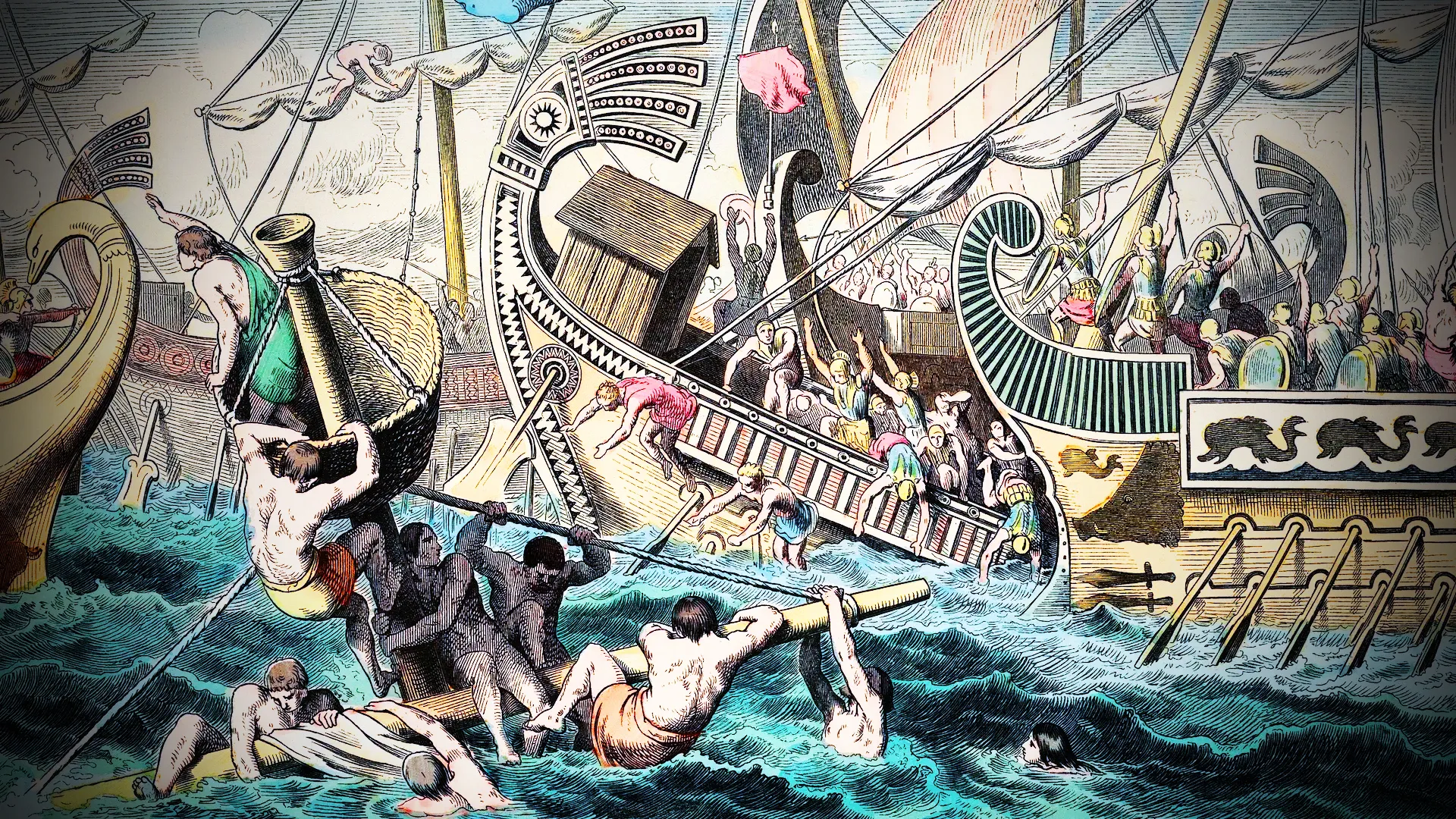
The success of the Athenian fleet relied on speed, agility, and highly disciplined rowers. Instead of using ships as floating platforms for close-quarters infantry combat, the Athenians used the trireme as an offensive weapon to ram and disable enemy ships.
The Diekplous (Breaking the Line): This daring maneuver involved sailing in a single file column through the gaps between enemy ships and then turning to strike their vulnerable, unarmored sides and sterns from behind.
The Periplous (Outflanking): When facing an enemy line, the Athenian fleet would row around the flanks of the opposing ships, creating confusion and forcing the enemy to turn inward, which exposed them to a devastating ramming attack.
2. Crew Coordination and Logistics
The tactical brilliance of the Athenian fleet was made possible by the rigorous training and coordination of the crew.
Rowers (Thranites): The 170 oarsmen had to row in perfect, uninterrupted rhythm. The success of maneuvers like the diekplous depended entirely on the helmsman’s ability to turn the ship at the exact right moment based on the oarsmen's speed.
Deck Complements: While the primary weapon was the ram, each trireme carried a small contingent of hoplites, archers, and officers (hyperesia) to fend off boarders and attack enemy decks.
The Trierarchy: The state relied on a taxation system where wealthy citizens funded the outfitting and maintenance of a warship for a year, ensuring a steady supply of high-quality vessels.
3. Decisive Historical Engagements
The effectiveness of these tactics is well-documented in key historical conflicts:
The Battle of Salamis (480 BCE): In the narrow straits of Salamis, the Athenian-led fleet used its superior maneuverability and tactical deployment to outmaneuver the larger, less agile Persian ships, crippling their ability to deploy numbers.
The Peloponnesian War (431–404 BCE): Athenian sea power allowed them to blockade coastal cities and project power throughout the Mediterranean until the catastrophic defeat at the Battle of Aegospotami.