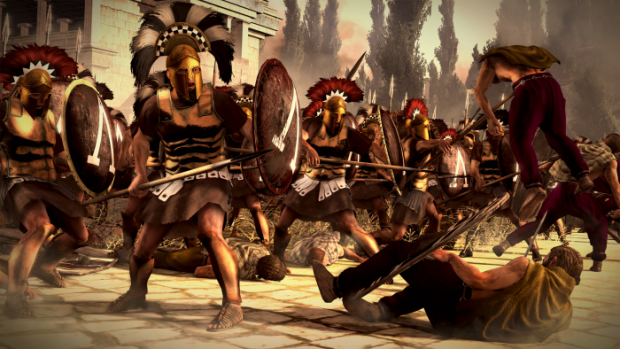
The Spartan Krypteia: A Deadly Training Program
The Krypteia (from the Greek word kryptos, meaning "hidden" or "secret") was one of the most enigmatic and brutal institutions of ancient Sparta. Often debated by modern historians and ancient writers alike, it is unclear whether the Krypteia served primarily as a coming-of-age initiation rite, a military training exercise, or a state-sponsored tool of terror used to control the enslaved population.
1. Divergent Ancient Accounts
Our understanding of the Krypteia comes entirely from non-Spartan writers, whose descriptions vary significantly depending on the time and political perspective of the author:
Plato's Perspective: In his work Laws, the philosopher describes the Krypteia as an exercise in extreme physical endurance. Young Spartans were forced to survive in the wilderness, barefoot, without blankets or slaves, carrying only basic provisions.
Plutarch's Perspective: Writing centuries later, Plutarch paints a much darker picture. He claims that the Krypteia was a system of state-sponsored assassination. Young men were dispatched into the countryside with daggers and minimal food to hide by day and murder selected Helots by night to suppress rebellion.
2. Recruitment and Training
The young men chosen for the Krypteia were drawn from the finest and most intelligent of the hêbôntes—young adults who had successfully completed the grueling Spartan education system, the Agoge.
Selection: The most promising youths were selected by the ephors and magistrates.
Purpose of Isolation: They had to live in the wilderness unsupervised and wait on themselves, learning stealth, survival skills, and resilience.
Transition to Manhood: The program functioned as a bridge between the teenage years and the assumption of full citizenship (Homoioi).
3. Operations and Tactics
The actions of the Krypteia were defined by stealth and irregular warfare:
Guerrilla Tactics: Members operated individually or in small bands, moving only at night and remaining hidden during the day.
Elimination of Threats: They were ordered to eliminate any Helot (Messenian or Laconian serfs) who showed leadership qualities, or who appeared strong, to neutralize the threat of rebellion.
The Weapon: The kryptai were usually armed only with a single dagger (xiphos), relying on surprise and covert strikes rather than the open battlefield tactics of the hoplite phalanx.
4. Strategic Context and Decline
The institution was a reaction to the extreme demographic imbalance in Sparta, where Helots outnumbered citizens by a ratio of roughly seven to one.
Internal Security: It functioned to maintain the status quo and keep the subjugated agricultural laborers in a constant state of intimidation.
Decline: Following the Battle of Leuctra in 371 BCE and the liberation of Messenia by the Thebans, the Helot population decreased significantly, which diminished the institution's primary purpose.