Before Modern Banks, Ancient Greeks Invented a Surprisingly Sophisticated Financial World
Ancient Greece did not have banks that looked like modern financial institutions.
There were no digital accounts.
No ATM machines.
No government-backed deposit insurance.
Yet Greek societies developed increasingly sophisticated financial practices involving deposits, loans, currency exchange, credit, and long-distance commerce.
At the center of this system were individuals known as trapezitai.
The name came from trapeza, meaning table or counter.
These money handlers literally conducted business at tables.
From this simple physical workspace emerged an important part of the ancient financial world.
Why Banking Became Necessary
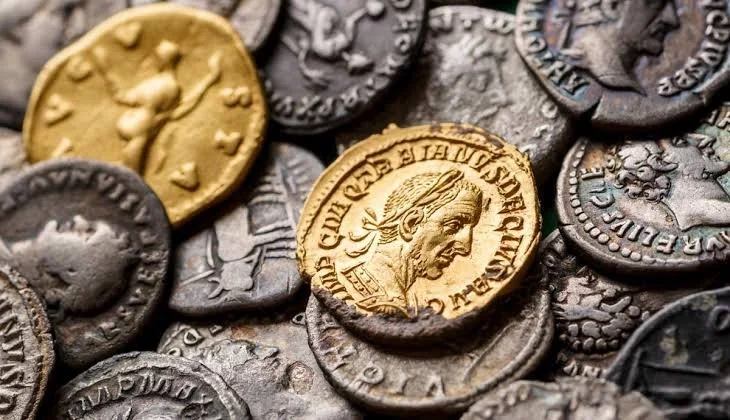
The development of coinage transformed economic exchange.
Different cities produced different currencies.
A merchant traveling between regions might encounter coins with different:
Weights.
Metal contents.
Values.
Someone needed to determine whether a coin was genuine.
Someone needed to exchange currencies.
This created opportunities for specialists.
The Trapezites
The trapezites could perform financial functions such as:
Exchanging coins.
Holding deposits.
Providing loans.
Facilitating payments.
The exact structure of banking varied.
Ancient Greek finance should not be treated as a direct equivalent of modern commercial banking.
But the basic idea was clear.
Specialists could manage money on behalf of others.
Deposits and Trust
Money could be deposited with a financial intermediary.
Trust was essential.
The depositor needed confidence that the money would be available when requested.
This relationship created one of the fundamental principles of banking:
financial systems depend on trust.
Without trust, deposits disappear.
Credit collapses.
Commerce becomes more difficult.
Loans and Interest
Ancient Greek economies included loans.
These could support:
Trade.
Agriculture.
Personal needs.
Maritime expeditions.
Interest could be charged.
The level of risk affected financial arrangements.
A loan associated with a dangerous maritime voyage might involve different conditions from a local transaction.
Maritime Loans
Sea trade was risky.
Ships could sink.
Cargo could be lost.
Piracy existed.
Weather was unpredictable.
Maritime finance therefore required specialized arrangements.
A lender might provide funds for a voyage with repayment dependent on the successful completion of the journey.
This spread risk between participants.
In some ways, such arrangements resemble early forms of commercial risk management.
Temple Treasuries
Greek temples could also function as important locations for the storage of wealth.
Sanctuaries possessed:
Donations.
Precious metals.
Offerings.
Land.
Other valuable assets.
However, a temple treasury should not automatically be described as a bank.
Religious institutions and private financial intermediaries performed different functions.
The overlap between sacred wealth and financial activity was complex.
Athens and Financial Growth
Athens developed a major commercial economy.
The city's ports connected Attica with the wider Mediterranean.
Trade required:
Currency exchange.
Credit.
Contracts.
Investment.
Financial specialists became increasingly important.
Written Contracts and Legal Protection
Commerce depended on agreements.
Loans could be documented.
Disputes could enter legal systems.
The development of commercial law helped create confidence.
A lender was more willing to provide money if legal mechanisms existed to address disputes.
Banking Without Paper Money
Ancient Greek finance was fundamentally connected with metal currency.
Silver coins played an especially important role.
But wealth could also exist in other forms.
Land.
Ships.
Goods.
Slaves.
Livestock.
The ancient economy was not based exclusively on coinage.
Why Greek Banking Was Important
Greek financial systems demonstrate that banking did not suddenly appear in the modern era.
Many essential concepts have deep historical roots.
These include:
Deposits.
Credit.
Loans.
Currency exchange.
Financial intermediaries.
Commercial risk.
Ancient Greeks built these practices into a world of city-states and Mediterranean trade.
The first “bank” might have been nothing more than a trusted person sitting behind a table.
But from that table emerged a financial system capable of supporting commerce across the ancient world.