How the Ancient Greeks Tried to Understand Earthquakes Thousands of Years Before Modern Geology
Ancient Greece was one of the Mediterranean world's most earthquake-prone regions.
Greek communities experienced earthquakes capable of damaging buildings, altering coastlines, triggering landslides, and generating fear on a massive scale.
Without modern seismographs, plate tectonics, or geological instruments, Greek thinkers attempted to understand why the ground moved.
Their answers combined mythology, philosophy, observation, and early natural science.
Poseidon, the Earth-Shaker
In Greek mythology, earthquakes were strongly associated with Poseidon.
One of his epithets was connected with his role as the “Earth-Shaker.”
This made religious sense within the ancient worldview.
An earthquake was sudden.
Powerful.
Invisible in origin.
The earth itself appeared to move.
A divine force offered an explanation.
From Myth to Natural Philosophy
Greek thinkers eventually began searching for natural explanations.
This was one of the major developments of Greek philosophy.
Instead of asking only which god caused an event, some thinkers asked:
What physical process could produce it?
Their answers were not identical to modern geology.
But the question itself represented an important intellectual development.
Aristotle and Underground Air
Aristotle proposed that earthquakes could be caused by movements of air and vapors beneath the earth.
According to his framework, trapped air could create pressure and movement.
This explanation was incorrect according to modern plate tectonics.
Yet it represented an attempt to explain earthquakes through natural processes rather than purely supernatural intervention.
Observing Patterns
Ancient observers noticed relationships between earthquakes and other natural events.
They paid attention to:
Sounds from the ground.
Changes in water.
Weather conditions.
Animal behavior.
Volcanic activity.
Some observations were meaningful.
Others reflected incorrect assumptions.
But the effort to identify patterns is fundamental to scientific inquiry.
Earthquakes and Greek Cities
Earthquakes could transform urban life.
Buildings collapsed.
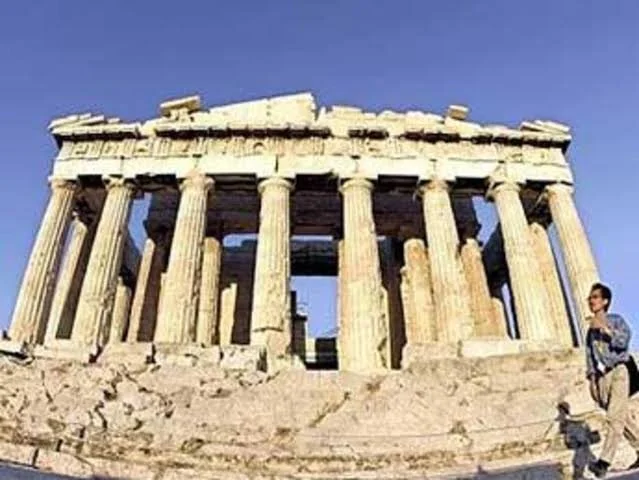
Temples required reconstruction.
Walls were damaged.
Ports could be affected.
A major earthquake was therefore both a natural disaster and a political crisis.
Governments needed to respond.
Cities had to rebuild.
The Earthquake That Destroyed Helike
One of the most famous disasters in ancient Greek history involved the destruction of Helike in the fourth century BCE.
Ancient sources describe the destruction of the city by an earthquake and associated sea inundation.
The event became famous throughout the ancient world.
For later generations, Helike became an example of the terrifying power of nature.
Rebuilding After Disaster
Greek architecture gradually incorporated practical knowledge developed through experience.
Builders learned about:
Foundations.
Material behavior.
Structural stability.
Ancient societies did not possess modern seismic engineering, but repeated exposure to earthquakes encouraged practical adaptation.
The Philosophical Importance of Earthquakes
Earthquakes challenged assumptions about stability.
The ground beneath human civilization appeared permanent.
An earthquake demonstrated that it was not.
For Greek philosophers, this encouraged questions about the nature of the earth.
How deep did it extend?
What existed beneath the surface?
What forces operated invisibly?
Ancient Seismology Was Not Modern Seismology
It is important not to exaggerate.
The Greeks did not discover plate tectonics.
They did not possess seismographs.
They could not measure seismic waves.
But they did attempt natural explanations.
They observed.
Compared.
Debated.
And proposed theories.
That intellectual tradition mattered.
The ancient Greek response to earthquakes represents an early stage in humanity's attempt to understand disasters scientifically.
The ground moved.
The gods were one explanation.
Nature itself became another.
And somewhere between mythology and modern geology, the first questions of seismology began.