The Role of Astrology in Greek Personal Lives
Introduction
In Ancient Greece, astrology developed alongside astronomy as Greeks studied the movements of celestial bodies. While early Greek thinkers emphasized rational observation, popular belief still connected the stars and planets to human fate. Astrology influenced personal decisions, health beliefs, and interpretations of destiny, especially in the Hellenistic period.
Origins and Development of Greek Astrology
Greek astrology was strongly influenced by earlier Mesopotamian traditions, which were later adapted by Greek scholars.
Early astronomy focused on observing stars and planets
By the Hellenistic period, celestial events were linked to human life
Philosophers began debating whether fate or reason governed human actions
Greek thinkers gradually systematized astrology into structured interpretations of the sky.
The Zodiac and Personal Fate
One of the most important contributions was the zodiac system.
The Zodiac Signs:
Divided the sky into twelve sections
Each sign associated with specific personality traits
Linked to planetary influences at the time of birth
People believed that a person’s character and destiny could be shaped by these celestial patterns.
Astrology in Daily Life
Personal Decision-Making
Many Greeks used astrology to guide:
Marriage choices
Business decisions
Travel planning
Military timing
Astrologers were sometimes consulted before major life events.
Health and Medicine
Astrology was also connected to medicine:
Certain body parts were linked to zodiac signs
Planetary positions were thought to affect health
Physicians sometimes combined astrology with medical practice
This blended science and belief in everyday healthcare.
Astrology and Religion
Astrology was not separate from religion:
The gods were associated with planets (e.g., Zeus with Jupiter)
Celestial movements were seen as divine communication
Temples sometimes incorporated astronomical observation
In some cases, astrology reinforced belief in divine order.
Philosophical Debate
Greek philosophers had different views:
Supporters
Believed the cosmos was orderly and meaningful
Saw astrology as part of universal harmony
Critics
Philosophers like the Stoics debated fate vs. free will
Others rejected astrology as superstition
Rational thinkers emphasized observation over prediction
This created ongoing intellectual tension.
Astrology in the Hellenistic World
Astrology became especially popular after Alexander the Great’s conquests:
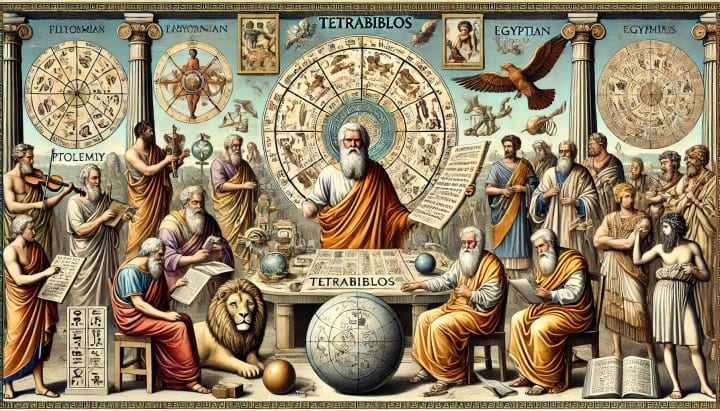
Greek, Egyptian, and Babylonian knowledge merged
Alexandria became a major center of astrological study
Horoscopes (personal birth charts) became common
This period shaped Western astrology traditions.
Influence on Personal Identity
Astrology affected how individuals viewed themselves:
People identified with zodiac signs
Personality traits were explained through celestial influence
Life events were interpreted as fate-driven
This gave meaning and structure to personal experience.
Social Status of Astrologers
Astrologers had mixed reputations:
Some were respected scholars and advisors
Others were seen as entertainers or fortune-tellers
Wealthy individuals often employed personal astrologers
Their influence depended on trust and social context.
Legacy of Greek Astrology
Greek astrological ideas influenced:
Roman astrology and imperial courts
Medieval Islamic and European astronomy
Modern Western zodiac systems
Popular culture and horoscope traditions
Many modern astrology concepts trace back to Greek interpretations.
Conclusion
Astrology in ancient Greece played a significant role in shaping personal beliefs about fate, identity, and decision-making. While it coexisted with scientific astronomy and philosophical skepticism, it remained influential in daily life, medicine, and religion. Its legacy continues today in the widespread use of zodiac systems and horoscopes around the world.