Clay tablets played an important but often misunderstood role in the history of Greek writing. When people think of ancient Greek literature, they usually imagine papyrus scrolls, inscriptions carved in stone, or handwritten manuscripts. However, long before the Classical age of philosophers, playwrights, and historians, Greek-speaking societies used clay tablets as an essential medium for administration and recordkeeping.
The most important examples come from the Bronze Age civilizations of the Aegean, particularly the Mycenaean palaces. These societies used a writing system known today as Linear B.
Clay tablets preserved information about:
agricultural production,
livestock,
land and property,
workers,
religious offerings,
military resources,
and palace administration.
They were not usually designed as permanent books.
Instead, many functioned as practical records created for the daily management of complex economic systems.
Their accidental preservation has given historians one of the most important windows into the earliest known form of the Greek language.
Before the Greek Alphabet
The Greek alphabet did not exist during the Mycenaean Bronze Age.
The earliest Greek writing known today used the script called Linear B.
Linear B was developed from an earlier Aegean writing tradition known as Linear A.
Linear A remains undeciphered.
Linear B, however, was deciphered in the twentieth century and was shown to represent an early form of Greek.
This discovery transformed the study of ancient Greece.
What Was Linear B?
Linear B was a writing system used primarily for administrative purposes.
It included:
syllabic signs representing spoken sounds;
ideograms or signs representing particular objects or categories;
and numerical symbols.
The script was not an alphabet.
A single sign could represent a syllable rather than an individual consonant or vowel.
This made Linear B very different from the later Greek alphabet.
Where Were Linear B Tablets Found?
Important discoveries have been made at Mycenaean palace centers, including:
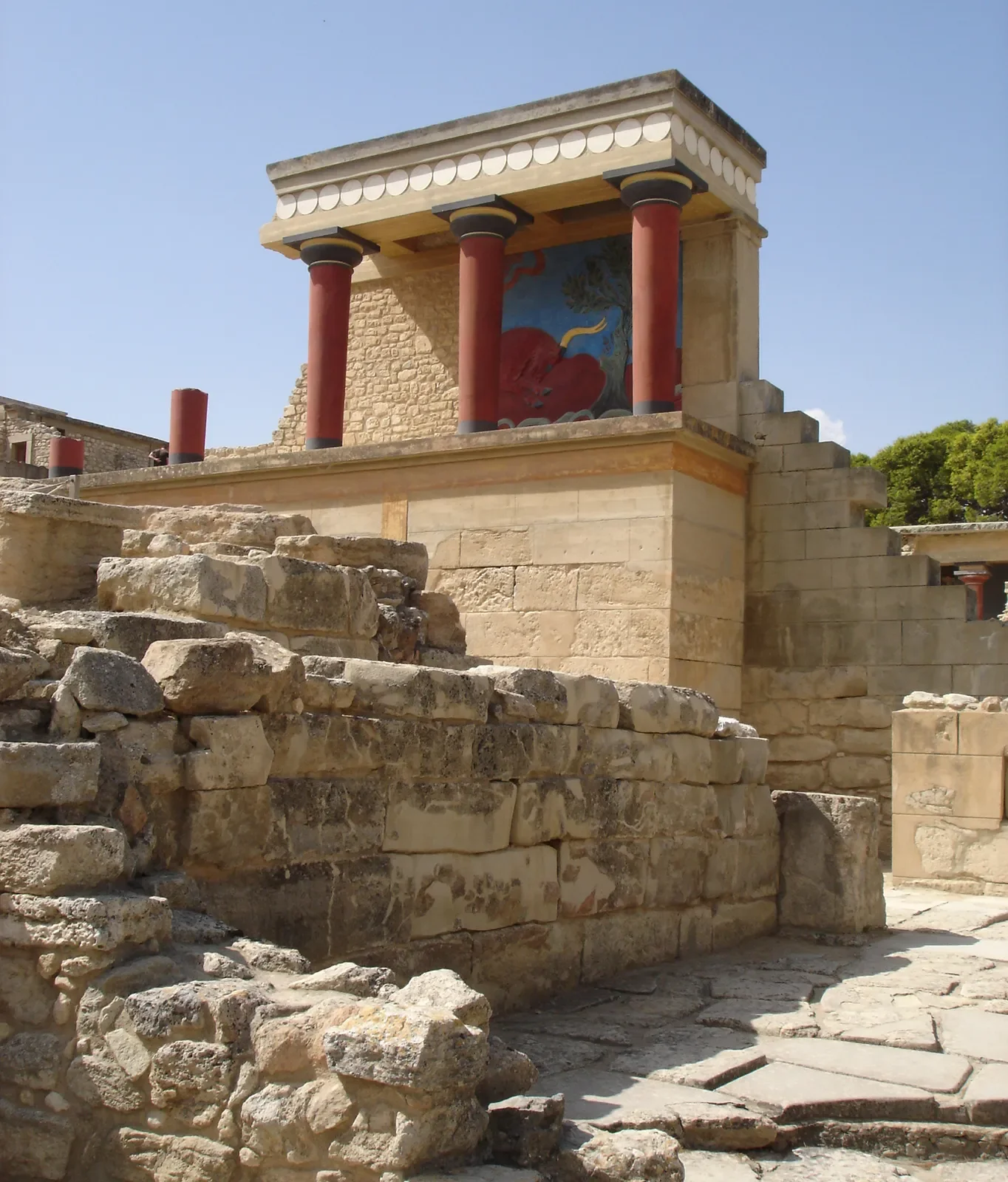
Knossos on Crete,
Pylos,
Mycenae,
Thebes,
and other sites.
These tablets were associated with administrative buildings and palace complexes.
Their distribution demonstrates that writing was integrated into the management of Bronze Age political centers.
The Palace Administration System
Mycenaean palaces controlled significant economic resources.
Administrators needed to track:
grain,
animals,
textiles,
workers,
weapons,
and religious offerings.
Writing made it possible to manage information more systematically.
A clay tablet could record a transaction or inventory.
The tablet became part of a larger administrative network.
The Role of the Scribe
Writing was a specialized skill.
Most people were probably not literate in Linear B.
Trained scribes prepared records for the palace administration.
A scribe needed to understand:
the writing system;
numerical notation;
administrative terminology;
and the categories used by the palace.
Writing therefore became a form of specialized labor.
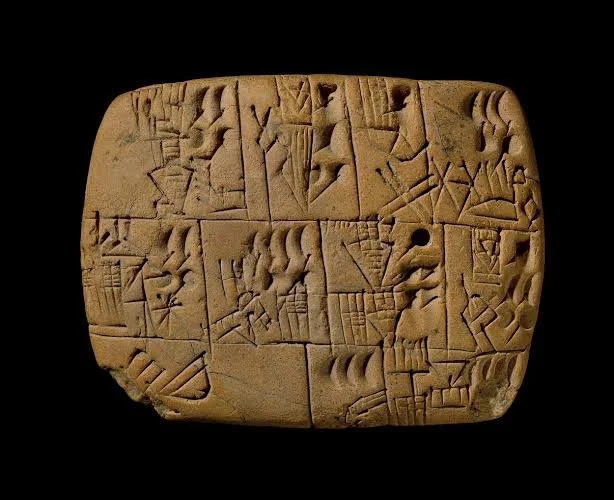
How Clay Tablets Were Made
Clay was readily available in many regions.
To create a tablet, a scribe or assistant could prepare a small piece of moist clay.
The clay was shaped into a suitable form.
A pointed tool known as a stylus could then be pressed into the soft surface.
The signs were created through incisions and impressions.
Writing Before the Clay Dried
The tablet had to remain soft enough to receive the writing.
This meant that the process was practical and immediate.
A record could be created quickly.
Once the information was no longer needed, the unfired tablet might potentially be recycled by adding water and reshaping the clay.
This suggests that many tablets were intended to be temporary documents.
Why the Tablets Survived
The remarkable survival of Linear B tablets was often the result of disaster.
Many tablets were preserved because palace buildings burned.
The intense heat accidentally fired the clay.
Instead of remaining soft and reusable, the tablets became hardened ceramic objects.
A destructive fire therefore transformed temporary administrative records into artifacts capable of surviving thousands of years.
The Fire That Preserved History
This is one of the great ironies of archaeology.
The destruction of Mycenaean palaces helped preserve the records that allow modern historians to study them.
Without these fires, many tablets might have dissolved or been recycled.
The collapse of a building could therefore preserve information that ordinary daily use would have erased.
What Did the Tablets Record?
The content of Linear B tablets is highly practical.
They often record economic and administrative information.
Examples include:
quantities of grain;
numbers of sheep and goats;
allocations of materials;
lists of workers;
textile production;
offerings to deities;
and inventories of weapons or equipment.
The tablets reveal the organizational complexity of Mycenaean society.
Women in the Linear B Records
The tablets also provide information about women within the Mycenaean economic system.
Some records identify groups of women connected with particular forms of labor.
They may appear in relation to:
textile production,
food distribution,
religious roles,
and other administrative categories.
These records do not provide a complete picture of women's lives, but they demonstrate that women were integrated into the palace economy in identifiable ways.
Religion and the Tablets
Linear B tablets contain names of deities and references to offerings.
Some divine names later became familiar in Classical Greek religion.
This provides important evidence for continuity and change between the Mycenaean world and later Greek culture.
However, the religious system of the Bronze Age was not identical to that of Classical Greece.
The tablets provide fragments rather than a complete theology.
The Mycenaean Greek Language
The decipherment of Linear B demonstrated that Greek was written centuries before the development of the classical Greek alphabet.
The language recorded on the tablets is an early form of Greek.
It differs from later Classical Greek in vocabulary, grammar, and pronunciation.
Nevertheless, the underlying language is recognizably Greek.
This discovery pushed the written history of Greek much further into the past.
The Decipherment of Linear B
For decades, Linear B remained undeciphered.
The breakthrough came in the 1950s when Michael Ventris, working with insights from other scholars, demonstrated that the script represented Greek.
Ventris's work was one of the major achievements of twentieth-century historical linguistics.
The decipherment transformed previously unreadable signs into administrative records.
Why the Decipherment Was So Important
Before Linear B was understood, historians could see the signs but could not reliably interpret the language.
Decipherment allowed researchers to identify:
names,
places,
commodities,
quantities,
occupations,
and religious references.
The tablets suddenly became historical documents rather than mysterious artifacts.
Clay Tablets Were Not Books
One of the most important misconceptions about Greek clay tablets is the idea that they were ancient books.
Most surviving Linear B tablets do not contain:
epic poems,
philosophical arguments,
dramatic plays,
or long historical narratives.
They are generally administrative records.
A tablet might record a shipment, a list of workers, or an allocation of goods.
This makes them similar in function to accounting documents.
The Shape of Tablets
Different tablets could have different forms.
Some were relatively small and elongated.
Others were broader.
The shape depended partly on the amount and type of information being recorded.
A small tablet might contain a brief entry.
A larger document could contain more extensive lists.
The physical form was therefore connected with administrative purpose.
Numerical Systems
Linear B included numerical symbols.
These allowed scribes to record quantities.
Numbers were essential to administration.
A palace needed to know:
how much grain was available;
how many animals were counted;
how many workers were assigned;
and how many materials were distributed.
Writing and mathematics were therefore closely connected.
Tablets and the Palace Economy
The surviving records suggest that Mycenaean palaces operated complex systems of collection and redistribution.
Resources could move between:
farmers,
herders,
craftsmen,
workers,
religious institutions,
and palace authorities.
The tablet served as a tool for managing these relationships.
Why Writing Was Centralized
Linear B writing appears primarily connected with administrative centers.
This suggests that literacy was concentrated among specialists rather than widely distributed throughout society.
The ability to write provided power.
A written record could influence:
taxation,
labor organization,
resource distribution,
and political administration.
Writing was therefore connected with authority.
The Collapse of the Mycenaean Palaces
Around the end of the Bronze Age, the Mycenaean palace system collapsed.
The reasons remain complex and may have differed between regions.
Possible factors include:
conflict,
political instability,
economic disruption,
and wider changes affecting the eastern Mediterranean.
As palace administration disappeared, the use of Linear B also ended.
The Greek “Dark Age” and Writing
For several centuries after the collapse of the Mycenaean palaces, writing appears to have disappeared from much of the Greek world.
This does not mean that culture disappeared.
Oral traditions continued.
Eventually, the Greeks adopted and adapted a new writing system influenced by the Phoenician alphabet.
This became the Greek alphabet.
The Greek Alphabet
The Greek alphabet represented a major change.
Unlike Linear B, it was an alphabetic system.
Greek writers adapted symbols to represent vowel sounds, creating a highly flexible method for recording the Greek language.
The alphabet eventually became the foundation for:
literature,
philosophy,
historical writing,
scientific texts,
and public inscriptions.
From Clay to Papyrus
As Greek writing developed in later periods, different materials became important.
These included:
papyrus,
wax tablets,
parchment,
stone,
metal,
and pottery fragments.
Clay tablets did not disappear entirely as a concept of recordkeeping in the wider ancient world, but they were not the primary medium for Classical Greek literature.
Papyrus became particularly important for longer texts.
Clay Tablets and Wax Tablets
Clay tablets should also not be confused with wax tablets.
Wax tablets consisted of a wooden frame containing a layer of wax.
A stylus could be used to write on the surface.
The wax could then be smoothed and reused.
Wax tablets were useful for temporary notes and education.
They served a different function from Mycenaean clay tablets.
Writing as Technology
The history of clay tablets demonstrates that writing is also a form of technology.
A writing system requires:
symbols,
materials,
tools,
trained users,
and institutions that value records.
The Linear B tablet combined all of these elements.
It transformed spoken or administrative information into a physical object.
Archaeology and Ancient Writing
Clay tablets are particularly valuable because they preserve direct evidence of ancient administration.
A monumental inscription may tell historians what rulers wanted the public to remember.
A clay tablet can reveal ordinary economic information.
A list of sheep or textile workers may seem less dramatic than a royal monument.
Yet such records can provide a detailed picture of how a society actually functioned.
The Accidental Archive
The surviving Linear B tablets are often described as accidental archives.
They were not intentionally preserved for future historians.
They survived because destruction transformed temporary records into durable ceramics.
This makes them especially valuable.
They provide a snapshot of administrative activity at particular moments.
What Clay Tablets Cannot Tell Us
The tablets also have limitations.
Because most are administrative, they do not provide complete information about:
personal emotions,
ordinary conversations,
philosophical beliefs,
or the experiences of people outside palace systems.
Historians must therefore combine tablet evidence with:
archaeology,
architecture,
burial evidence,
art,
and later written traditions.
No single source provides a complete history.
The Legacy of the Tablets
Clay tablets transformed modern understanding of early Greek civilization.
They demonstrated that Greek-speaking societies possessed organized writing systems centuries before the age of Homeric literature in written form.
They also revealed the complexity of Mycenaean administration.
What appear to be small pieces of hardened clay contain evidence about an entire economic and political system.
Conclusion
Clay tablets played a foundational role in the earliest known history of Greek writing.
During the Mycenaean Bronze Age, trained scribes used the Linear B script to record the activities of complex palace economies. The tablets tracked resources, workers, animals, religious offerings, and other forms of administrative information.
Most were not intended to survive permanently.
They were practical records written into soft clay and, in many cases, likely meant to be temporary.
Ironically, the destruction of palace centers preserved them. Fires hardened the clay, creating an accidental archive that survived for more than three thousand years.
The tablets also changed modern understanding of Greek history. Their decipherment revealed that Linear B represented an early form of the Greek language, pushing Greek writing back centuries before the classical age.
The role of clay tablets was therefore far greater than their small size suggests.
They were the administrative memory of Bronze Age Greece.
And because fire transformed temporary records into permanent artifacts, they became something their original scribes could never have imagined:
a surviving written voice from the earliest known Greek-speaking civilization.