Before Mechanical Clocks, Ancient Greeks Turned the Sun's Shadow Into a Precision Instrument
The movement of the Sun provided ancient societies with one of the oldest natural methods of measuring time.
Greek communities used sunlight in several ways.
They observed:
Sunrise.
Sunset.
Shadow direction.
Shadow length.
Seasonal changes.
The position of the Sun.
These observations eventually contributed to the development of sophisticated sundials.
The Gnomon
The simplest instrument was the gnomon.
It could be a vertical object that cast a shadow.
As the Sun moved across the sky, the shadow moved.
By observing this movement, people could estimate the time of day.
Shadow Length
The length of the shadow changed throughout the day.
Around solar noon, when the Sun reached its highest point, the shadow became shortest.
In the morning and afternoon, it became longer.
This provided a natural indicator of solar position.
Seasonal Differences
The Sun's path changes throughout the year.
Summer sunlight comes from a higher angle.
Winter sunlight comes from a lower angle.
Therefore, the same shadow length does not always represent the same time of day.
Greek astronomers needed to account for these differences.
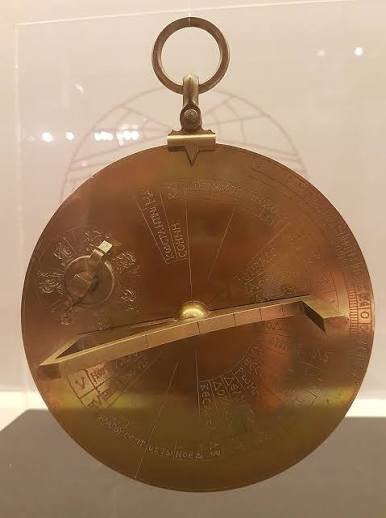
Sundials
A properly designed sundial could provide marked divisions indicating time.
Some designs used an angled gnomon aligned with Earth's axis.
This allowed the shadow to move more predictably across the dial.
Unequal Greek Hours
Ancient Greeks often used seasonal hours.
Daylight was divided into twelve parts.
Because daylight length changes throughout the year, these “hours” were not always equal in duration.
An hour during summer daylight could be longer than one during winter daylight.
This is very different from the fixed sixty-minute hour used today.
Time and Public Life
Timekeeping was important for:
Religious rituals.
Political meetings.
Court proceedings.
Athletic events.
Daily work.
A society does not need digital clocks to organize itself.
It needs shared methods of measuring time.
Shadows and Astronomy
The same observations used to tell time could contribute to astronomy.
Shadow measurements helped Greek thinkers study:
Latitude.
Solar motion.
Seasonal changes.
The famous measurement of Earth's circumference associated with Eratosthenes relied on comparing solar angles.
The Importance of the Sun
For ancient Greeks, the Sun was both a physical object and a religious symbol.
Solar observations therefore existed within a world where astronomy and religion were not completely separate.
The Sun marked time.
It illuminated sacred spaces.
It structured agricultural activity.
The Ancient Clock That Never Needed Winding
A sundial had an obvious advantage:
The Sun supplied the energy.
There was no spring.
No battery.
No mechanical motor.
The Earth's rotation provided the movement.
The ancient Greek genius was recognizing that this movement could be transformed into a measurable scale.