Before Zeus and the Olympian Gods, Another Generation Ruled the Universe
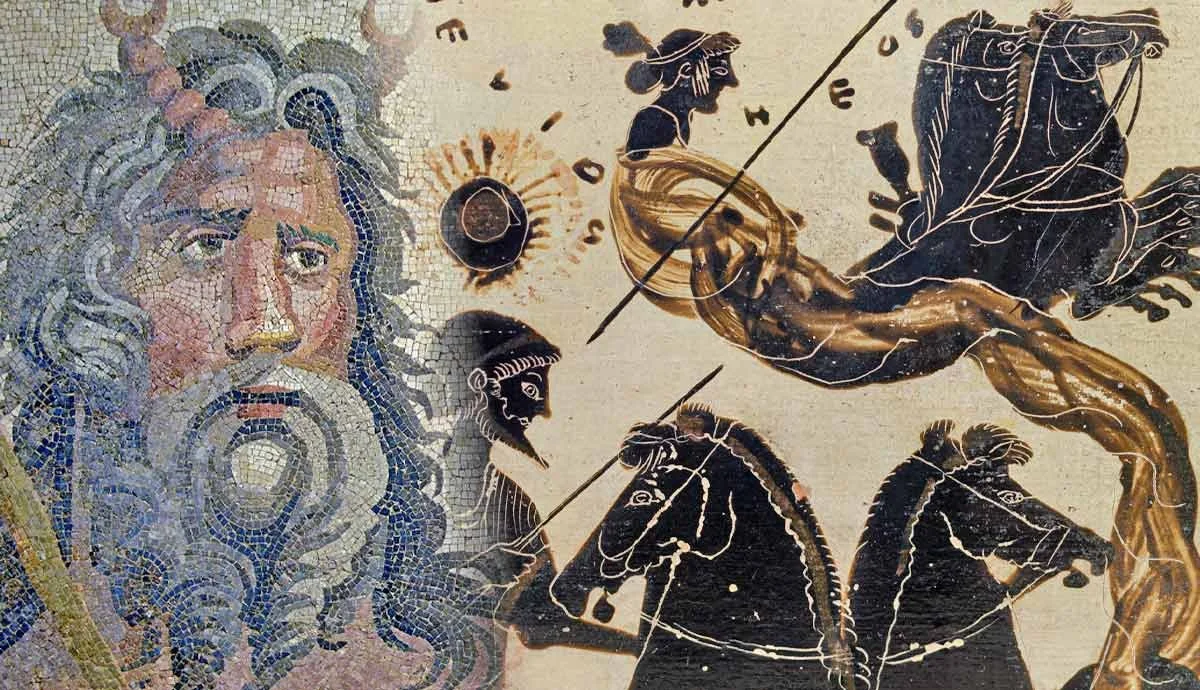
Before Zeus became king of the gods, Greek mythology imagined an earlier divine generation known as the Titans.
The Titans represented a primordial order of divine beings connected with the structure and forces of the cosmos.
Their story is one of the great mythological narratives of succession:
one generation rises, rules, fears its children, and is eventually overthrown by the next.
Who Were the Titans?
The Titans were traditionally children of Uranus, the sky, and Gaia, the earth.
The traditional twelve consisted of:
Male Titans
Oceanus.
Coeus.
Crius.
Hyperion.
Iapetus.
Cronus.
Female Titans
Tethys.
Phoebe.
Themis.
Mnemosyne.
Rhea.
Theia.
Their individual importance varied.
Some became ancestors of later gods.
Others represented cosmic concepts or natural divisions.
Cronus Becomes King
Uranus feared his children.
According to the myth, he imprisoned some of his offspring within the earth.
Gaia became furious.
She encouraged Cronus to rebel against his father.
Cronus attacked Uranus and overthrew him.
The Titans therefore became the ruling generation.
The Prophecy
Cronus learned that one of his own children would eventually overthrow him.
This terrified him.
He therefore attempted to prevent the prophecy.
Whenever Rhea gave birth, Cronus swallowed the child.
His children included:
Hestia.
Demeter.
Hera.
Hades.
Poseidon.
Zeus.
Five were swallowed.
Zeus escaped.
Rhea's Deception
Rhea hid the infant Zeus.
Instead of giving Cronus the baby, she gave him a stone wrapped in cloth.
Cronus swallowed it.
Zeus was raised secretly.
Eventually he became strong enough to challenge his father.
The War of the Gods
Zeus forced Cronus to release his swallowed siblings.
The younger gods then fought the Titans.
This enormous conflict became known as the Titanomachy.
The war lasted for years.
The Titans fought from Mount Othrys.
Zeus and his allies fought from Mount Olympus.
The Cyclopes and the Hundred-Handers
Zeus received assistance from powerful beings imprisoned by the Titans.
The Cyclopes provided Zeus with his famous thunderbolt.
The Hecatoncheires, beings with enormous strength and many arms, also joined the Olympian side.
Their assistance helped turn the war.
The Fall of the Titans
The Olympians eventually defeated the Titans.
Many Titans were imprisoned in Tartarus, a deep region of the underworld.
However, the mythology is not always consistent about which Titans suffered this fate.
Oceanus, for example, does not play the same role as some of the major combatants.
Why the Titans Were Overthrown
The myth represents a recurring Greek theme:
generational succession.
A ruler attempts to preserve power.
The next generation becomes a threat.
Fear leads to violence.
Violence eventually produces revolution.
The gods therefore behave like the humans who tell their stories.
Titans Were Not Simply “Evil Gods”
Modern popular culture often treats Titans as villains.
Ancient Greek mythology was more complicated.
The Titans represented an earlier cosmic order.
They were not uniformly evil.
Some continued to receive religious or literary attention.
The conflict was about succession and authority rather than a simple battle between good and evil.
The Titans as Cosmic Ancestors
Several Titans became parents of important later divine figures.
For example:
Hyperion and Theia were associated with Helios, Selene, and Eos in later genealogical traditions.
Iapetus became the father of figures including Prometheus and Atlas.
Cronus and Rhea became parents of the major Olympians.
The Titans therefore remained deeply embedded in the genealogy of the Greek cosmos.
The Deeper Meaning
The Titanomachy is ultimately a story about power.
Every ruler fears replacement.
Every generation inherits the world from an earlier one.
And every generation may eventually challenge what came before.
The Olympians were not simply the first gods.
They were the new generation that won the right to rule.