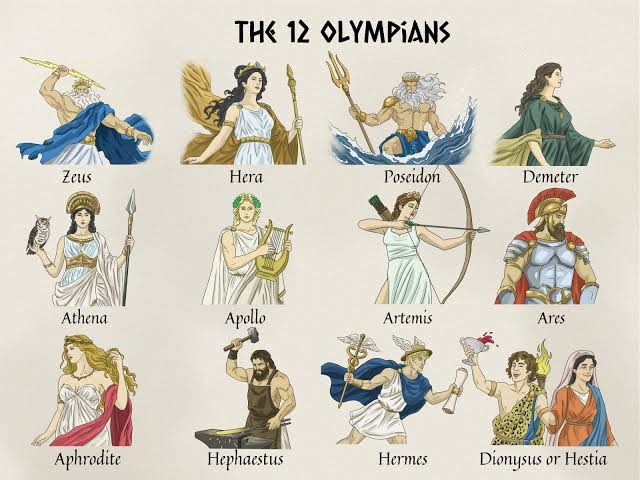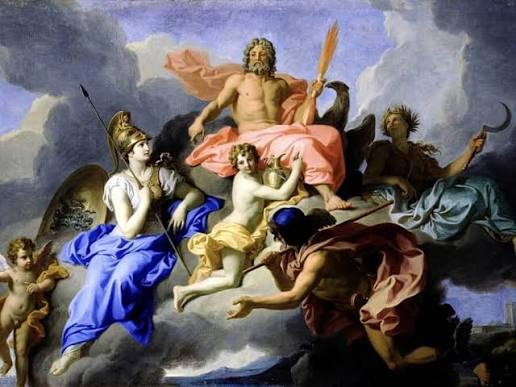
In ancient Greece, a god’s name carried weight. It could point to a place of worship, a sacred duty, a feared power, or a story that had been told for generations. Zeus was not remembered only as the ruler of Olympus. Athena was not confined to wisdom alone. Apollo could be healer, archer, prophet, musician, and bringer of light. The names and titles attached to the gods helped people make sense of forces that felt larger than human life: storms, war, love, beauty, illness, justice, and death.
Names That Carried Power
To speak the name of a god was to acknowledge a presence in the world. For the ancient Greeks, the divine was not distant. It could be felt in a good harvest, a sudden fever, a marriage, a storm at sea, a safe birth, or a victory in battle. A name gave that presence a form people could call upon.
That is why divine names often sounded heavier than ordinary ones. They gathered memory, fear, admiration, and hope. Athena’s name suggested intelligence, discipline, and the guarded strength of the city. Poseidon brought to mind the sea, earthquakes, horses, and danger rising without warning. Aphrodite carried beauty and desire, but also the trouble that desire could bring.
That same sense of meaning ran through ancient Greek naming traditions, where names could hold traces of ancestry, belief, and story. With the gods, those traces became stronger. A divine name reminded people what a deity might protect, punish, grant, or transform.
Why Gods Had More Than One Name
A Greek god could be known by several names because no single name could hold every side of divine power. The title used in a prayer, hymn, or sanctuary often depended on what people needed at that moment.
Apollo offers one of the clearest examples. At Delphi, he was closely tied to prophecy. Among poets, he belonged to music and song. In times of sickness, he could be approached as a healer. In darker stories, his arrows brought plague. Through the many titles given to Apollo, one god could carry several roles while remaining recognizably himself.
These titles were not decorative extras. They helped worshippers address a particular face of a god’s power. A sailor might call upon Poseidon as lord of the sea. A city might honor Athena as its guardian. The name chosen shaped the relationship between human need and divine response.
What Divine Names Revealed
The names and titles of the Greek gods often pointed toward the powers they ruled. Ares carried the noise, fear, and violence of battle. Demeter belonged to grain, harvest, and the fragile rhythm of the seasons. Hades was tied to the unseen world below, where the dead passed beyond ordinary reach.
Some names became almost inseparable from the ideas behind them. Nike meant victory. Nemesis carried the force of rightful retribution. Eros gave desire a body, a voice, and a place in myth. These figures made abstract powers easier to imagine. People could fear them, honor them, tell stories about them, and remember them.
Writers still draw from that old habit when creating gods, heroes, and imagined worlds. Strong Greek mythology names often work because they feel connected to a role, a mood, or a source of power. Like the ancient names, they do more than sound impressive. They suggest what kind of presence has entered the story.
How Mythic Naming Still Shapes Stories
Greek mythology remains vivid because its names rarely feel accidental. Before a story has fully unfolded, a name can suggest beauty, terror, cunning, justice, desire, or ruin. It gives the imagination something to hold.
That is one reason Greek-inspired names still appear in novels, films, games, and fantasy worlds. They can give a character a sense of age and gravity. A name shaped by myth can make a figure feel larger than life, especially when it reflects what that figure does, threatens, protects, or wants.
The ancient pattern still works. A divine name should carry more than sound. It should hint at what people fear, what they worship, or what changes when that name is spoken.
Why These Names Still Endure
The names of the Greek gods survived because they were built around meaning. They belonged to stories, temples, cities, prayers, festivals, sculptures, and poems. As Greek culture changed, the names kept moving with it.
They still feel familiar because the forces behind them have never disappeared. Wisdom, jealousy, love, war, beauty, death, victory, and justice remain part of human life. The gods gave those forces memorable forms, and their names helped those forms travel far beyond the ancient world.
To remember the names of the Greek gods is to glimpse how the Greeks imagined power itself: personal, dramatic, dangerous, beautiful, and close enough to be called by name.