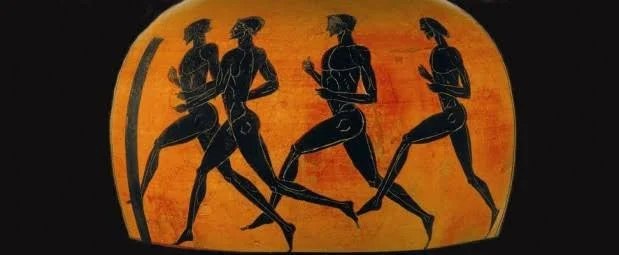
The Nemean Games were among the major athletic festivals of ancient Greece. Held at Nemea in the northeastern Peloponnese, they were part of the group of prestigious Panhellenic competitions that included the Olympic, Pythian, and Isthmian Games.
The festival combined athletics, religion, political identity, and cultural competition.
Nemea and Zeus
The games were held in a sanctuary dedicated to Zeus.
Athletes and spectators traveled from different Greek communities to participate.
Like other major Greek athletic festivals, the Nemean Games were religious events rather than merely sporting competitions.
Competition occurred within a sacred environment.
The Myth of Heracles
The traditional foundation myth connects the Nemean Games with Heracles.
Heracles' first labor was to kill the Nemean Lion, a supernatural creature that terrorized the region.
The lion possessed an exceptionally tough hide that ordinary weapons could not penetrate.
Heracles eventually strangled it.
He then used the lion's own claws to cut its hide.
The Nemean Lion subsequently became associated with Heracles' heroic identity.
The Death of Opheltes
Another foundation tradition concerns Opheltes, a young child.
According to the myth, Opheltes was cared for by his nurse Hypsipyle.
The Seven against Thebes encountered the child during their campaign.
Hypsipyle placed him down temporarily while guiding the warriors to water.
A serpent killed him.
The warriors subsequently established funeral games in his honor.
This story is especially significant because it connects the Nemean Games with funerary ritual.
Athletic Events
The Nemean Games featured many athletic competitions.
Events included:
foot races
wrestling
boxing
pankration
pentathlon
horse and chariot events
The exact program changed over time.
Athletes competed not simply for money but for honor, prestige, and recognition.
Victory could bring enormous social status.
The Crown of Victory
The traditional prize at Nemea was a crown made from wild celery.
This may seem modest compared with modern sporting trophies.
Yet Greek athletic culture valued symbolic honor more than material prizes.
A victorious athlete could return home as a celebrated public figure.
Panhellenic Identity
The Nemean Games contributed to the idea that Greeks across different city-states shared a common cultural identity.
Athletes came from communities that might otherwise be political rivals.
During festivals, competition could temporarily coexist with religious unity.
This was one of the important institutions contributing to Panhellenic culture.
Political Significance
Athletic festivals also had political dimensions.
City-states used victories to demonstrate prestige.
Successful athletes could become symbols of civic excellence.
Victories were commemorated in inscriptions, monuments, poetry, and sculpture.
Conclusion
The Nemean Games demonstrate how deeply athletics were integrated into ancient Greek religion and society.
They were simultaneously athletic competitions, religious ceremonies, political spectacles, and celebrations of heroic tradition.
Their foundation myths—particularly those involving Heracles and Opheltes—gave the games a sacred history.
The Nemean Games therefore reveal that ancient Greek sport cannot be understood separately from religion, mythology, identity, and politics.