Aphrodite was the Greek goddess of love, beauty, desire, and sexual attraction.
Her influence was not limited to romantic relationships. In Greek mythology, desire could affect families, kingdoms, friendships, alliances, and wars.
Aphrodite therefore represented one of the most powerful forces in human life: attraction.
The Birth of Aphrodite
Two major traditions describe Aphrodite's origins.
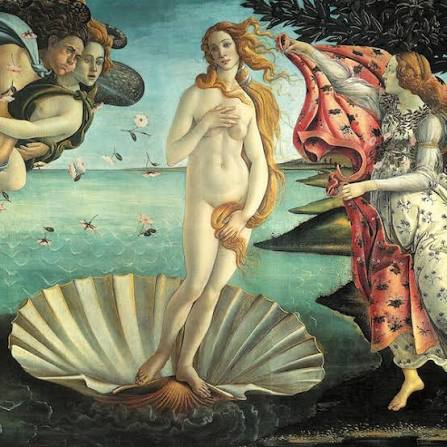
In Hesiod's Theogony, Aphrodite emerges from sea foam after the severed body of Uranus falls into the sea.
In other traditions, including those associated with Homer, Aphrodite is presented as the daughter of Zeus and Dione.
These conflicting traditions demonstrate that Greek mythology did not always possess a single official version.
Aphrodite and Beauty
Aphrodite's most obvious domain was physical beauty.
Yet her power extended beyond appearance.
She represented desire itself—the force that causes people to seek one another.
This made her both attractive and dangerous.
The Judgment of Paris
One of Aphrodite's most famous myths involves Paris of Troy.
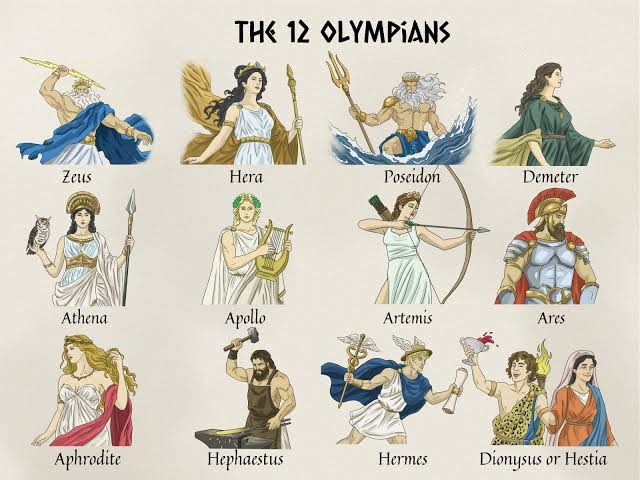
Hera, Athena, and Aphrodite compete over who is the most beautiful goddess.
Paris is chosen to judge them.
Aphrodite promises him the most beautiful woman in the world.
Paris chooses Aphrodite.
The woman is Helen of Sparta.
Her departure with Paris becomes one of the legendary causes of the Trojan War.
Aphrodite and the Trojan War
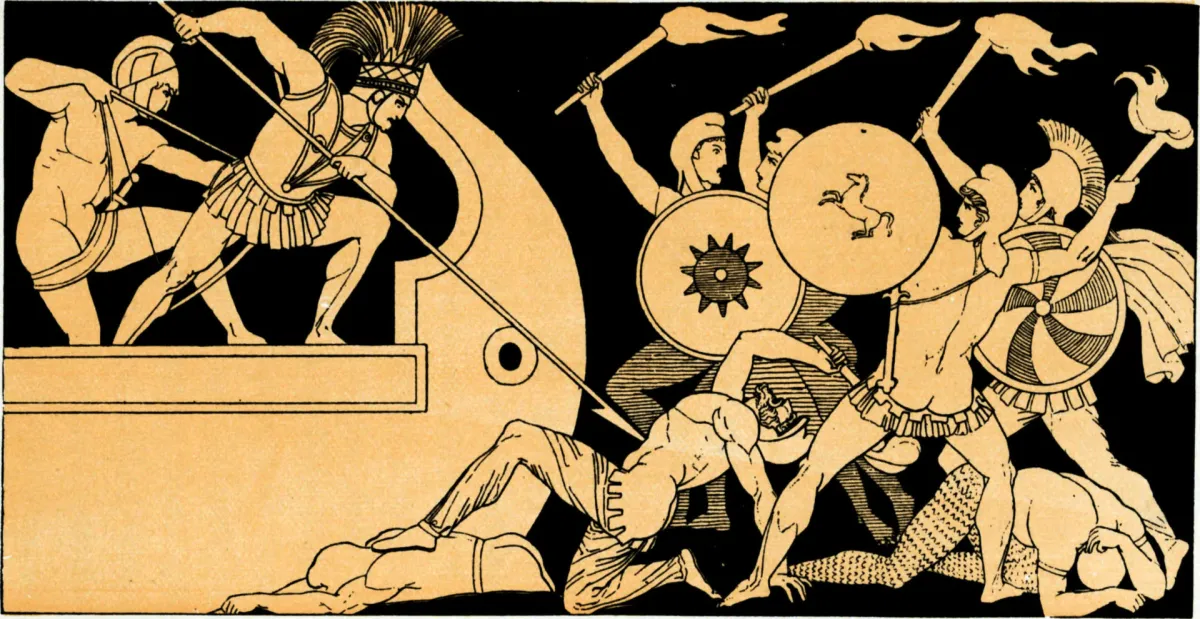
Aphrodite's role in the Trojan War demonstrates how love and desire could have political consequences.
She protects Paris and supports the Trojans.
Yet Aphrodite herself does not control the entire war.
The conflict becomes entangled with the decisions of gods, heroes, kings, and armies.
Aphrodite and Hephaestus
Aphrodite was traditionally married to Hephaestus.
Their relationship is frequently portrayed as unhappy.
A famous myth describes Aphrodite's affair with Ares.
Hephaestus discovers the lovers and traps them in an invisible net, exposing them before the gods.
The story emphasizes the complicated and often humorous relationships among the Olympians.
Aphrodite and Ares
Aphrodite and Ares represented an interesting mythological pairing.
Love and war appear together repeatedly in Greek mythology.
Their relationship suggests that attraction and conflict can be closely connected.
Their children included figures associated with fear and harmony, depending on the tradition.
Aphrodite and Adonis
The story of Adonis became one of Aphrodite's most famous legends.
Aphrodite falls deeply in love with the beautiful mortal Adonis.
Adonis dies after being attacked while hunting.
The myth became associated with themes of beauty, mortality, grief, and seasonal renewal.
Aphrodite and Psyche
The story of Psyche became especially famous in later literature.
Psyche's beauty causes Aphrodite's jealousy.
Psyche is given a series of difficult tasks.
Eventually, her love for Cupid and her perseverance lead to divine transformation.
Although the story is better known from the Roman author Apuleius, it draws upon Greek mythological traditions.
Aphrodite's Worship
Aphrodite was worshipped in many Greek communities.
Her cult could involve marriage, fertility, sexuality, beauty, and social relationships.
Different regions emphasized different aspects of the goddess.
Aphrodite's Symbols
Common symbols associated with Aphrodite include:
roses;
doves;
swans;
seashells;
myrtle;
the sea.
The seashell became particularly famous because of the tradition describing her emergence from the sea.
Conclusion
Aphrodite was far more than a goddess of romantic love.
She represented desire as a force capable of transforming individuals and entire societies.
Her myths connect beauty with jealousy, romance with war, attraction with danger, and love with mortality.
That complexity explains why Aphrodite remained one of the most recognizable figures in Greek mythology.