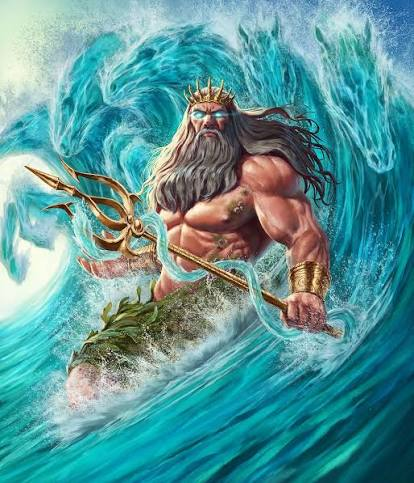
Poseidon was one of the most powerful gods of ancient Greek mythology.
He ruled the sea, commanded storms, caused earthquakes, and was associated with horses.
For a civilization whose communities were scattered around the Aegean and Mediterranean, Poseidon's power was deeply relevant.
The sea could provide wealth and transportation, but it could also bring storms, shipwrecks, and death.
Brother of Zeus
Poseidon was the son of Cronus and Rhea.
Cronus swallowed him as an infant, but Zeus eventually forced Cronus to release his children.
Poseidon joined Zeus and the other Olympians in the war against the Titans.
After their victory, the three brothers divided the cosmos.
Zeus received the sky.
Poseidon received the sea.
Hades received the Underworld.
The Trident
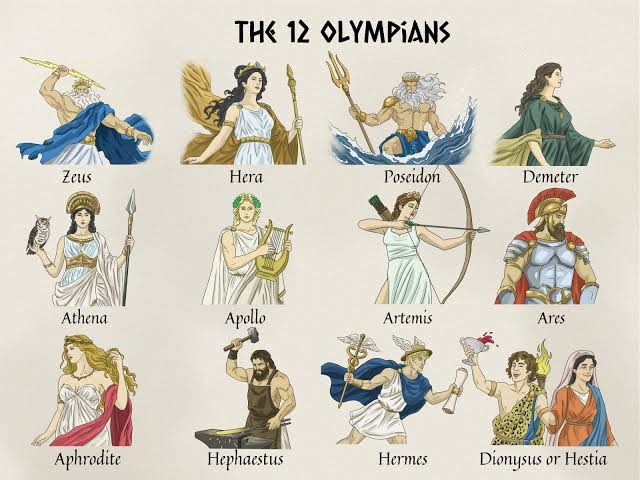
Poseidon's most famous symbol was his three-pronged spear: the trident.
With it, he could stir the sea, create springs, and cause earthquakes.
The trident represented his authority over the waters.
Poseidon and Earthquakes
Poseidon was sometimes called the "Earth-Shaker."
The Greeks lived in a seismically active region.
Earthquakes could destroy buildings, roads, temples, and entire communities.
Associating earthquakes with Poseidon provided a mythological explanation for a frightening natural phenomenon.
Poseidon and Horses
Poseidon also had a strong connection with horses.
Greek mythology sometimes describes him as the creator or father of extraordinary horses.
His horse association may seem strange for a sea god, but it was deeply established in Greek religion.
Poseidon and Athena
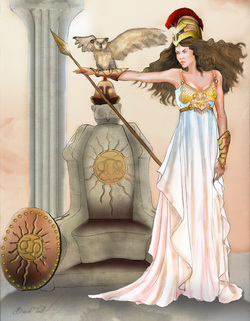
One of the most famous stories involving Poseidon concerns his rivalry with Athena over Athens.
Poseidon offered the city a gift, but Athena's olive tree was considered more useful.
Athena became the city's patron.
Poseidon nevertheless remained important to Athens, particularly as a maritime power.
Poseidon and Odysseus
Poseidon's conflict with Odysseus is central to the Odyssey.
Odysseus blinds the Cyclops Polyphemus.
Polyphemus is Poseidon's son.
Poseidon then obstructs Odysseus's journey home.
The resulting voyage demonstrates how divine anger could transform an ordinary journey into an epic struggle.
Poseidon and the Sea
Ancient sailors could not rely on modern navigation, weather forecasting, or engines.
The sea remained unpredictable.
Storms could destroy ships within hours.
Poseidon's worship therefore had practical significance for maritime communities.
Sailors offered prayers and sacrifices before dangerous voyages.
Poseidon and Greek Cities
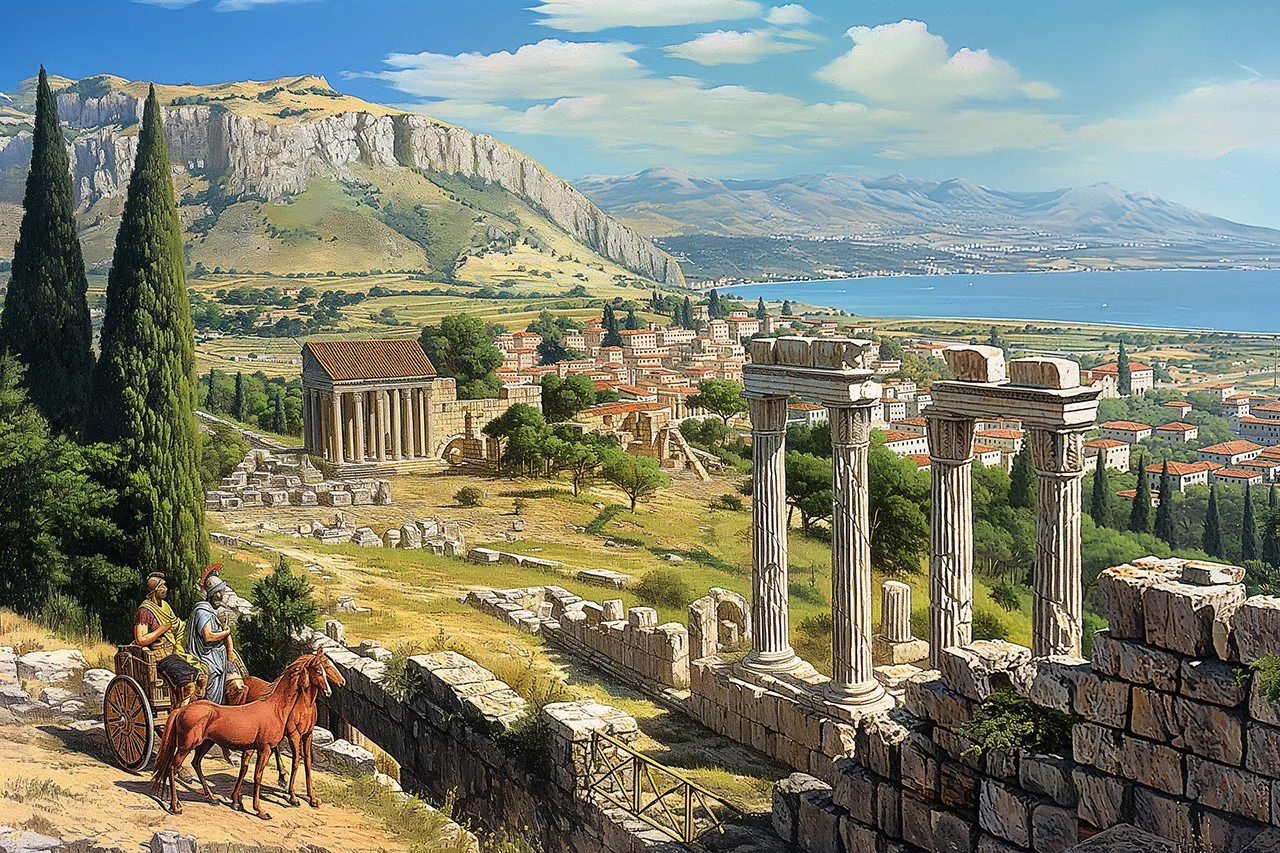
Many coastal cities honored Poseidon.
His sanctuaries were often located near the sea or in locations connected with maritime activity.
His importance demonstrates how Greek religion was shaped by geography.
Conclusion
Poseidon embodied the double nature of the sea.
The ocean could provide trade, fish, exploration, and communication.
But it could also bring storms and destruction.
As god of the sea and Earth-Shaker, Poseidon represented both sides of that reality.
His mythology reveals how deeply ancient Greek religion was connected to the natural environment surrounding Greek communities.