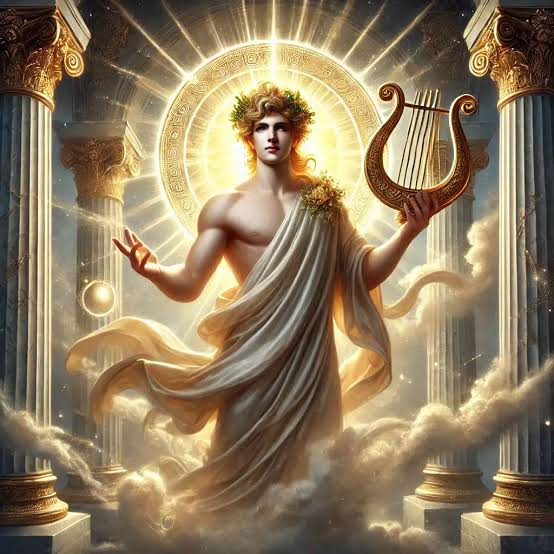
Apollo was one of the most widely worshipped gods of the ancient Greek world.
He was associated with prophecy, music, poetry, healing, archery, ritual purification, and youth. In later traditions, he became strongly associated with the sun, although Helios was originally the distinct personification of the sun.
Apollo's many roles made him one of the most complex gods in Greek religion.
The Son of Zeus and Leto
Apollo was the son of Zeus and Leto.
His twin sister was Artemis.
According to myth, Hera pursued Leto because of Zeus's relationship with her.
Leto eventually found refuge on the island of Delos, where she gave birth to Apollo and Artemis.
Delos subsequently became one of the most sacred religious centers in the Aegean.
Apollo at Delphi
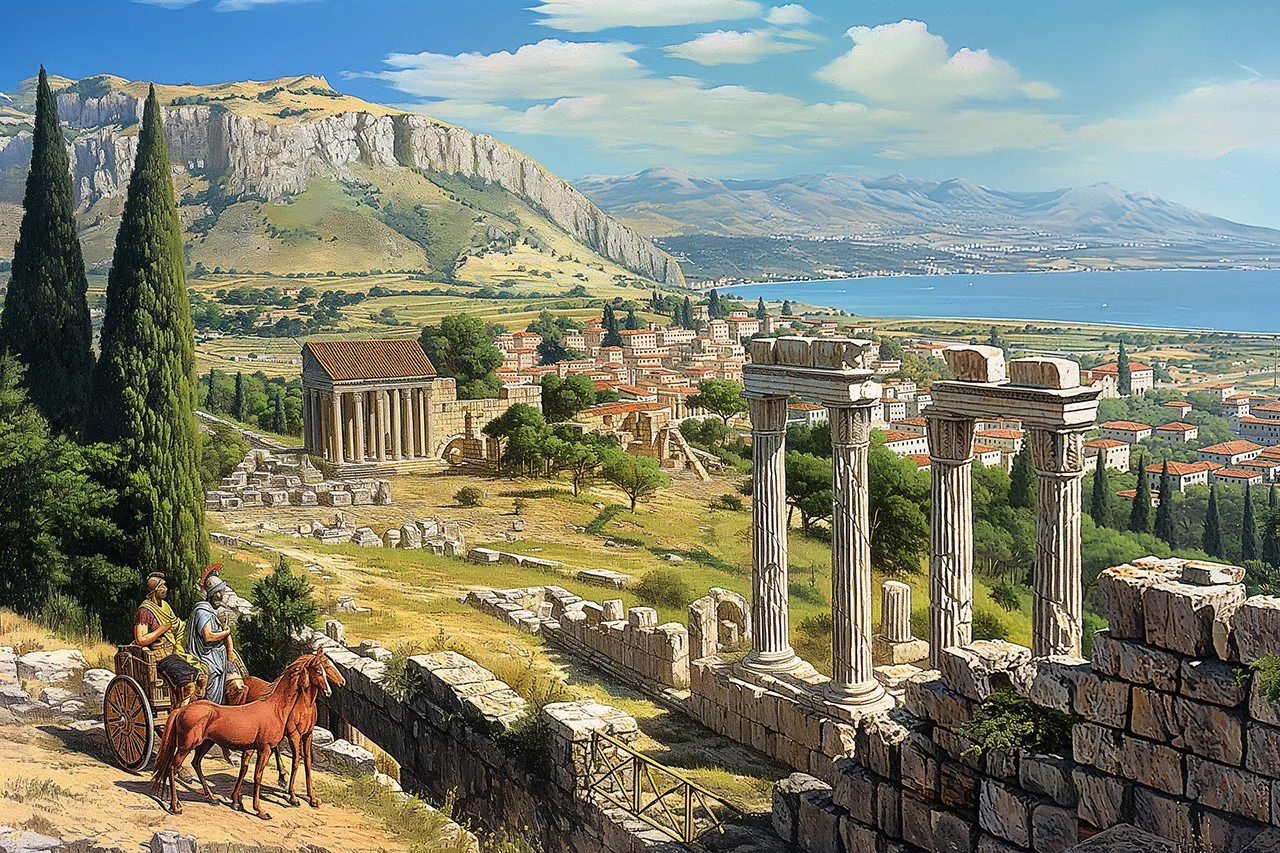
Perhaps Apollo's most famous sanctuary was Delphi.
The sanctuary became renowned for its oracle.
People from different parts of the Greek world traveled to Delphi seeking divine guidance.
The priestess known as the Pythia delivered prophetic responses associated with Apollo.
These prophecies could influence political decisions, military plans, colonization, and personal choices.
Prophecy
Apollo's prophetic power was closely connected to his ability to reveal hidden knowledge.
Yet Greek myths frequently portray prophecy as ambiguous.
A prediction might be technically correct while being misunderstood by the person receiving it.
This creates one of Greek mythology's most fascinating themes: knowing the future does not necessarily mean knowing how to avoid it.
Apollo and Music
Apollo was also the god of music.
He was traditionally associated with the lyre.
The Muses were closely connected with artistic inspiration, and Apollo could be portrayed as their leader.
Music was not considered merely entertainment in ancient Greek culture.
It was connected with education, ritual, poetry, performance, and social identity.
Apollo and Healing
Apollo had a relationship with healing and medicine.
His son Asclepius became the legendary master of medicine.
The connection between Apollo and Asclepius illustrates how divine mythology could become linked to ancient ideas about health and healing.
Apollo and Archery
Apollo was also an exceptional archer.
His arrows could bring disease as well as destruction.
In the Iliad, Apollo sends plague upon the Greek army.
His arrows therefore symbolized both supernatural power and divine punishment.
Apollo and Order
Apollo's mythology often emphasizes harmony, proportion, purification, and order.
This contrasts with the ecstatic and disruptive qualities associated with Dionysus.
The two gods are sometimes presented as complementary forces within Greek religious thought.
Apollo's Major Symbols
Apollo's traditional symbols included:
the lyre;
the laurel;
the bow;
arrows;
the raven;
the tripod of Delphi.
The laurel became especially important because of the myth of Daphne.
Apollo and Daphne
Apollo falls in love with Daphne, who does not return his affection.
Daphne asks for protection and is transformed into a laurel tree.
Apollo adopts the laurel as a sacred plant.
The myth connects desire, transformation, rejection, and divine symbolism.
Apollo's Worship
Apollo had sanctuaries throughout Greece and beyond.
His worship was especially important at Delphi and Delos.
Festivals dedicated to Apollo included musical, athletic, and religious competitions.
These festivals demonstrate that Greek religion was deeply integrated with cultural life.
Apollo and the Sun
Modern popular culture often describes Apollo simply as the Greek sun god.
This is an oversimplification.
Helios was the earlier personification of the sun.
Over time, Apollo became increasingly associated with solar imagery, particularly in later Greek and Roman traditions.
Conclusion
Apollo embodied many aspects of Greek civilization.
He was a musician, prophet, healer, archer, and divine protector.
His sanctuaries became centers of religion and consultation, while his mythology influenced poetry, art, music, medicine, and philosophy.
Apollo represented the Greek fascination with knowledge and order—but his myths also repeatedly remind audiences that knowledge can be difficult to interpret and that divine power can bring both healing and destruction.