Artemis was one of the most important goddesses in ancient Greek religion.
She was associated with hunting, wilderness, animals, childbirth, young women, and chastity.
As the twin sister of Apollo, she formed part of a powerful divine pair whose influence extended across many areas of Greek religious life.
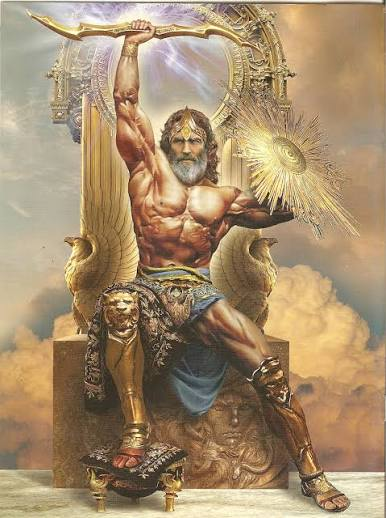
Daughter of Zeus and Leto
Artemis was the daughter of Zeus and Leto.
Her twin brother was Apollo.
According to mythology, Leto suffered persecution from Hera before giving birth to the twins.
The island of Delos became closely associated with their birth.
Artemis the Huntress
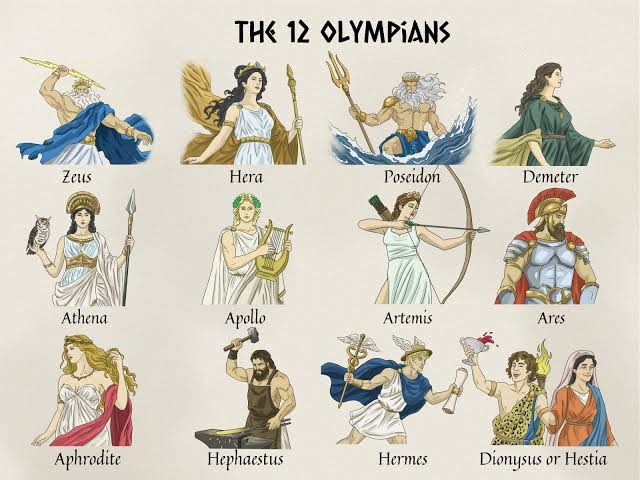
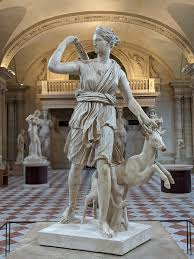
Artemis was traditionally depicted carrying a bow and accompanied by animals.
She represented the wilderness beyond the boundaries of cultivated human society.
For ancient communities, forests and mountains could be places of danger as well as sources of food.
Hunting was therefore both practical and symbolic.
Artemis and Young Women
Artemis had a strong connection with young women.
Her virginity represented independence from marriage and sexual relationships.
This does not mean that all Greek women were expected to imitate Artemis.
Instead, her divine identity represented a supernatural form of independence.
Artemis and Childbirth
One of Artemis's fascinating contradictions is her connection to childbirth.
Although she was a virgin goddess, she was also invoked by women during labor.
She therefore stood at the boundary between childhood and adulthood, virginity and motherhood.
Actaeon
One of Artemis's darkest myths concerns Actaeon.
The hunter accidentally sees Artemis bathing.
She transforms him into a stag, and his own hunting dogs attack and kill him.
The story emphasizes the dangers of violating divine boundaries.
Niobe
Another famous myth concerns Niobe.
Niobe boasts about having more children than Leto.
Apollo and Artemis respond by killing Niobe's children.
The myth warns against excessive pride and disrespect toward the gods.
Artemis at Ephesus
Artemis was especially important at Ephesus.
The Ephesian Artemis developed characteristics distinct from the Artemis of mainland Greek mythology.
Her sanctuary became one of the most famous religious sites of the ancient Mediterranean.
Artemis and Nature
Artemis represents an important Greek religious idea: nature was not simply passive scenery.
The wilderness possessed divine significance.
Animals, mountains, forests, springs, and hunting grounds could all be connected with sacred powers.
Conclusion
Artemis represented the wild, independent, and unpredictable side of the natural world.
She protected young people, governed hunting, assisted women during childbirth, and punished those who crossed sacred boundaries.
Her mythology combines seemingly contradictory ideas—virginity and childbirth, wilderness and protection, hunting and animal guardianship.
That complexity made Artemis one of the most fascinating goddesses in Greek religion.