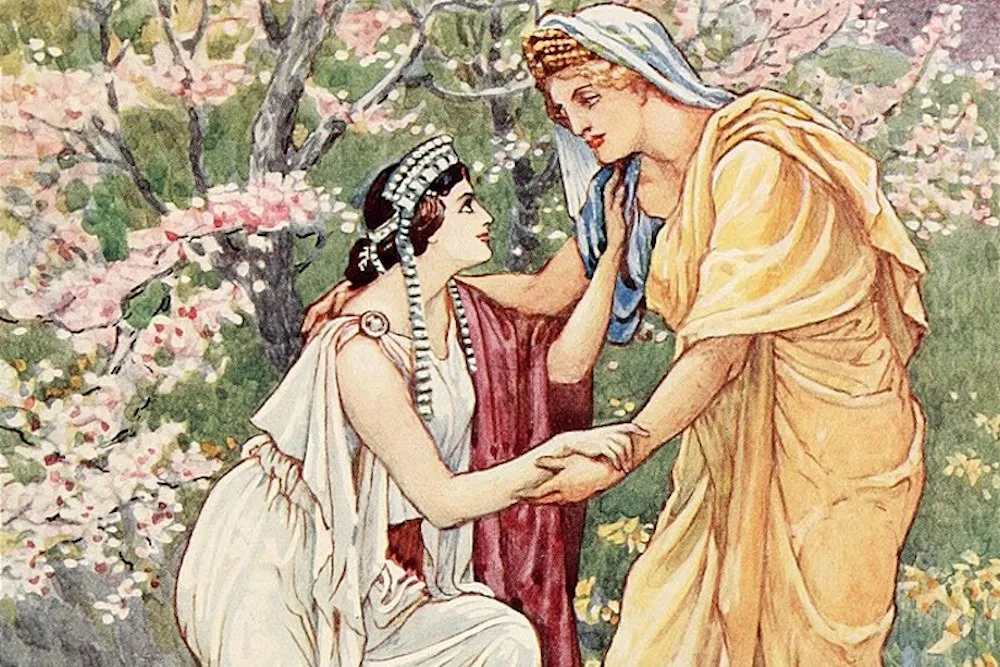
The story of Demeter and Persephone is one of the most important myths in ancient Greek religion.
It explains the changing seasons, but its meaning extends far beyond agriculture.
The myth explores motherhood, loss, death, fertility, separation, and renewal.
Demeter
Demeter was the goddess of agriculture, grain, fertility of the earth, and cultivated crops.
For agricultural societies, her role was fundamental.
Without successful harvests, communities could face hunger and social collapse.
Persephone
Persephone was the daughter of Demeter and Zeus.
She was associated with both life and the Underworld.
Her dual identity made her especially important to Greek religious traditions concerning death and renewal.
The Abduction
One day, Persephone was gathering flowers when the earth opened.
Hades emerged and carried her into the Underworld.
Demeter searched desperately for her daughter.
She traveled across the earth carrying torches and grieving.
The Earth's Famine
Demeter's grief affected the world.
She withdrew her divine power from the earth.
Crops stopped growing.
Humanity faced famine.
The gods realized that the situation threatened the survival of mortals.
The Compromise
Zeus eventually intervened.
Persephone would return to her mother, but there was a problem.
She had eaten pomegranate seeds in the Underworld.
Because she had consumed food there, she could not remain permanently among the living.
A compromise was reached.
Persephone would spend part of the year with Demeter and part with Hades.
The Seasons
The myth became associated with the changing seasons.
When Persephone returns, Demeter allows the earth to flourish.
When Persephone leaves, the earth becomes barren.
The story therefore transforms the agricultural cycle into a family drama.
The Eleusinian Mysteries
Demeter and Persephone were central to the Eleusinian Mysteries.
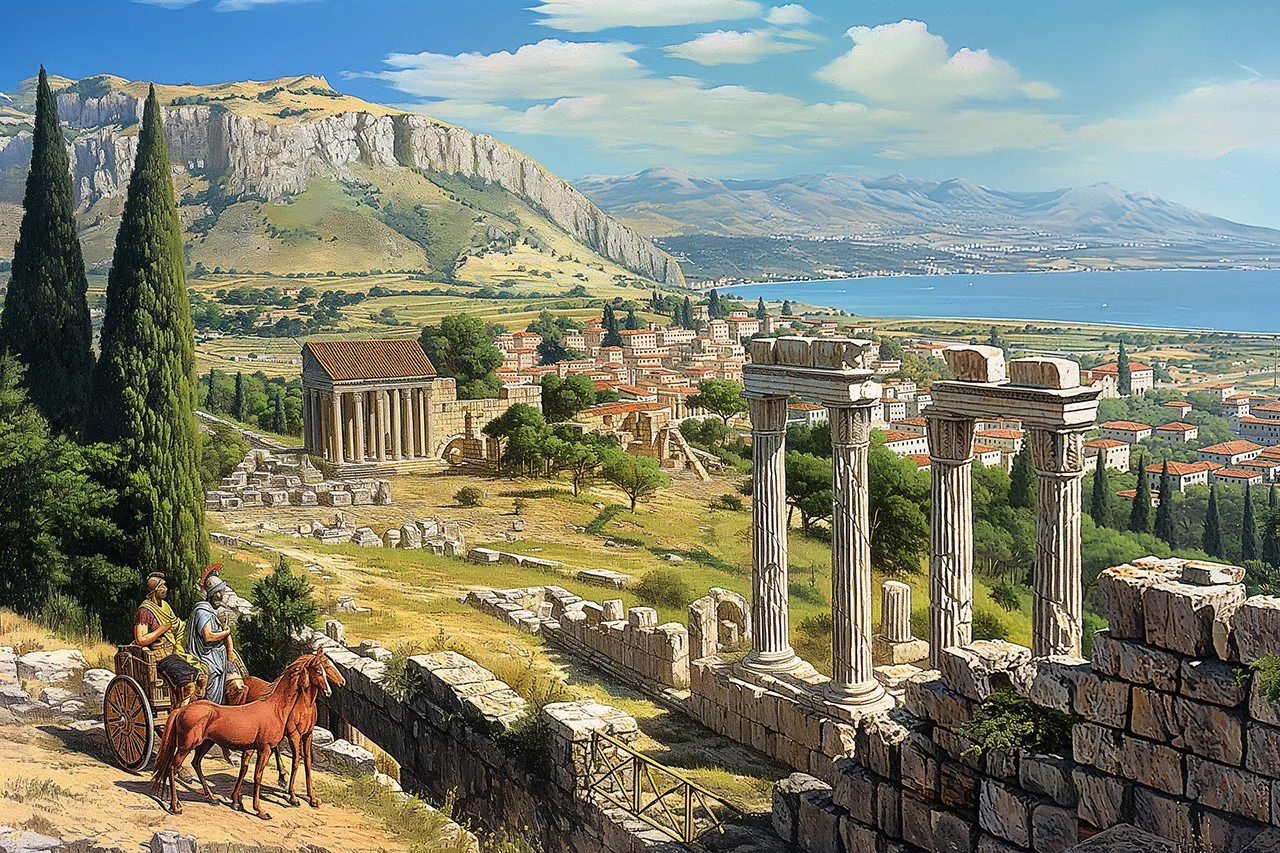
These secret religious ceremonies were held at Eleusis near Athens.
Initiates believed that the rituals offered profound religious experiences concerning death and the afterlife.
Because participants were sworn to secrecy, much about the ceremonies remains unknown.
Death and Renewal
The myth is powerful because it connects agricultural growth with human mortality.
A seed disappears beneath the ground.
Later, it returns as a plant.
Persephone similarly disappears into the Underworld and returns to the world above.
The myth therefore creates a symbolic relationship between farming and death.
Conclusion
The story of Demeter and Persephone was much more than an explanation of winter.
It was a myth about the pain of separation and the possibility of return.
It helped Greek communities understand agricultural cycles while providing a religious framework for thinking about death and renewal.
The story's influence became particularly powerful at Eleusis, where Demeter and Persephone occupied the center of one of the ancient world's most mysterious religious traditions.