From approximately the eighth century BCE onward, Greek communities established settlements throughout the Mediterranean and Black Sea.
This movement is often called Greek colonization.
It transformed the cultural and economic landscape of the ancient world.
Why Did Greeks Establish Colonies?
There was no single reason.
Population pressure could encourage migration.
Limited agricultural land pushed some communities to seek new opportunities.
Political conflicts could also cause groups to leave.
Trade was another major motivation.
A new settlement could provide access to valuable resources and strategic ports.
Where Did They Go?
Greek settlers established communities across a vast area.
Important regions included:
southern Italy;
Sicily;
southern France;
the Black Sea;
North Africa;
and parts of the eastern Mediterranean.
Southern Italy became so heavily influenced by Greek settlements that Romans later called the region Magna Graecia, meaning "Greater Greece."
Colonies and Mother Cities
Many colonies maintained relationships with their founding cities.
The original city was often called the metropolis, or mother city.
However, colonies could become politically independent.
They developed their own governments, economies, and identities.
Trade Networks
Greek colonies expanded commercial networks.
They traded agricultural products, metals, ceramics, timber, fish, textiles, and other commodities.
Greek pottery has been found across large portions of the Mediterranean, demonstrating the scale of these connections.
Cultural Exchange
Colonization was not simply Greeks spreading their culture to empty lands.
The Mediterranean was already inhabited by diverse peoples.
Greek settlers interacted with Phoenicians, Egyptians, Italic peoples, Thracians, Scythians, and many others.
Ideas, technologies, artistic styles, religious traditions, and goods moved in multiple directions.
Cities and Architecture
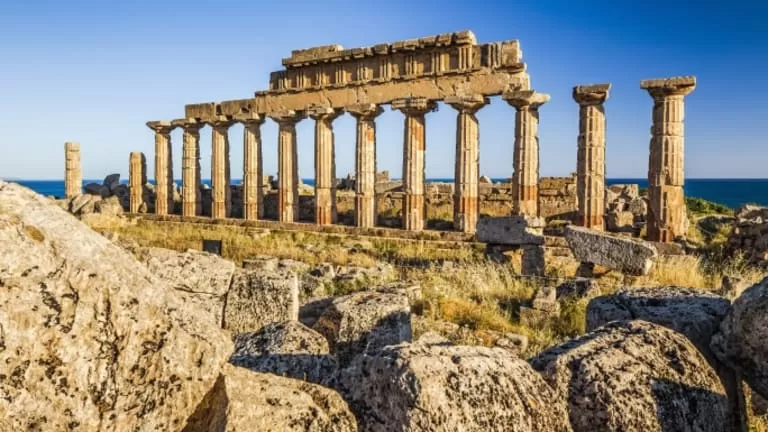
Greek settlements often included familiar urban features such as temples, marketplaces, defensive walls, and public spaces.
But local geography and existing traditions influenced their development.
Cities adapted Greek urban concepts to their environments.
Sicily and Southern Italy
Sicily became one of the most important regions of Greek settlement.
Cities such as Syracuse, Akragas, and Selinus developed into powerful communities.
Some eventually became major political forces in their own right.
Conclusion
Greek colonization transformed the Mediterranean.
It created networks of cities that connected distant regions through trade, migration, politics, and cultural exchange.
The process was complex.
It involved opportunity, conflict, cooperation, and interaction with existing populations.
The result was a Mediterranean world in which Greek language, architecture, religion, art, and political traditions became influential far beyond mainland Greece.