The Peloponnesian War was one of the most destructive conflicts in classical Greek history.
Fought primarily between Athens and Sparta and their respective allies, the war lasted from 431 to 404 BCE, with interruptions and shifting alliances.
Its consequences extended far beyond the battlefield.
A Divided Greek World
The war revealed the deep political divisions of Greece.
Athens possessed a powerful navy and maritime empire.
Sparta dominated the Peloponnesian League and possessed a formidable land army.
Their rivalry eventually drew much of the Greek world into conflict.
The Fall of Athens
Athens was defeated in 404 BCE.
The city's empire collapsed.
Its walls and political institutions were weakened.
For Athenians, the defeat represented a profound psychological shock.
A city that had considered itself the cultural and political leader of Greece had been forced to surrender.
Political Instability
The war did not create lasting peace.
Sparta became temporarily dominant, but its supremacy was challenged.
Thebes later defeated Sparta at Leuctra in 371 BCE.
This constant competition weakened the Greek city-state system.
Economic Consequences
Years of warfare damaged agriculture, trade, and populations.
The plague that struck Athens early in the war caused enormous loss of life.
Economic disruption affected ordinary families as well as political elites.
Literature and Historical Thought
The war also influenced Greek intellectual culture.
Thucydides' history of the conflict became one of the most important works of ancient historical writing.
Rather than explaining events entirely through divine intervention, Thucydides emphasized human decisions, power, fear, ambition, and political calculation.
Tragedy and Political Anxiety
Greek drama continued to explore themes of war, suffering, leadership, justice, and political responsibility.
The experience of prolonged warfare provided a powerful background for these themes.
Greek culture became increasingly conscious of the dangers of political rivalry and excessive ambition.
The Road Toward Macedon
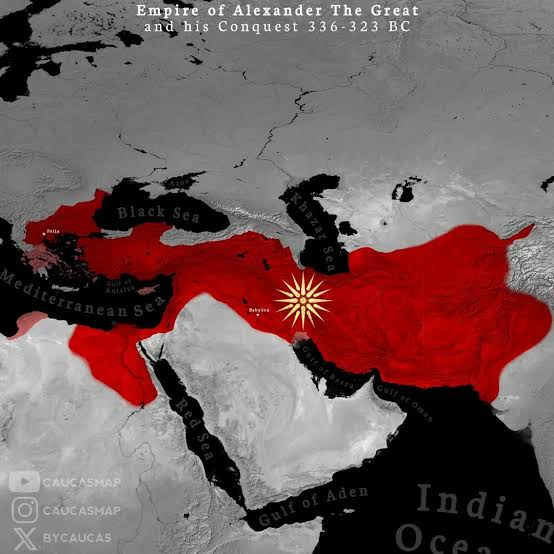
The weakening of the major Greek city-states created opportunities for Macedonia.
By the fourth century BCE, Philip II of Macedon was able to exploit divisions among the Greek states.
His victory at Chaeronea in 338 BCE effectively placed much of Greece under Macedonian dominance.
Conclusion
The Peloponnesian War did not destroy Greek civilization.
Athens remained an important intellectual and cultural center.
Philosophy, drama, art, architecture, and historical writing continued to flourish.
But the war changed the political environment permanently.
It demonstrated the enormous cost of rivalry between Greek states and contributed to the weakening of the independent city-state system.
In the long term, that weakness helped prepare the way for Macedonian expansion.