The ancient Olympic Games became one of the most famous institutions of the Greek world.
Held at Olympia in the western Peloponnese, the games were connected with the worship of Zeus and attracted competitors and visitors from across the Greek world.
The ancient Olympics were very different from the modern Olympics.
Olympia
Olympia was a major religious sanctuary.
The athletic contests formed part of a broader religious festival.
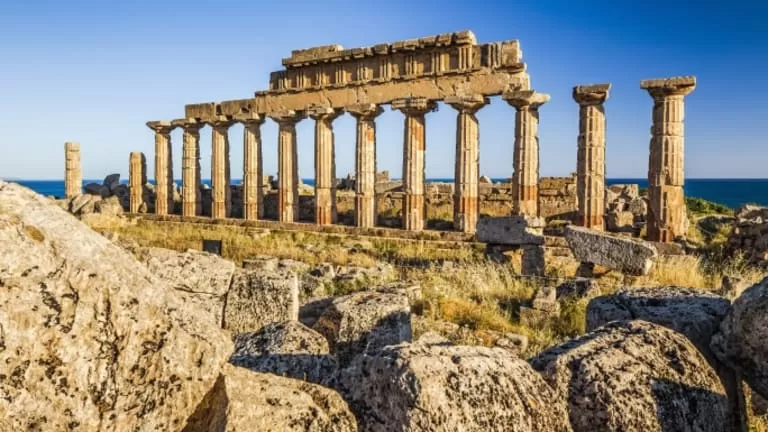
The sanctuary contained temples, altars, monuments, and athletic facilities.
The most important deity worshipped there was Zeus.
The Legendary Origins
Greek tradition connected the origins of the Olympic Games with legendary figures including Heracles.
Different ancient sources preserved different stories.
Historically, organized competitions at Olympia are securely attested by the eighth century BCE, although the sanctuary and its religious traditions were older.
Who Could Compete?
Participation was generally restricted to free Greek males.
Women were not normally allowed to compete in the men's events.
Athletes competed individually rather than representing modern-style national teams.
They were associated with their cities and communities.
Events
The games included several athletic events.
These included:
running;
wrestling;
boxing;
pankration;
discus;
javelin;
long jump;
and chariot racing.
Some events were extremely dangerous.
The pankration combined wrestling and striking and could cause serious injuries.
The Olympic Truce
The games were associated with the concept of an Olympic truce.
The idea was that participants and travelers should be able to reach the festival safely.
However, the truce did not mean that warfare permanently stopped throughout Greece.
The Greek world remained politically fragmented and frequently violent.
The Prize
Victors did not receive gold medals.
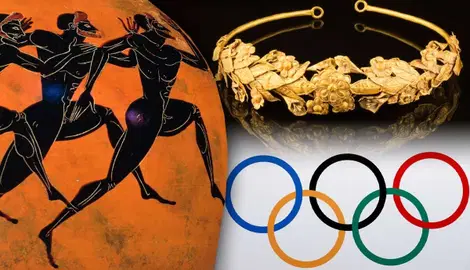
The traditional prize was a wreath made from sacred olive branches.
Yet the prestige could be enormous.
Victorious athletes could receive honors, financial rewards, free meals, or other privileges from their home cities.
Religion and Competition
Athletics were not separated from religion.
Competitions were performed within a sacred environment and connected to ceremonies honoring Zeus.
Victory therefore carried religious and social significance.
Women and the Games
Women were generally excluded from the main men's competition.
However, women could have important connections to athletic festivals.
There were also separate traditions involving female athletic competitions, such as the Heraia at Olympia.
Conclusion
The ancient Olympic Games were not simply an early version of modern international sport.
They were religious festivals, social gatherings, political opportunities, and displays of athletic excellence.
The competitions helped connect Greek communities despite their political divisions.
For centuries, Olympia provided a place where Greeks could compete, worship, socialize, and celebrate a shared cultural identity.