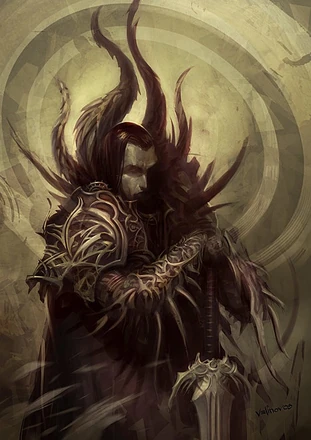
Hades was one of the most powerful gods in Greek mythology, yet he is often misunderstood.
He ruled the Underworld, the realm of the dead.
Contrary to many modern portrayals, Hades was not simply the Greek equivalent of the Devil. He was not primarily a personification of evil.
He was the ruler of the dead and the guardian of the boundaries between life and death.
Brother of Zeus and Poseidon
Hades was the son of Cronus and Rhea.
He was swallowed by Cronus and later freed by Zeus.
After the defeat of the Titans, Hades received the Underworld as his domain.
His brothers ruled other portions of the cosmos.
The Underworld
The Greek Underworld was not simply a place of punishment.
Most ordinary dead people were believed to enter the realm of Hades.
Different regions or destinations existed within the broader Underworld.
The blessed might reach the Elysian Fields, while others faced punishment according to particular myths.
Hades as a Ruler
Hades maintained order among the dead.
He was associated with wealth as well.
This may seem surprising until we remember that precious metals and minerals came from underground.
The Greeks could therefore associate Hades with hidden wealth beneath the earth.
Persephone
Hades is most famous for his relationship with Persephone.
He abducts her and takes her to the Underworld.
Eventually, a compromise allows Persephone to spend part of the year above and part below.
The story became closely connected with Demeter and the changing seasons.
The Dog Cerberus
Cerberus was the monstrous guardian of the Underworld.
Usually described as a three-headed dog, Cerberus prevented the dead from escaping and the living from entering freely.
Heracles eventually captures him as one of his labors.
Hades and Orpheus
The story of Orpheus and Eurydice is another famous Underworld myth.
Orpheus travels into Hades to retrieve his dead wife.
His music moves the rulers of the Underworld.
He is allowed to take Eurydice back to the living world on one condition: he must not look back until they have escaped.
He looks back too soon.
Eurydice disappears forever.
Hades and Mortality
Hades represents an unavoidable reality.
Everyone eventually dies.
Unlike gods associated with war or love, Hades governs a process that no mortal can permanently escape.
Was Hades an Olympian?
This is an important distinction.
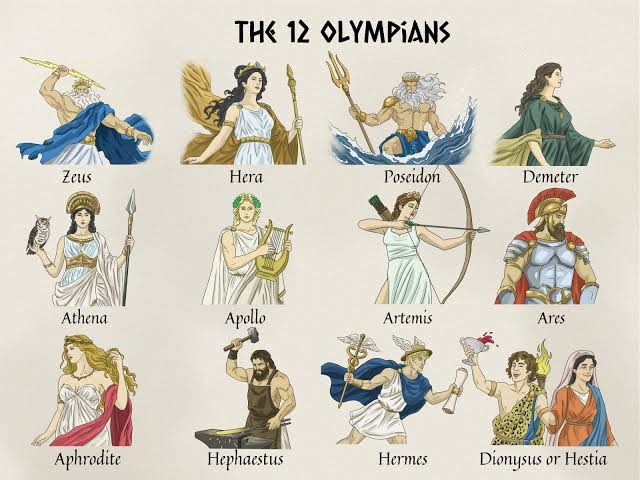
Hades is often included in modern popular lists of the major Greek gods, but he is not usually counted among the Twelve Olympians, because his realm was the Underworld rather than Mount Olympus.
This is why lists of the twelve Olympians can differ from lists of the major Greek gods.
Conclusion
Hades was not the Greek Devil.
He was the ruler of the dead, guardian of the Underworld, and god associated with hidden wealth.
His myths are fundamentally concerned with death, separation, memory, and the limits of mortal existence.
Far from being a simple villain, Hades represented one of the most unavoidable powers in the ancient Greek imagination: the boundary between life and death.