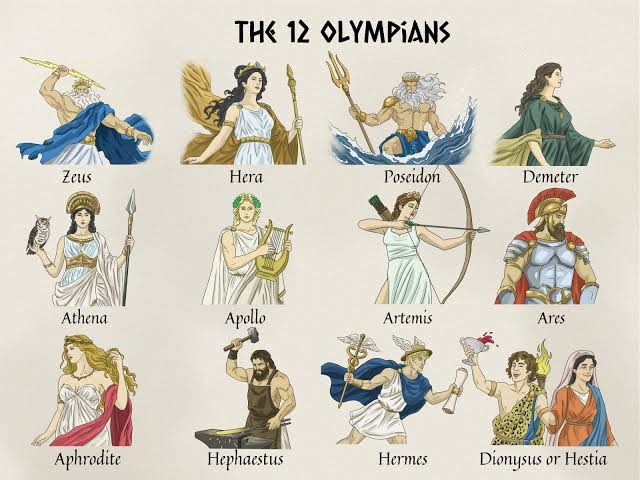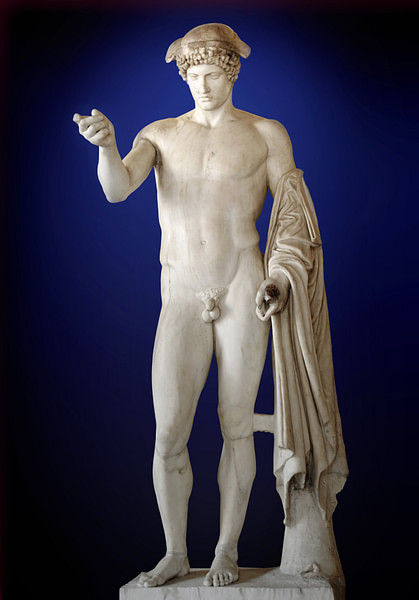
Hermes was the fastest and most versatile of the Greek gods.
He served as messenger of the Olympians and was associated with travelers, merchants, communication, boundaries, thieves, shepherds, and the movement of souls into the Underworld.
His many responsibilities made him one of the most adaptable gods in Greek mythology.
The Son of Zeus and Maia
Hermes was the son of Zeus and Maia.
According to the Homeric Hymn to Hermes, he was extraordinarily clever from birth.
As a newborn, Hermes quickly demonstrated his ability to deceive, invent, and negotiate.
The Theft of Apollo's Cattle
One of Hermes's most famous childhood adventures involves Apollo's cattle.
Hermes steals the animals and attempts to conceal the evidence by confusing their tracks.
Apollo eventually discovers what happened.
The two gods confront each other, but Hermes uses his charm and intelligence to escape serious punishment.
The Lyre
Hermes invented the lyre according to mythology.
He created it from a tortoise shell and strings.
He eventually gave the instrument to Apollo.
The story helps explain the relationship between Hermes's cleverness and Apollo's musical identity.
Messenger of the Gods
Hermes's best-known role was divine messenger.
He could travel between Olympus and the mortal world with extraordinary speed.
His winged sandals became one of his most famous symbols.
Hermes and Travelers
Ancient travelers faced dangerous roads, uncertain borders, and unfamiliar communities.
Hermes became their protector.
Roadside markers called hermai were associated with him.
These stone monuments marked boundaries and routes.
Hermes and Commerce
Hermes was also associated with trade.
Merchants depended on communication, negotiation, transportation, and trust.
His clever personality made him an appropriate divine patron.
Hermes and Thieves
Hermes was not a straightforward symbol of honesty.
He was also associated with thieves and tricksters.
Greek mythology frequently presents intelligence as morally flexible.
The same cleverness that helps a merchant negotiate can help a thief escape.
Hermes and the Dead
Hermes also served as a guide for souls traveling toward the Underworld.
This role is called psychopomp.
He could escort the dead to the realm of Hades.
His ability to cross boundaries made him particularly suited to this task.
Conclusion
Hermes was the god of movement.
He moved between cities, worlds, social groups, and even the realms of the living and the dead.
He represented communication, commerce, travel, cleverness, and transformation.
His mythology celebrates intelligence—but also reminds audiences that cleverness can be used for both honorable and dishonest purposes.