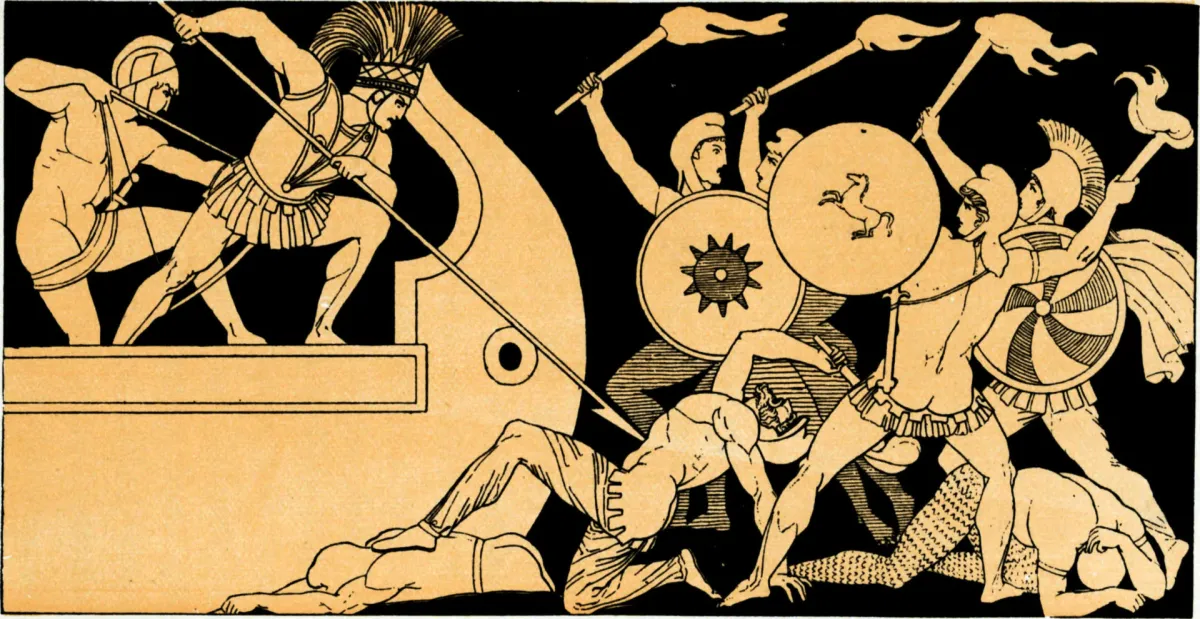
When people imagine ancient Greece, they often picture a family of powerful gods living together on Mount Olympus. Zeus sits upon his throne, Athena stands beside him, Apollo plays music, Aphrodite represents beauty, and Poseidon commands the sea. This familiar image comes from centuries of Greek mythology, art, poetry, and later retellings.
But the idea of exactly twelve Olympian gods was not as simple or fixed as modern lists suggest.
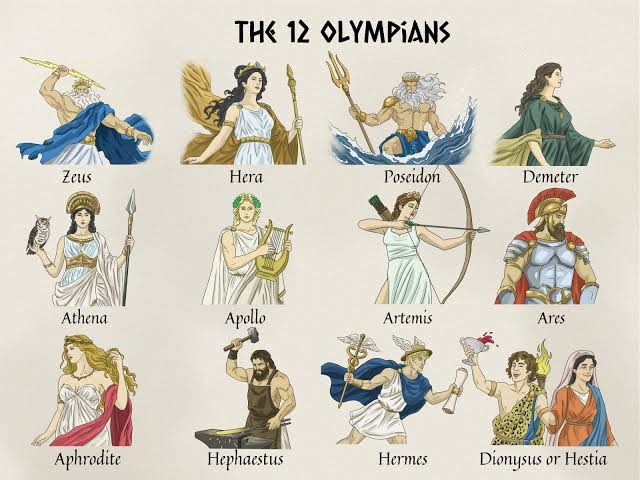
The Greeks worshipped many gods, heroes, spirits, and divine beings. Different cities and traditions sometimes included different gods among the Olympians. Zeus, Hera, Athena, Apollo, Artemis, Poseidon, Ares, Aphrodite, Hermes, Demeter, Hephaestus, and Dionysus are commonly included in modern lists, but Hestia sometimes appears instead of Dionysus.
The Olympians were therefore not simply a fixed twelve-member family like a modern organization. They represented a group of major deities associated with the divine order centered on Mount Olympus.
Zeus and the New Divine Order
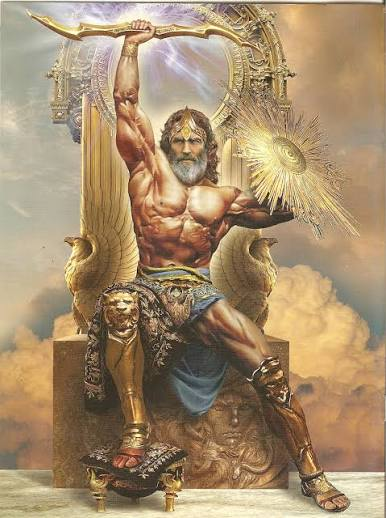
At the center stood Zeus, ruler of the gods and master of the sky.
According to Greek mythology, Zeus and his siblings overthrew the Titans, establishing a new generation of divine rulers.
Zeus was associated with thunder, lightning, kingship, justice, hospitality, and the protection of social order.
His authority was not absolute in the way a modern king might imagine. Greek mythology frequently shows Zeus negotiating with other gods, dealing with fate, and confronting challenges.
Hera: Marriage and Queenship
Hera was Zeus's wife and queen of the gods.
She was especially associated with marriage, women, childbirth, and legitimate family relationships.
Greek myths frequently focus on the conflicts between Hera and Zeus, particularly because Zeus's numerous affairs produced many children.
These stories should not be interpreted as straightforward descriptions of ancient Greek marriage. They are mythological narratives that explore jealousy, power, legitimacy, family, and divine conflict.
Poseidon: God of the Sea
Poseidon controlled the sea, but his influence extended beyond maritime life.
He was also associated with earthquakes and horses.
For a civilization surrounded by the Mediterranean, Poseidon was enormously important. Sailors depended upon favorable seas, while coastal communities feared storms, earthquakes, and other natural disasters.
His trident became one of the most recognizable symbols of Greek mythology.
Athena: Wisdom and Strategy
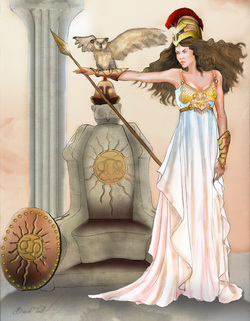
Athena represented wisdom, strategic warfare, crafts, and civic intelligence.
Unlike Ares, who represented the violent and chaotic aspects of battle, Athena was frequently associated with disciplined strategy.
Athena became especially important to Athens, which claimed her as its patron goddess.
The Parthenon was dedicated to Athena, and her presence in Athenian culture demonstrates how mythology could become closely connected with civic identity.
Apollo and Artemis
Apollo and Artemis were twins born to Leto.
Apollo became associated with prophecy, music, poetry, healing, and the sun in later traditions.
Artemis was associated with hunting, wilderness, childbirth, and the protection of young people.
Their mythology demonstrates how one divine family could encompass seemingly different aspects of human experience.
Aphrodite
Aphrodite represented love, beauty, desire, and sexual attraction.
Her mythology was not simply about romance.
Desire in Greek mythology could have enormous political and social consequences.
The Judgment of Paris, for example, connects Aphrodite's promise of the world's most beautiful woman with the legendary events leading to the Trojan War.
Ares
Ares represented the brutal and destructive side of warfare.
Greek literature often portrays him as violent, impulsive, and difficult to control.
This differs from Athena's strategic approach to warfare.
The contrast between Ares and Athena demonstrates that the Greeks did not treat war as a single concept. Warfare could involve courage, discipline, strategy, violence, honor, fear, and destruction.
Hermes
Hermes was the messenger of the gods.
He was also associated with travelers, merchants, boundaries, communication, thieves, and cleverness.
His role connected different worlds.
He could travel between Olympus, the human world, and the realm of the dead.
Hermes therefore became one of the most versatile gods in Greek mythology.
Demeter
Demeter was the goddess most closely associated with agriculture and grain.
Her importance becomes especially clear through the myth of Persephone.
When Persephone disappears into the Underworld, Demeter's grief causes the earth to become barren.
The eventual return of Persephone provides the mythological explanation for the changing seasons.
The story also reflects the central importance of agriculture to Greek communities.
Hephaestus
Hephaestus was the divine craftsman.
He created extraordinary objects for the gods, including weapons, armor, and magical artifacts.
His workshop represented divine technology and craftsmanship.
Unlike many Greek gods who possessed physical beauty, Hephaestus was often portrayed as physically imperfect or lame.
Yet his abilities as a craftsman made him indispensable.
Dionysus
Dionysus was associated with wine, ecstasy, theater, transformation, and altered states of consciousness.
His worship could involve intense religious experiences.
He was also connected with Greek theater, making him particularly important to the cultural history of ancient Greece.
Dionysus represented forces that could disrupt ordinary social boundaries.
Hestia and the Question of the Twelve
Hestia was goddess of the hearth and domestic center.
She was highly important to Greek households and communities.
However, modern lists sometimes replace her with Dionysus when identifying the twelve Olympians.
This illustrates an important point: there was no universally fixed list of twelve Olympians across every Greek tradition.
What Made Them "Olympian"?
The Olympians were primarily the gods associated with the ruling divine order established after the defeat of the Titans.
Mount Olympus served as the symbolic home of the gods.
It was not necessarily imagined as an ordinary physical palace in the modern sense. Greek poets used Olympus as a divine space where the gods gathered, argued, feasted, celebrated, and interacted.
The Gods Were Not Perfect
Greek mythology does not present its gods as morally perfect beings.
They could be jealous, deceptive, violent, generous, loving, vengeful, or compassionate.
Their stories often resemble exaggerated versions of human conflicts.
The gods possessed extraordinary powers, but they also experienced emotions familiar to humans.
Worship Was Different from Myth
Ancient Greeks did not simply "believe in stories."
Religion involved sacrifices, festivals, prayers, processions, temples, offerings, and local traditions.
A person could worship Athena in Athens, Apollo at Delphi, Artemis at Ephesus, or Demeter at Eleusis while participating in very different local religious traditions.
Conclusion
The Twelve Olympians were not merely characters from entertaining stories.
They formed part of a religious system through which Greek communities understood nature, society, warfare, agriculture, family, desire, death, craftsmanship, and political order.
Their stories changed across centuries and regions, which is why no single list explains every Greek tradition.
The Olympians remain powerful today because their myths transformed human experiences into unforgettable stories of gods who were simultaneously extraordinary and strangely familiar.