Few figures in Greek mythology are as powerful or complicated as Zeus.
He was the god of the sky, thunder, kingship, justice, oaths, hospitality, and divine authority. Ancient Greeks regarded him as the chief god of the Olympian order, and his worship extended across much of the Greek world.
Yet Zeus was not simply a powerful thunder god.
His mythology explores authority itself: what makes a ruler legitimate, how power should be exercised, and what happens when divine or human beings challenge established order.
The Son of Cronus
Zeus was the youngest child of the Titans Cronus and Rhea.
Cronus had received a prophecy that one of his children would overthrow him. Terrified of losing his position, he swallowed his children after they were born.
Rhea eventually concealed Zeus from Cronus and arranged for the infant to be raised secretly.
When Zeus grew older, he forced Cronus to release his swallowed siblings.
These included Hestia, Demeter, Hera, Hades, and Poseidon.
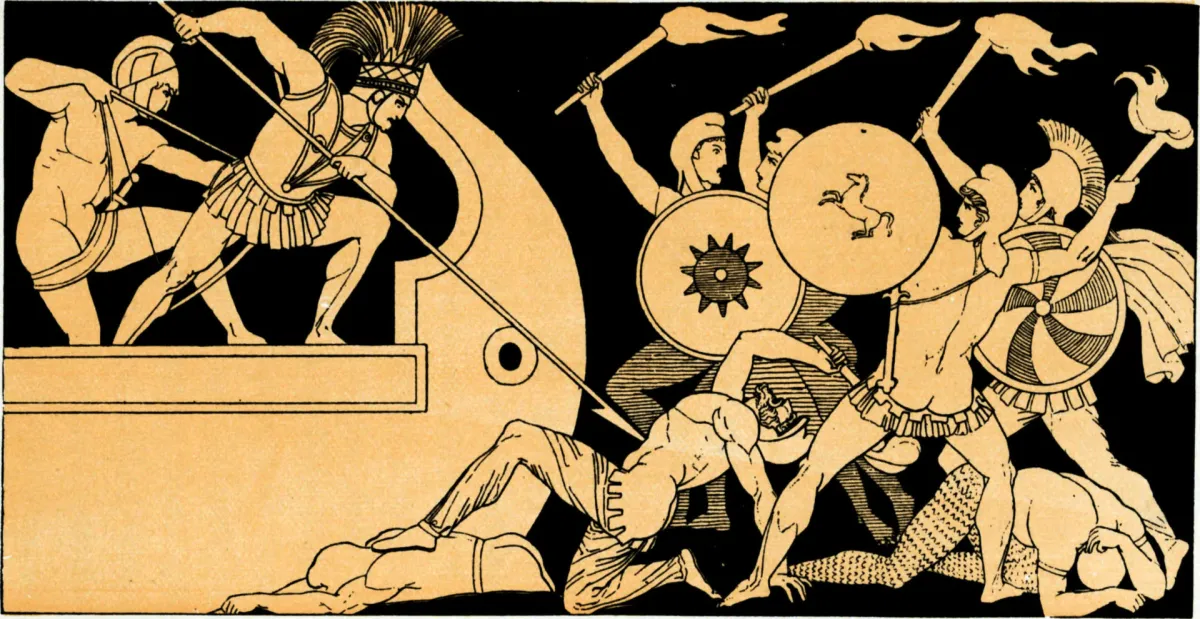
Together, the younger gods challenged the Titans.
The Titanomachy
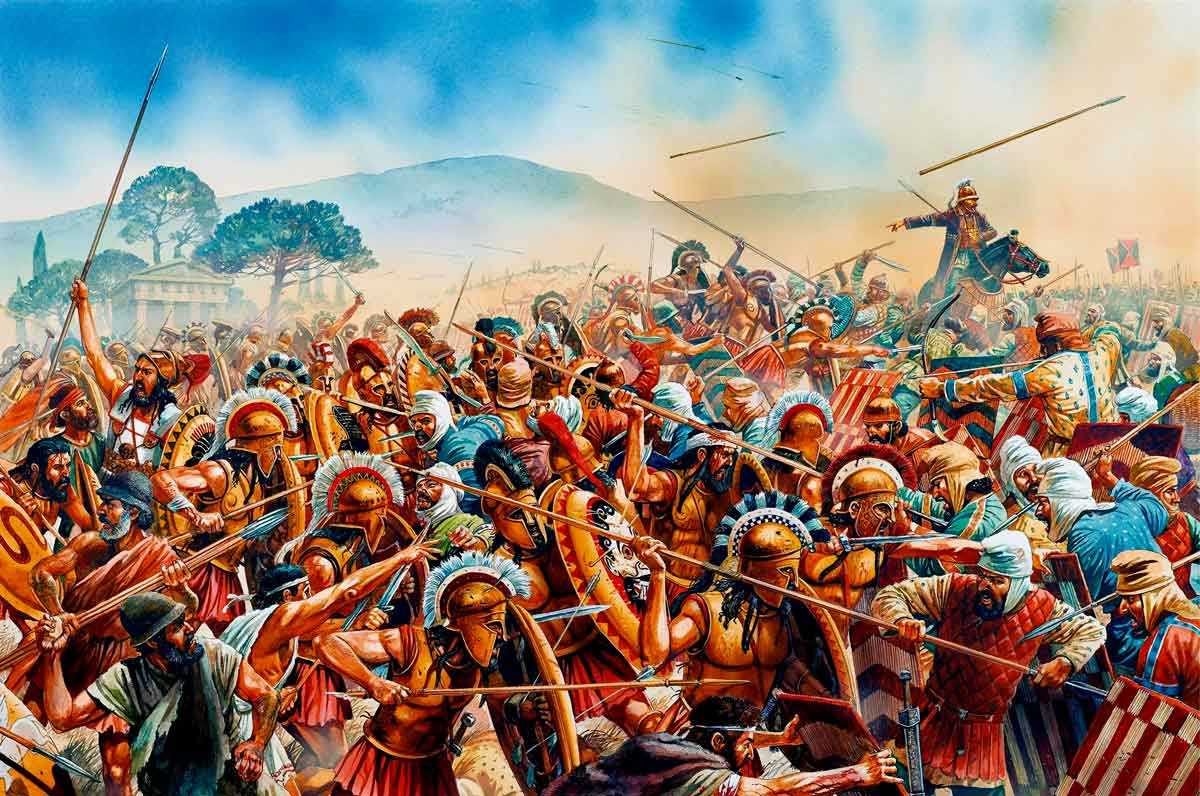
The war between the Titans and the younger gods became known as the Titanomachy.
Zeus eventually emerged as the leader of the new divine generation.
The victory established the Olympian order.
Afterward, Zeus, Poseidon, and Hades divided the cosmos.
Zeus received the heavens, Poseidon the sea, and Hades the Underworld.
The earth itself remained a shared realm rather than becoming the exclusive property of one brother.
Zeus and the Thunderbolt
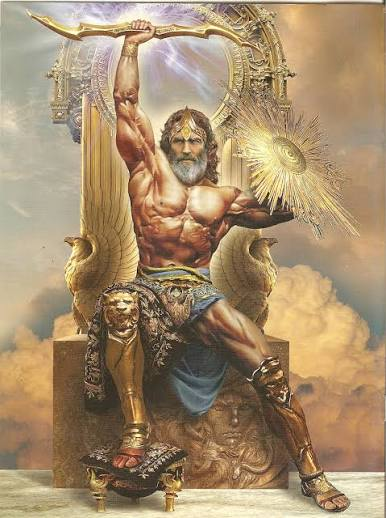
The thunderbolt became Zeus's most famous weapon.
Greek mythology connects his thunder and lightning with his authority over the heavens.
Ancient Greeks did not necessarily understand lightning scientifically in the modern sense. Instead, dramatic natural phenomena could be interpreted as signs of divine power.
Zeus's thunderbolt therefore represented both physical force and authority.
Zeus as King
Zeus was frequently described as king of the gods.
But Greek myths often show him participating in negotiations with other gods.
His authority existed within a complex divine family.
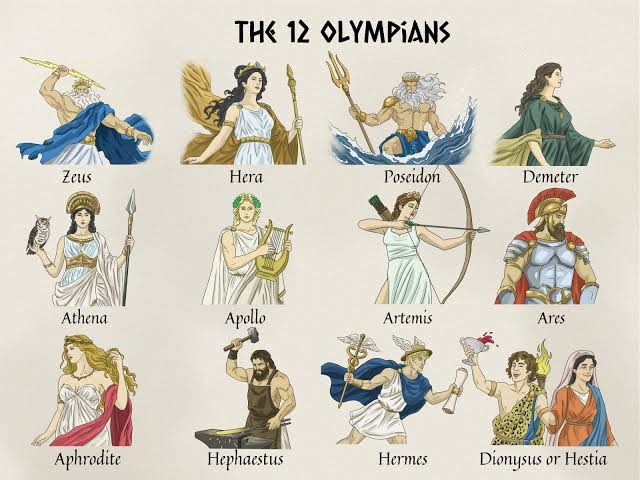
Hera, Athena, Poseidon, Apollo, Artemis, and other gods could disagree with him.
This makes Olympus resemble a political community filled with competing interests.
Zeus and Justice
Zeus was strongly associated with justice and law.
He protected oaths and hospitality and punished violations of sacred obligations.
One of the most important concepts associated with Zeus was xenia, the sacred relationship between host and guest.
A stranger arriving at someone's home could potentially fall under divine protection.
Abusing guests could therefore be viewed as a serious religious offense.
Zeus and Mortals
Zeus frequently interacted with humans.
He rewarded heroes, punished arrogance, protected certain cities, and fathered numerous children according to myth.
Heracles, Perseus, and other legendary figures were connected to Zeus through stories of divine-human relationships.
These myths helped connect heroic families with the divine world.
Zeus and Hera
Zeus's relationship with Hera is one of mythology's most complicated divine marriages.
Hera was his wife and queen.
Yet Zeus's many relationships with other women became central to numerous myths.
Hera frequently responded with anger toward Zeus's lovers and children.
These stories are often less about idealized marriage and more about power, legitimacy, jealousy, and family conflict.
Zeus and Athena
One of Zeus's most famous myths concerns Athena's unusual birth.
After swallowing Metis, Zeus developed a terrible headache.
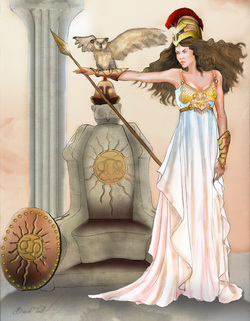
Hephaestus eventually split open Zeus's head, and Athena emerged fully armed.
The story symbolically connects Athena's wisdom and strategic intelligence with Zeus's authority.
Major Worship Centers
Zeus was worshipped throughout Greece.
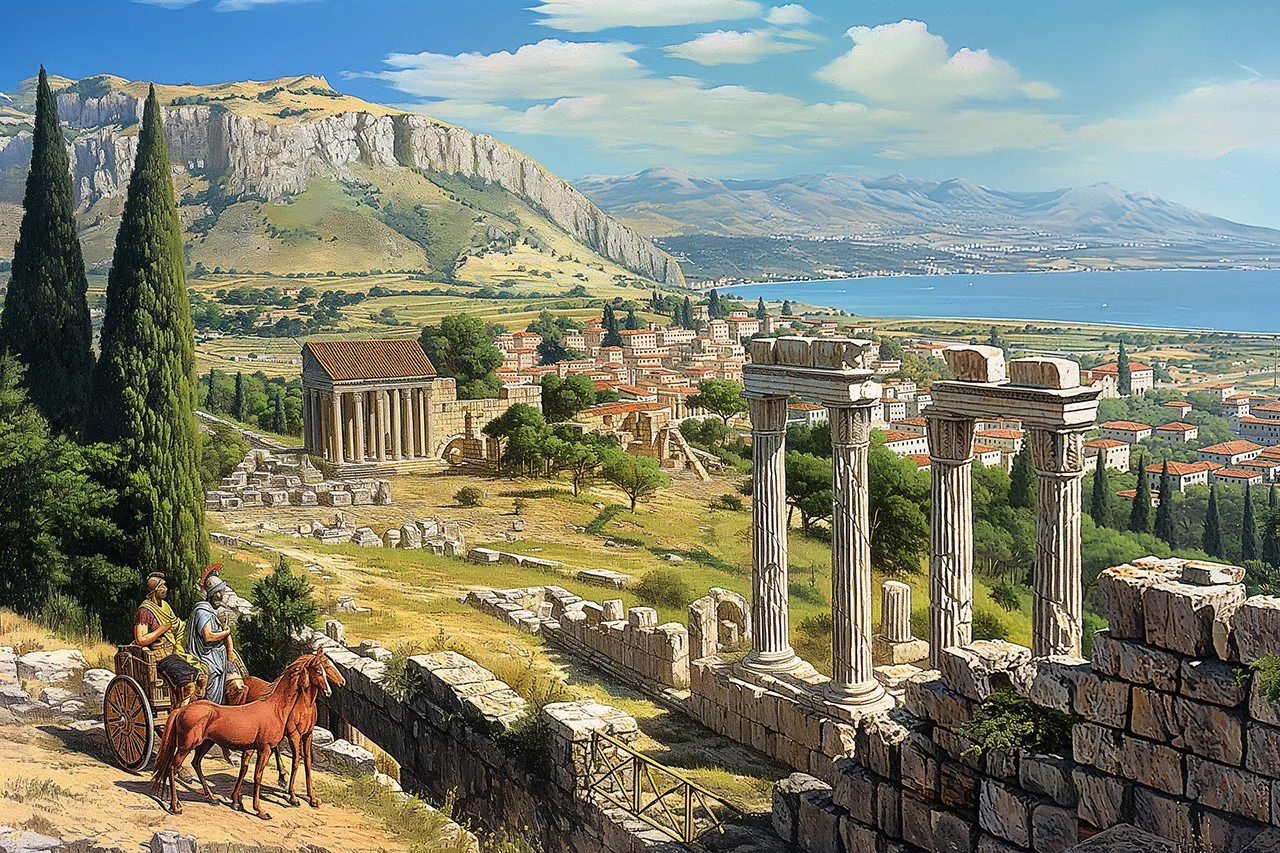
One of the most important sanctuaries dedicated to him was at Olympia.
Another major center was Dodona, where Zeus was worshipped through an ancient oracle tradition.
The Olympic Games were held in honor of Zeus at Olympia.
Zeus and the Olympic Games
The Olympic Games became one of the most famous religious festivals in the ancient Greek world.
Athletes competed in events including running, wrestling, boxing, and chariot racing.
Although the Games later became associated with athletic achievement, they were originally embedded in religious traditions.
The sanctuary at Olympia contained a monumental temple dedicated to Zeus.
Zeus and Prometheus
The myth of Prometheus demonstrates Zeus's role as defender of divine authority.
Prometheus steals fire for humanity and helps humans gain knowledge and technology.
Zeus punishes him severely.
The story reflects a recurring Greek mythological theme: the dangers and benefits of crossing divine boundaries.
Zeus Was More Than a Sky God
It is tempting to reduce Zeus to "the Greek god of thunder."
That description is incomplete.
His religious significance included:
kingship;
justice;
hospitality;
oaths;
weather;
authority;
social order;
divine governance.
He represented the structure of the cosmos itself.
Conclusion
Zeus became one of the central figures of Greek religion because his authority touched nearly every level of existence.
He commanded thunder, ruled the gods, protected sacred agreements, punished violations, and maintained the divine order.
At the same time, his myths portray him as complicated and sometimes contradictory.
That tension is one reason Zeus has remained such a powerful figure in mythology.
He was not simply the strongest god.
He represented the difficult question of what it means to possess power—and what responsibilities come with ruling the world.