Few families in Greek mythology suffered as much as the House of Atreus.
Generation after generation experienced betrayal, murder, revenge, and divine punishment.
The family included figures such as Atreus, Thyestes, Agamemnon, Menelaus, Orestes, and Electra.
Tantalus
The story can be traced back to earlier generations, including Tantalus.
Tantalus offended the gods through an act of horrifying impiety.
His punishment in the Underworld became legendary.
He stood near food and water but could never reach either.
The English word "tantalize" ultimately derives from his name.
Atreus and Thyestes
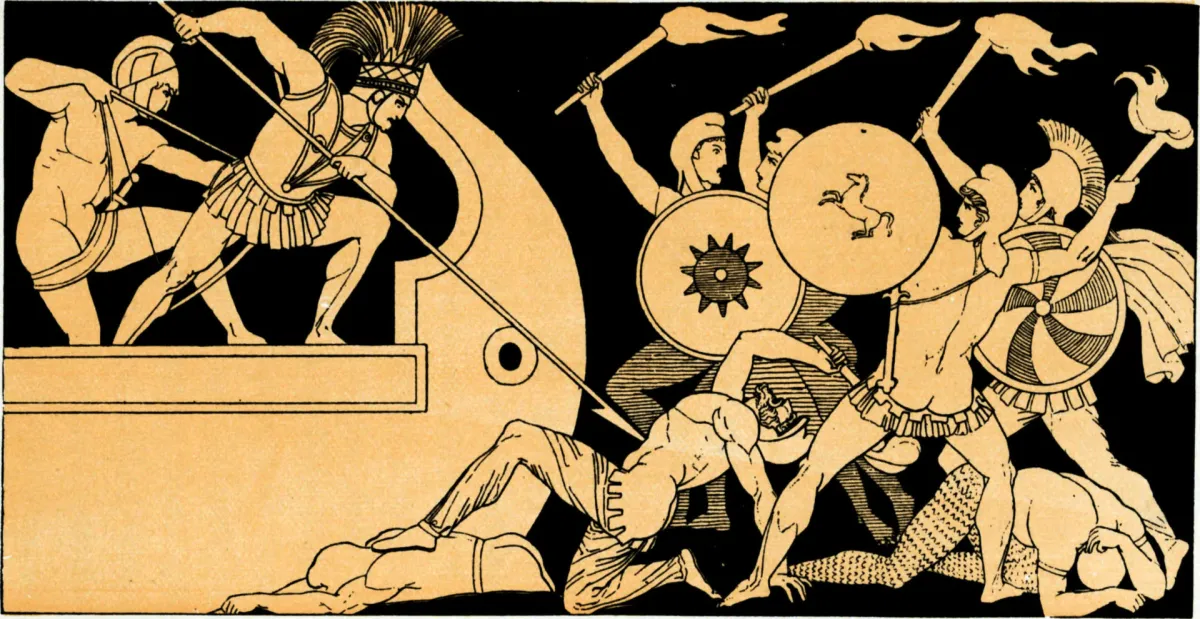
Atreus and Thyestes were brothers who fought over power.
Their conflict became extraordinarily violent.
Atreus eventually committed an act of revenge against Thyestes involving Thyestes' own children.
The horrifying story established a cycle of violence within the family.
Agamemnon
The next generation included Agamemnon, king of Mycenae or Argos depending on the tradition.
Agamemnon became commander of the Greek forces during the Trojan War.
Before the Greek fleet could sail, however, unfavorable winds prevented departure.
A tradition says that Agamemnon sacrificed his daughter Iphigenia to Artemis.
The story varies dramatically between ancient sources, including versions where Iphigenia was rescued or replaced with an animal.
Clytemnestra's Revenge
Agamemnon eventually returned from Troy.
His wife, Clytemnestra, killed him.
Her motives are presented differently across traditions.
They include revenge for Iphigenia and anger over Agamemnon's relationship with Cassandra.
Orestes
Agamemnon's son Orestes eventually killed Clytemnestra to avenge his father.
But matricide was itself a terrible crime.
The Erinyes, or Furies, pursued him.
Orestes therefore became trapped in the family's endless cycle of violence.
The Eumenides
Aeschylus' play Eumenides provides an important development.
Orestes is eventually judged at Athens.
Athena establishes a court to resolve the conflict.
The Furies are transformed into the Eumenides, often translated as the "Kindly Ones."
The story moves from personal revenge toward institutional justice.
Conclusion
The House of Atreus is more than a collection of shocking stories.
It explores one of the deepest themes of Greek tragedy:
How can a society escape a cycle of revenge?
The answer presented by Aeschylus is the replacement of endless personal retaliation with a formal system of justice.