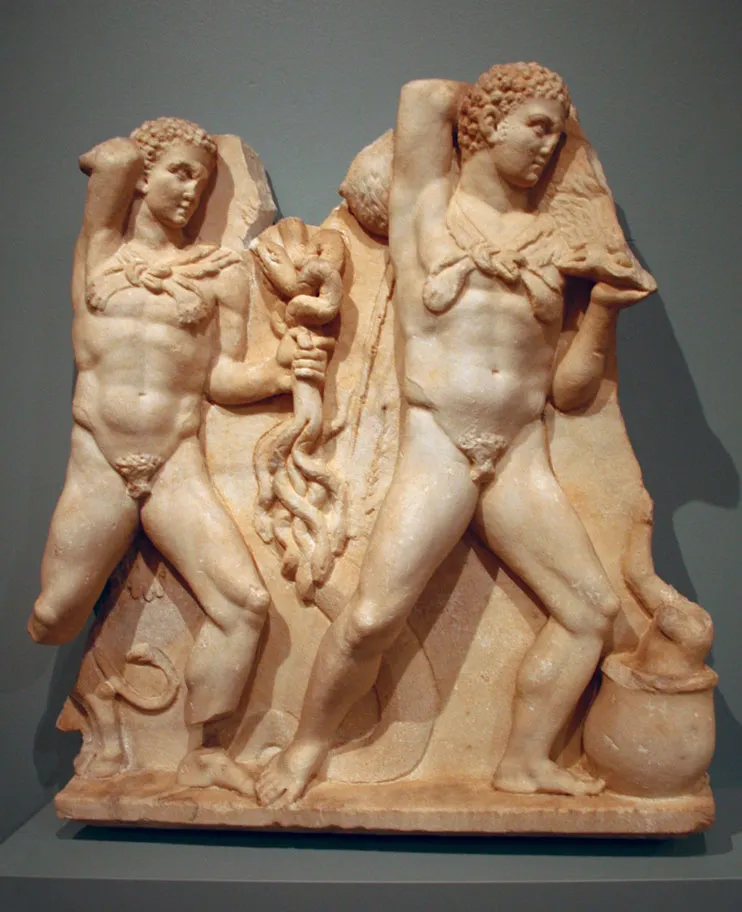
The Twelve Labors of Heracles represent the greatest sequence of adventures associated with the Greek hero.
They were not originally designed simply as heroic challenges.
They were connected to Heracles' need to atone for his terrible actions after being driven into madness.
Why Heracles Had to Perform the Labors
After killing his family during his madness, Heracles sought purification.
The oracle at Delphi directed him to serve King Eurystheus.
Eurystheus assigned him a series of increasingly difficult tasks.
Some ancient sources differ on exactly which tasks should be counted and how they should be described.
The traditional list eventually became twelve.
1. The Nemean Lion
The lion possessed an exceptionally tough hide.
Heracles eventually defeated it through physical strength rather than relying on ordinary weapons.
He later used the lion's own claws to cut its hide.
2. The Lernaean Hydra
The Hydra was a many-headed serpent.
When Heracles cut off one head, more could grow back.
With help from Iolaus, Heracles eventually defeated the creature.
3. The Ceryneian Hind
Heracles had to capture a sacred hind associated with Artemis.
Because killing it would anger the goddess, he needed to capture it alive.
4. The Erymanthian Boar
Heracles captured the enormous boar alive.
The task demonstrated that heroic success did not always require killing the opponent.
5. The Augean Stables
Heracles was ordered to clean the enormous stables of King Augeas.
Rather than doing the work manually, he redirected rivers through the stables.
This displayed his ability to solve problems through engineering.
6. The Stymphalian Birds
These dangerous birds were driven away using a special device or noise-maker associated with Athena in some traditions.
Heracles then killed many of them.
7. The Cretan Bull
Heracles captured the bull and brought it back.
The animal was later associated with the myths surrounding the Minotaur.
8. The Mares of Diomedes
Heracles was required to obtain the savage horses of King Diomedes.
The story involves violence, sacrifice, and the transformation of the horses' behavior.
9. The Belt of Hippolyta
Heracles traveled to the Amazons to obtain the belt of their queen, Hippolyta.
The circumstances of the encounter vary considerably between traditions.
10. The Cattle of Geryon
Heracles traveled to the western edge of the known world to obtain the cattle of the giant Geryon.
This became one of his longest journeys.
11. The Apples of the Hesperides
Heracles needed to acquire golden apples guarded by supernatural beings.
The episode involved Atlas and one of the cleverest solutions in the entire cycle.
12. Cerberus
The final labor required Heracles to enter the Underworld and capture Cerberus.
He eventually returned the creature alive.
From Mortal to Divine
Heracles' labors established his reputation throughout the Greek world.
His eventual death led to his transformation into a god.
The Twelve Labors therefore became more than a collection of adventures.
They formed the heroic journey of a suffering mortal who ultimately achieved divine status.