Ancient Greek philosophy was not confined to abstract questions about the universe.
Greek philosophers frequently discussed government, justice, citizenship, law, education, leadership, and the nature of political power.
Their ideas would influence political thought for thousands of years.
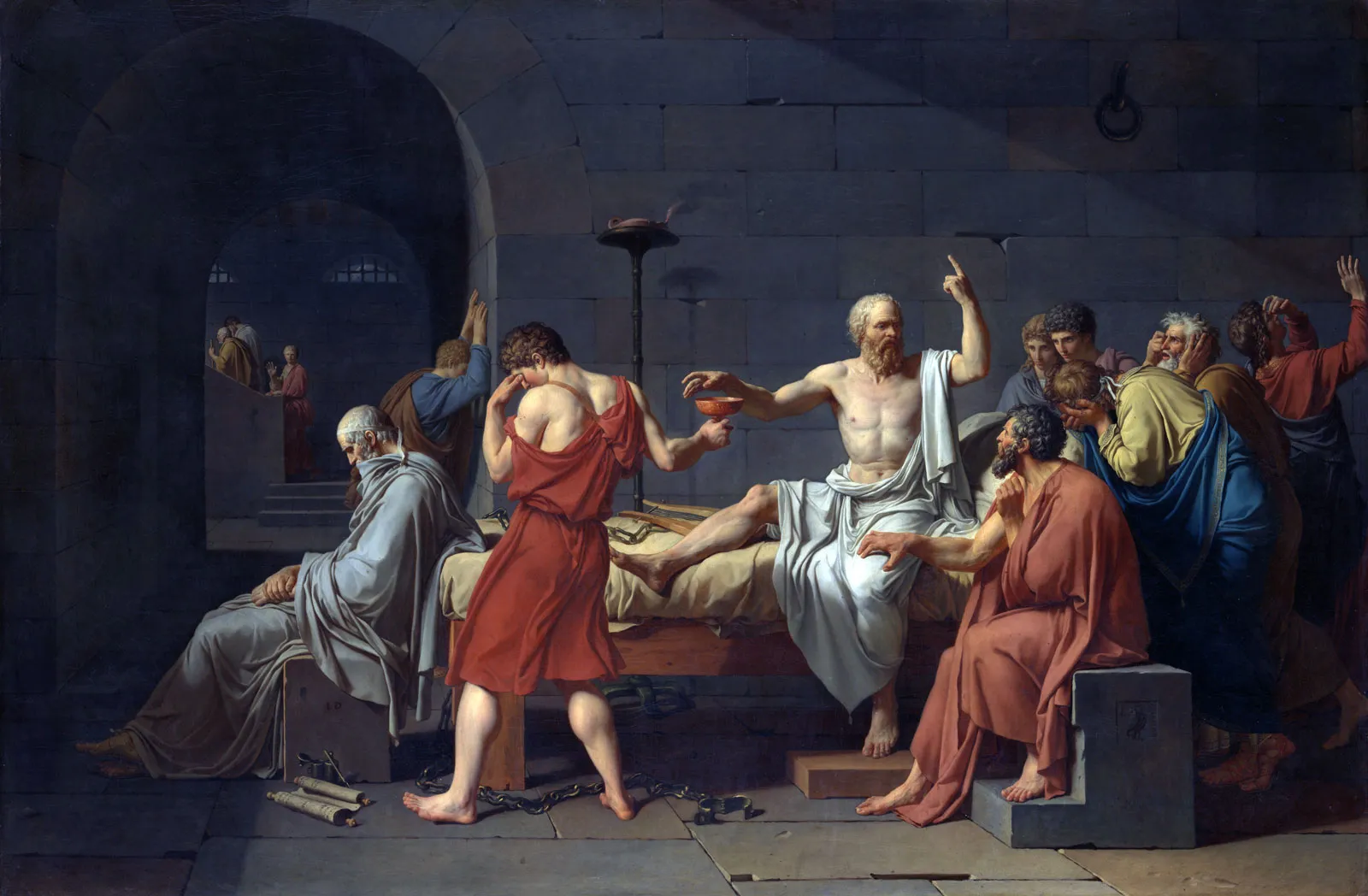
Socrates
Socrates did not leave written works.
Much of what we know about him comes from later writers, especially Plato and Xenophon.
Socrates challenged people to examine their assumptions.
His questioning could have political consequences because he encouraged citizens to think critically about justice and leadership.
Plato
Plato developed some of the most famous political ideas in ancient philosophy.
In the Republic, he explored the nature of justice and proposed an idealized political system governed by philosopher-kings.
Plato was skeptical of democracy as practiced in Athens.
He believed political leadership required knowledge and moral training.
Aristotle
Aristotle took a different approach.
Rather than focusing entirely on an ideal state, he studied existing constitutions.
He examined different forms of government, including monarchy, aristocracy, and democracy.
His political writings attempted to understand how institutions functioned in real societies.
Philosophy and Citizenship
Greek political philosophy was shaped by the city-state.
Citizens were expected to participate in public life.
Philosophers therefore asked:
What makes someone a good citizen?
What makes a government legitimate?
Should ordinary people govern?
What is justice?
What responsibilities does the state have?
The Sophists
Sophists played an important role in teaching rhetoric and argumentation.
Their students could learn how to persuade audiences in political and legal settings.
Critics accused some sophists of teaching people to win arguments rather than discover truth.
Nevertheless, their influence on education and political communication was significant.
Philosophy and Law
Philosophical debates about justice influenced how Greeks thought about law.
Is a law just because the state created it?
Can an unjust law be challenged?
Should individuals obey authority?
These questions remain relevant today.
Conclusion
Greek philosophy helped transform politics into a subject of systematic intellectual investigation.
Rather than accepting political institutions simply because they existed, philosophers asked whether those institutions were just, effective, and morally legitimate.
Their arguments did not create modern political systems directly.
But the questions they raised continue to influence discussions about democracy, leadership, law, citizenship, and justice.