For centuries, Helike existed in the imagination as one of the ancient world's lost cities.
Ancient writers described a catastrophic disaster in which the city was destroyed and seemingly swallowed by the earth and sea.
The story naturally invited comparisons with Atlantis.
But Helike was not Atlantis.
It was a real Greek city whose history, destruction, archaeological rediscovery, and subsequent legend reveal how natural disasters can become transformed into cultural memory.
At the same time, modern research has complicated the traditional story of Helike's destruction.
Helike Before the Disaster
Helike was located on the southwestern shore of the Gulf of Corinth in the region of Achaea.
It was an important Greek community with a long history.
The city was associated with Poseidon Helikonios, a regional form of the god of the sea and earthquakes.
Helike was also connected with the wider Achaean political world.
The archaeological record indicates that the area was occupied long before the Classical period.
The Disaster of 373 BCE
Traditional accounts place Helike's catastrophic destruction in 373 BCE.
Ancient writers described a major earthquake followed by flooding or inundation.
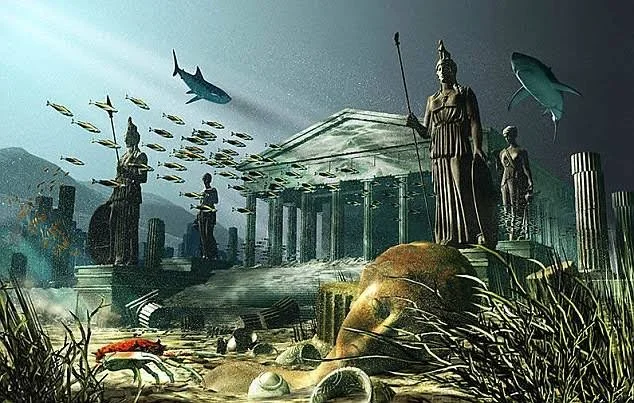
Later accounts claimed that the city disappeared beneath water.
The story became one of the most famous examples of an ancient city supposedly swallowed by the sea.
The connection to Poseidon made the disaster particularly powerful in Greek imagination.
A city devoted to the god of earthquakes and the sea had seemingly been destroyed by those very forces.
The Atlantis Comparison
The comparison with Atlantis comes from the similarities between the two stories:
a prosperous Greek-associated city;
catastrophic destruction;
disappearance;
association with the sea;
long-term fascination.
Some researchers have proposed that the memory of Helike may have contributed to later stories about Atlantis.
But this remains speculative.
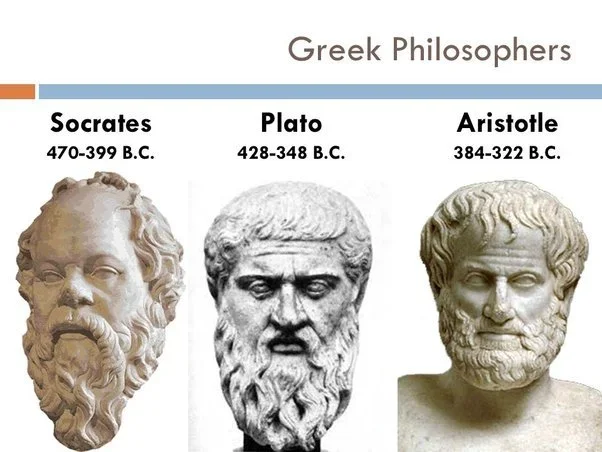
Plato's Atlantis story appears in the Timaeus and Critias, and its relationship to historical events is heavily debated.
There is no established evidence that Plato directly based Atlantis on Helike.
Therefore, "Greece's Atlantis" works well as a provocative title, but Helike should not be presented as the historical Atlantis.
The Traditional Account
Ancient writers describe a dramatic catastrophe.
According to later accounts, the earthquake struck at night.
The sea inundated the area.
Buildings were destroyed.
The city became difficult to locate.
The story gained a legendary quality.
Later travelers reportedly encountered evidence of the submerged city.
The image of ruins beneath water became central to Helike's identity.
Archaeological Search
The search for Helike became a major archaeological challenge.
Researchers had to consider changing coastlines, earthquakes, sedimentation, river systems, and the possibility that the ancient shoreline differed substantially from the modern landscape.
Modern archaeological work eventually identified remains associated with ancient Helike.
The Helike Project reports that excavations beginning in the late twentieth century eventually revealed evidence of the Classical city beneath later sediments.
The discoveries were especially important because they demonstrated that the lost city was not simply a literary invention.
A Bronze Age Helike
One of the most remarkable discoveries was the identification of an earlier settlement in the same general region.
The Helike Project reports evidence of an Early Bronze Age settlement that had also been affected by geological processes.
This demonstrates that the region had a long history of environmental instability.
The Gulf of Corinth is tectonically active.
Earthquakes, coastal changes, subsidence, and sedimentation can dramatically alter landscapes.
The Problem of the "Sunken City"
This is where modern research becomes particularly interesting.
A traditional interpretation imagines Helike as a city permanently submerged beneath the sea.
But geological and archaeological evidence suggests that the reality may have been more complicated.
Some recent scholarship has challenged the traditional account of total destruction and permanent submergence.
A 2021 reassessment argued that geoarchaeological evidence does not support a simple scenario in which the entire city was permanently swallowed by a tsunami. It also pointed to evidence suggesting continued activity in the region after 373 BCE.
This illustrates why archaeological legends must be examined against physical evidence.
Earthquakes and Tsunamis
The Gulf of Corinth is one of the most seismically active regions of Greece.
Earthquakes can trigger multiple processes.
A strong earthquake may cause:
structural collapse;
ground deformation;
landslides;
coastal subsidence;
sediment movement;
water displacement;
local flooding.
Therefore, reconstructing an ancient disaster requires more than identifying an earthquake.
Researchers must determine exactly how the landscape responded.
Helike and Collective Memory
Whether every detail of the traditional story is correct is less important than understanding why the story survived.
Disasters often become part of cultural memory.
A catastrophic event can be retold for generations.
Over time, factual memories may become combined with religious interpretation, moral storytelling, political interests, and local legend.
Helike's story illustrates this process.
A natural disaster became associated with divine punishment.
The city became a symbol of destruction.
Eventually, the lost city became part of wider discussions about Atlantis.
Poseidon and Divine Punishment
Ancient writers connected Helike's destruction with Poseidon.
The religious interpretation reflected ancient Greek ideas about the relationship between divine power and human behavior.
If a community offended a god, disaster could be interpreted as punishment.
Modern geology provides different explanations.
But historians should not simply dismiss the religious interpretation as "primitive."
For ancient communities, religious explanations were part of how the world was understood.
The same earthquake could simultaneously be a physical event and a religious event.
The Importance of Archaeological Evidence
Helike demonstrates why archaeology is essential.
Written sources can preserve memories.
But landscapes preserve physical evidence.
Sediments can reveal environmental changes.
Buildings can reveal destruction patterns.
Coins can reveal economic activity.
Ceramics can help establish chronology.
Buried structures can reveal settlement organization.
Together, these sources can confirm, modify, or challenge literary traditions.
Was Helike Atlantis?
The safest historical answer is that Helike was a real ancient Greek city, while Atlantis belongs to a philosophical-literary tradition created by Plato.
The two share themes of destruction and disappearance, but there is no established archaeological basis for identifying them as the same place.
The comparison is nevertheless useful because both stories demonstrate humanity's fascination with lost civilizations.
Why Helike Matters Today
Helike is particularly valuable because it connects archaeology with environmental history.
Its story raises questions about:
earthquakes;
tsunamis;
coastal change;
archaeological preservation;
oral tradition;
religious interpretation;
historical memory.
It also demonstrates that archaeological landscapes are dynamic.
A city does not necessarily disappear because its inhabitants simply vanish.
It may be buried.
Its coastline may move.
Sediments may accumulate.
Rivers may change course.
Later communities may build over it.
Conclusion
Helike is one of Greece's most fascinating lost cities precisely because its story lies between history and legend.
The city was real.
The region experienced catastrophic geological events.
Ancient writers preserved dramatic accounts of its destruction.
Archaeologists later rediscovered evidence of the settlement.
Modern geological research has complicated the traditional narrative.
For these reasons, Helike should not simply be called "the Greek Atlantis."
It is more interesting than that.
Helike demonstrates how a real city can become legendary—and how archaeology can gradually separate historical evidence from centuries of storytelling.
Its story ultimately reminds us that the ancient world was not static.
Cities could disappear.
Landscapes could transform.
Memories could evolve.
And sometimes, beneath layers of sediment and legend, archaeology can recover fragments of the real world that inspired the stories.