• Home page/Blog
    • Ancient Greece
    • Archaeology
    • Mythology
    • Architecture
    • Artefact
    • Inventions
    • Tourism
    • News
    • Science
    • General
    • Weird
    • Recipes
    • Blog
  • About
  • Contact
Menu

GHD

  • Home page/Blog
  • History
    • Ancient Greece
    • Archaeology
    • Mythology
  • Art
    • Architecture
    • Artefact
    • Inventions
  • Travel
    • Tourism
  • Other
    • News
    • Science
    • General
    • Weird
    • Recipes
    • Blog
  • About
  • Contact
No results found
pelasgians.jpg

Pelasgians: The oldest inhabitants of ancient Greece

December 12, 2020

The name Pelasgians was used exclusively by the ancient Greek writers, who referred to those populations who considered themselves to be ancestors of the Greeks or "pre-Greeks". Some, especially later, use it to describe purely Greek populations.

Modern historians, archaeologists and linguists have tried to associate the "Pelasgians", a rather vague term, in terms of content, with different cultures, language groups etc., but this is an unsolved "problem". The constant elaboration of Greek traditions and myths makes it difficult to separate clear "memories of historical events" from fiction regarding the information given by ancient writers about the Pelasgians.

The oldest inhabitants of Greece were called Pelasgians, like all the tribes that inhabited Greece in prehistoric times.
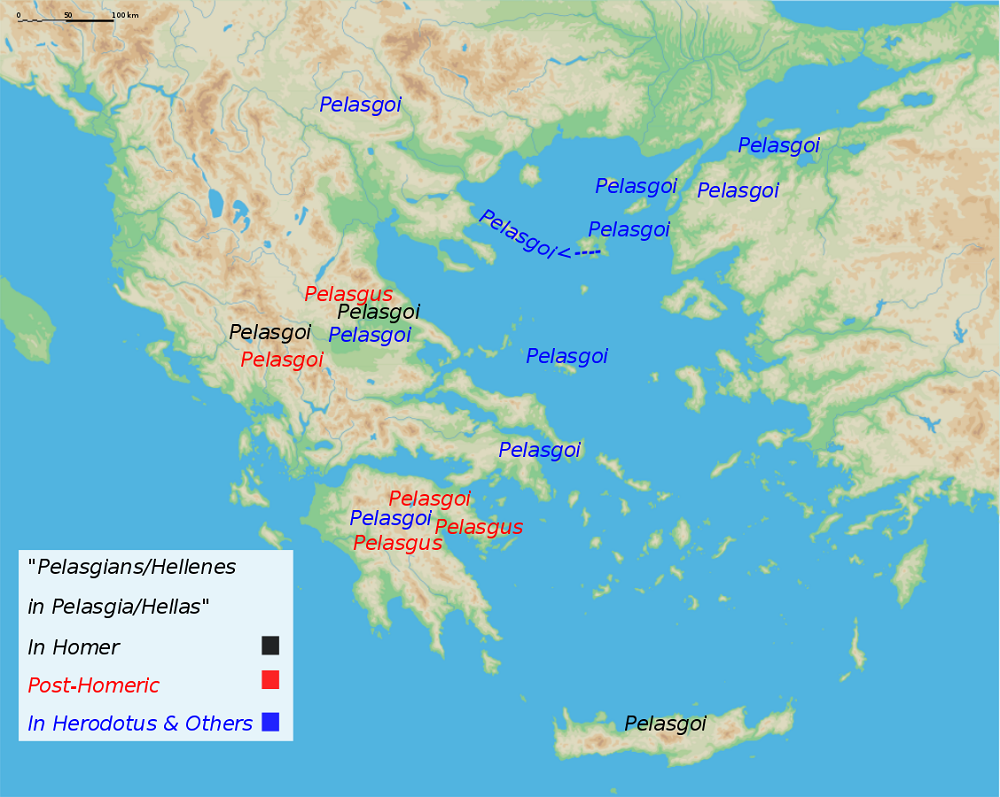
Map of Pelasgians and Pelasgus.

Map of Pelasgians and Pelasgus.

Strabo mentions that the Pelasgian tribe lived in the Thessaly region called Pelasgian Argos and was later called Pelasgiotida.

The Pelasgian is mentioned as the ancestor of the Pelasgians. Numerous legends and traditions are connected with his name.

One of them says that Pelasgos was the first man to emerge from the earth and thus became the ancestor of mankind. In Arcadia, where this tradition existed, it was believed that the son of Pelasgos from the nymph Kyllini was Lycaon, the mythical king of Arcadia. Originally, it was named Pelasgia after its ancestor.

Pelasgos was also mentioned as the founder of Argos in the Peloponnese, son of Aginoras and father of Larissa.
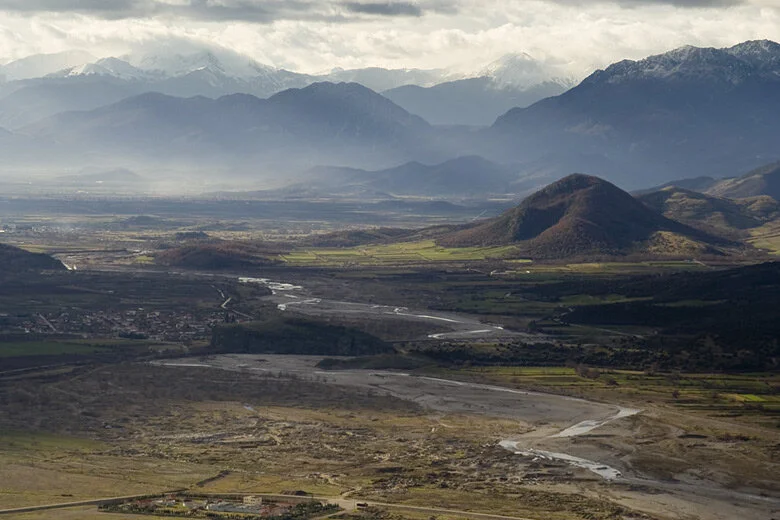
Plain of Thessaly, to the west of classical Pelasgiotis, but in the original range of the Pelasgians. The Pindus Mountains are visible in the background. The river is the Peneus.

Plain of Thessaly, to the west of classical Pelasgiotis, but in the original range of the Pelasgians. The Pindus Mountains are visible in the background. The river is the Peneus.

According to another source, he was the son of Poseidon and the nymph Larissa, the brother of Achaeus and Fthios.

Other sources say that he was the mythical ancestor of the Pelasgians of Thessaly or that he was the son of Irestor and the grandson of Ekvasus, a settler from Parrasia, in Arcadia.

In Ancient Greece
← Newer Posts Older Posts →
Featured
image_2026-09-01_010508909.png
September 9, 2026
Ancient Greek Boat Races and Festivals
September 9, 2026
Read more →
September 9, 2026
image_2026-09-01_121730264.png
September 9, 2026
Greek Philosophical Schools and Their Founders
September 9, 2026
Read more →
September 9, 2026
image_2026-09-01_121825407.png
September 9, 2026
The Influence of the Seasons on Greek Religion
September 9, 2026
Read more →
September 9, 2026
image_2026-09-01_121929012.png
September 9, 2026
How Ancient Greeks Built Wells
September 9, 2026
Read more →
September 9, 2026
image_2026-09-01_122015637.png
September 9, 2026
The Process of Becoming a Greek Citizen
September 9, 2026
Read more →
September 9, 2026
image_2026-09-01_010400392.png
September 9, 2026
The Role of Grandparents in Greek Families
September 9, 2026
Read more →
September 9, 2026
image_2026-09-01_010306396.png
September 9, 2026
How Greeks Greeted One Another
September 9, 2026
Read more →
September 9, 2026
image_2026-09-01_010203925.png
September 9, 2026
The Ritual of Animal Sacrifice Explained
September 9, 2026
Read more →
September 9, 2026
SEE MORE

Powered by ©GreeceHighDefinition / Privacy Policy