How Ancient Greeks Used Shadows to Tell Time Thousands of Years Before Watches
Before mechanical clocks, digital watches, and smartphones, human beings had to rely on the movement of nature itself to measure time.
The Sun was one of the most dependable clocks available.
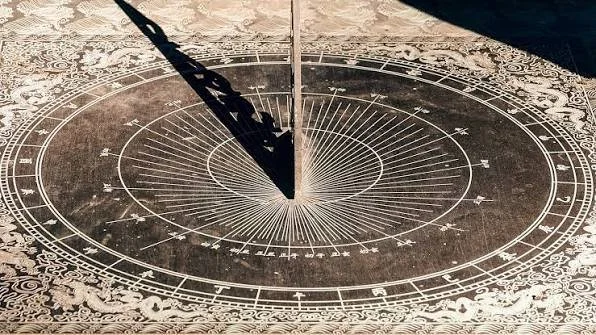
Ancient Greeks developed sophisticated sundials, instruments that used shadows to indicate the position of the Sun.
But these devices were more than simple outdoor clocks.
They required an understanding of geometry, celestial motion, latitude, and the apparent movement of the Sun across the sky.
The Basic Principle
A sundial works because sunlight casts a shadow from a fixed object.
As Earth rotates, the Sun appears to move across the sky.
The shadow changes direction.
A carefully designed dial can mark these positions.
The central projecting element is often called a gnomon.
Depending on the design, the gnomon may be a vertical rod, angled rod, or another structure designed to cast a measurable shadow.
Why a Simple Stick Wasn't Enough
A stick can show that the Sun is moving.
But it cannot automatically provide accurate clock time.
The relationship between shadow length, shadow direction, and time depends on:
Latitude.
Season.
Time of year.
Orientation of the instrument.
The geometry of Earth's rotation.
Greek mathematicians understood enough geometry to develop more sophisticated systems.
Sundials and Greek Mathematics
Greek geometry was fundamental to astronomical instrument design.
The same mathematical traditions used to study triangles and circles could be applied to shadows.
A sundial therefore represents the practical application of mathematical astronomy.
It transforms celestial movement into a readable scale.
Seasonal Differences
One major problem is that the Sun does not follow exactly the same apparent path throughout the year.
At different seasons:
Sunrise and sunset positions change.
Day length changes.
Solar altitude changes.
Shadows change length.
Therefore, a sundial cannot simply divide the day into identical modern hours without adjustment.
Ancient systems often worked with seasonal hours, in which daylight was divided into portions.
This meant an “hour” during summer could differ in duration from an “hour” during winter.
Greek Water Clocks and Sundials Together
Sundials had an obvious limitation.
They did not work at night.
They were also less useful during heavy cloud cover.
Greek societies therefore also developed water clocks, known as clepsydrae.
The two systems complemented each other.
The Sun could establish daytime measurements.
Water could provide a continuous flow-based measurement independent of sunlight.
Sundials as Scientific Instruments
A sophisticated sundial could also serve astronomical purposes.
It could help determine:
Solar position.
Seasonal changes.
Approximate time.
Orientation.
This made the instrument valuable to astronomers and mathematicians.
Why Shadows Were So Important
A shadow is one of nature's simplest measuring tools.
You need only:
A light source.
A fixed object.
A surface.
Yet with geometry, the shadow becomes a scientific instrument.
The Greeks recognized this principle repeatedly.
They used shadows not only to tell time but also to reason about Earth's size and celestial geometry.
The Legacy of the Greek Sundial
Modern clocks are enormously more precise.
But the basic principle remains fascinating.
Ancient Greeks looked at something everyone could see—the movement of shadows—and turned it into mathematics.
The shadow was not merely the absence of light.
It was a measurement.
And for thousands of years, that measurement helped humanity organize time.