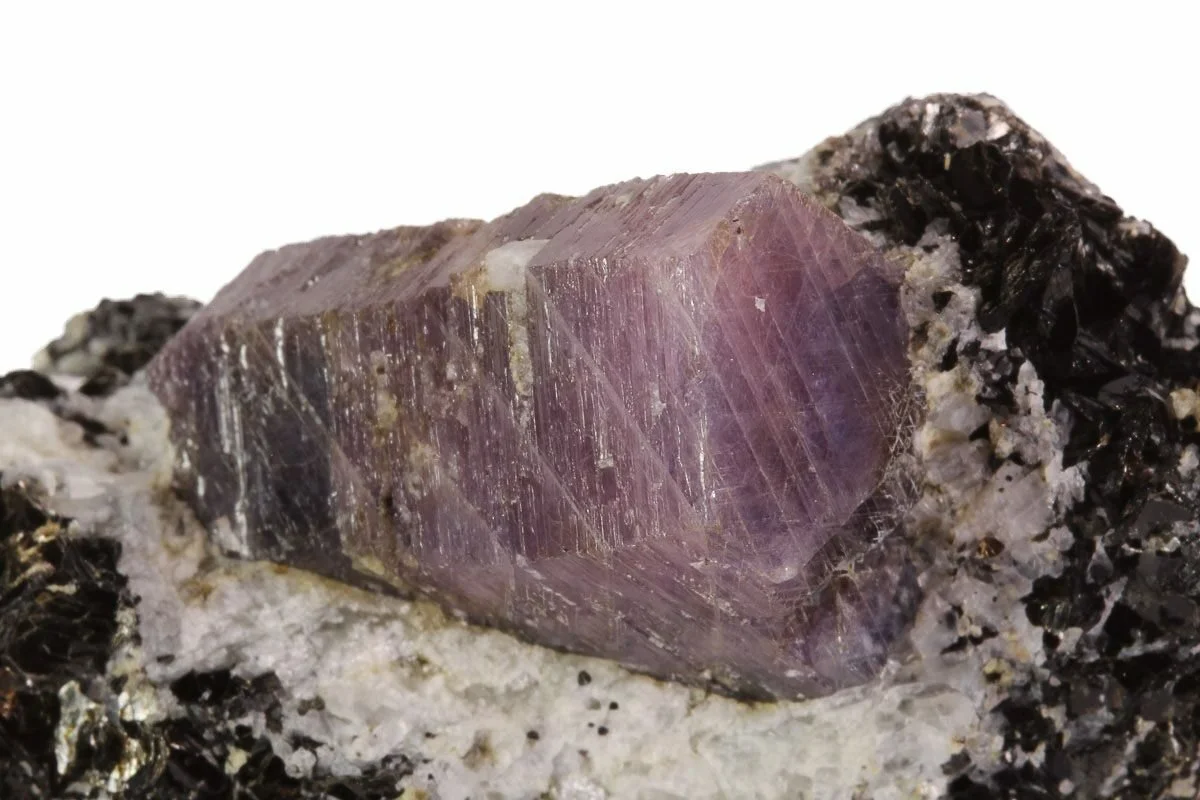
Corundum, metamorphic rocks, and the geological conditions required to create precious gemstones.
The Possibility of Blue Hidden in Stone
Sapphire is a variety of the mineral corundum, best known for its blue gemstones but also found in other colors. Its hardness, durability, and optical qualities have made it one of the most recognized precious stones.
The idea of tiny sapphire flecks hidden within the schists of the Rodopi region suggests a geological puzzle. Could metamorphic rocks preserve small corundum crystals that have escaped notice? The answer depends on local chemistry and geological history, and no specific sapphire occurrence should be claimed without reliable mineralogical evidence.
How Sapphire Forms
Corundum consists primarily of aluminium oxide. Its formation is favored in environments with sufficient aluminium and relatively little available silica, because the presence of abundant silica encourages the formation of other aluminium-bearing minerals.
Corundum can occur in certain metamorphic rocks, in rocks formed through particular igneous processes, and in sedimentary deposits where resistant crystals accumulate after weathering.
Blue coloration commonly results from trace elements, especially iron and titanium, interacting within the crystal structure. Other trace elements can produce different colors.
The conditions required for gem-quality sapphire are specific. The presence of metamorphic rock alone does not establish that corundum formed there, and corundum itself is not necessarily gem quality.
The Rodopi's Metamorphic Landscape
The Rodopi mountain region spans parts of northern Greece and neighboring southeastern Europe. Its geological history includes metamorphism, deformation, and tectonic processes that have produced a range of complex rock formations.
Schist is a metamorphic rock characterized by a foliated structure, often caused by the alignment of platy or elongated minerals. Different schists have different chemical compositions and mineral assemblages, depending on their original material and the conditions they experienced.
To assess the possibility of corundum, geologists would examine the specific schist units, their chemistry, and the metamorphic conditions recorded by their minerals. A broad regional description cannot substitute for this site-level evidence.
Distinguishing Sapphire from Other Minerals
Small blue grains in rock can be difficult to identify by appearance alone. Several minerals and mineral aggregates may show blue coloration, and weathering or lighting can make visual identification unreliable.
Researchers would use microscopy, hardness and optical measurements, chemical analysis, and crystallographic methods to establish whether a specimen is corundum. They would also assess whether its composition and clarity support a gemstone classification.
The word “flecks” may describe tiny crystals that have no commercial value. Scientific significance, however, does not depend on whether a mineral can be cut into a gemstone.
From Geological Clue to Verified Discovery
A confirmed sapphire occurrence could help researchers understand the metamorphic history of a rock unit or reveal a previously undocumented mineral association. Establishing that significance would require precise locations, verified specimens, and a clear explanation of the geological setting.
Until such evidence exists, sapphire flecks in Rodopi schists should be treated as a hypothesis for investigation. The most useful question is not whether the mountain hides treasure, but whether its rocks contain the chemical and structural conditions necessary for corundum to form.