• Home page/Blog
    • Ancient Greece
    • Archaeology
    • Mythology
    • Architecture
    • Artefact
    • Inventions
    • Tourism
    • News
    • Science
    • General
    • Weird
    • Recipes
    • Blog
  • About
  • Contact
Menu

GHD

  • Home page/Blog
  • History
    • Ancient Greece
    • Archaeology
    • Mythology
  • Art
    • Architecture
    • Artefact
    • Inventions
  • Travel
    • Tourism
  • Other
    • News
    • Science
    • General
    • Weird
    • Recipes
    • Blog
  • About
  • Contact
No results found
ancient-greek-statues-vibrant-colors_2.jpg

Video Presents How The Ancient Greek Statues Really Looked | How The Ancient Greek Statues Really Looked? Possibly Pretty Vibrant With Various Colors

November 14, 2018

How The Ancient Greek Statues Really Looked? Possibly Pretty Vibrant With Various Colors

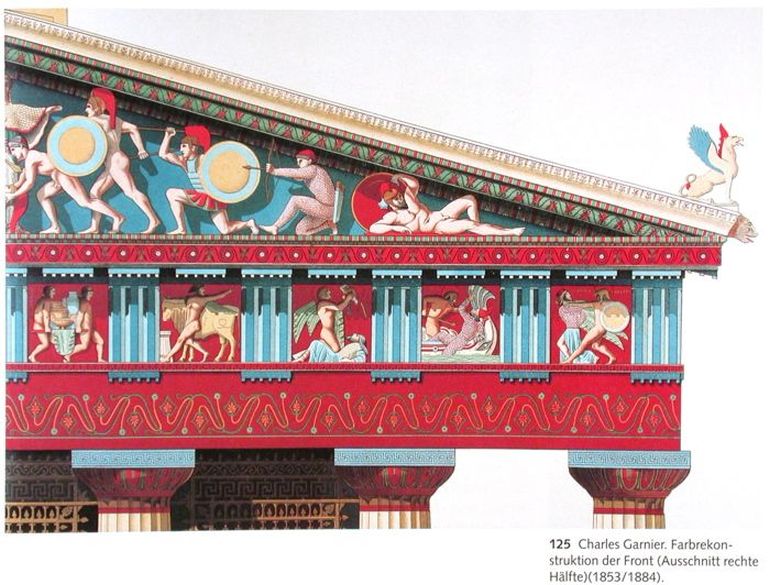
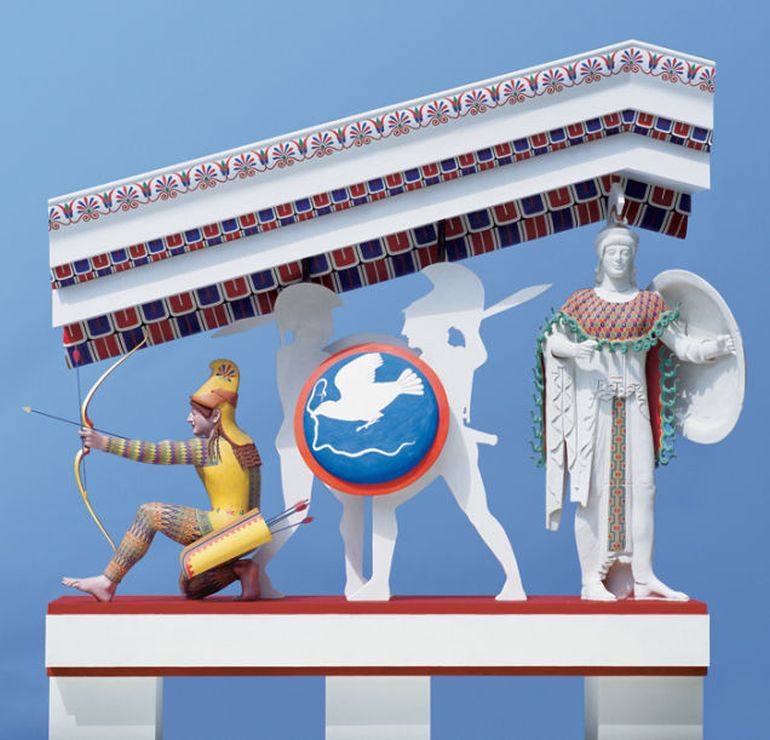
To most of us history enthusiasts, the phrase Classical Greece brings forth reveries of temples, sanctuaries and sculptures in their distinctly white marble facades. This notion perhaps has to do with the numerous extant ancient Greek specimens of structures (like the famed Parthenon), along with statues preserved in their ‘achromic’ forms in various museums around the globe. But when it comes to historicity, it was probably the opposite that was true. In essence, most tangible artworks and architectural feats (including the Parthenon) of ancient Greece probably showcased their kaleidoscopic flair with brightly painted facades.

As Matthew Gurewitsch from the Smithsonian Magazine, wrote back in 2008 –

To us, classical antiquity means white marble. Not so to the Greeks, who thought of their gods in living color and portrayed them that way too. The temples that housed them were in color, also, like mighty stage sets. Time and weather have stripped most of the hues away. And for centuries people who should have known better pretended that color scarcely mattered.

Now from the literary perspective, the Euripides play from 5th century BC clearly mentions (with the fictional narrative coming from Helen of Troy) how wiping a color off a statue is akin to disfiguring its craftsmanship. And in our modern context, technology has rather complemented such a colorful ‘past’ of the Greeks. To that end, German archaeologist Vinzenz Brinkmann has made use of various scientific techniques ranging from ultraviolet light, high-intensity ‘raking light’ to infrared and X-ray spectroscopy, to discern and reconstruct many of the multifarious hues and colors prevalent in ancient Greek statues.
ancient-greek-statues-vibrant-colors_3.jpg
ancient-greek-statues-vibrant-colors_4.jpg
ancient-greek-statues-vibrant-colors_5.jpg
ancient-greek-statues-vibrant-colors_3.jpg ancient-greek-statues-vibrant-colors_4.jpg ancient-greek-statues-vibrant-colors_5.jpg

Many of his color sources have a ‘tinge’ of authenticity to them, with the use of organic pigments mirroring the propensity of ancient Greek craftsmen, painters and sculptors. For example, Brinkmann derived his “green from malachite, blue from azurite, yellow and ocher from arsenic compounds, red from cinnabar, black from burned bone and vine.” The first of these reconstructions made their debut in an exhibition held at the Glyptothek museum in 2003. -Source: realmofhistory.com

Watch the video:
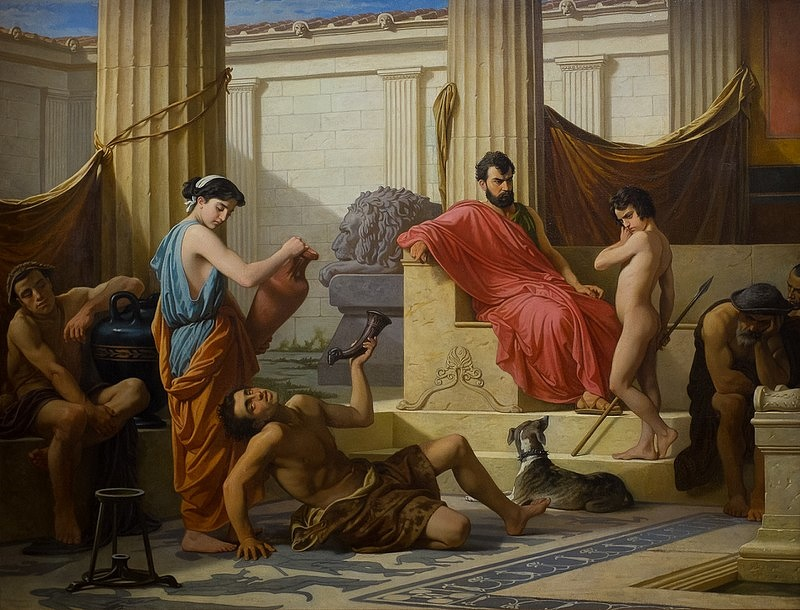
Using ultraviolet and raking light, archaeologist Vinzenz Brinkmann examines marble sculptures of Athena and Paris from the Temple of Aphaia, now in the Glyptothek in Munich. In the process, he reveals examples of physical evidence used to inform the recreations of the original color design and paint scheme of the statues.
← Crete’s Late Minoan tombs points way to early European migrationGreek Mythology: The Dispute Between Athena and Poseidon →
Featured
image_2026-05-04_222128667.png
May 5, 2026
How Alexander the Great Revolutionized Warfare
May 5, 2026
May 5, 2026
image_2026-05-04_221942200.png
May 5, 2026
The Defense of Thermopylae: Why It Was So Effective
May 5, 2026
May 5, 2026
image_2026-05-04_221852342.png
May 5, 2026
The Spartan Krypteia: A Deadly Training Program
May 5, 2026
May 5, 2026
image_2026-05-04_221732911.png
May 5, 2026
The Role of Military Alliances in Greek History
May 5, 2026
May 5, 2026
image_2026-05-04_221533994.png
May 5, 2026
The Siege of Syracuse: Athens’ Failed Military Operation
May 5, 2026
May 5, 2026
image_2026-05-04_221426739.png
May 5, 2026
Greek Naval Tactics: The Power of the Athenian Fleet
May 5, 2026
May 5, 2026
image_2026-05-04_221350329.png
May 5, 2026
The Use of Psychological Warfare in Ancient Greece
May 5, 2026
May 5, 2026
image_2026-05-04_221301649.png
May 4, 2026
How the Spartans Trained Their Soldiers
May 4, 2026
May 4, 2026
SEE MORE

Powered by ©GreeceHighDefinition / Privacy Policy