• Home page/Blog
    • Ancient Greece
    • Archaeology
    • Mythology
    • Architecture
    • Artefact
    • Inventions
    • Tourism
    • News
    • Science
    • General
    • Weird
    • Recipes
    • Blog
  • About
  • Contact
Menu

GHD

  • Home page/Blog
  • History
    • Ancient Greece
    • Archaeology
    • Mythology
  • Art
    • Architecture
    • Artefact
    • Inventions
  • Travel
    • Tourism
  • Other
    • News
    • Science
    • General
    • Weird
    • Recipes
    • Blog
  • About
  • Contact
No results found
b_roman.jpg

Divers Discover Ancient Shipwreck in Cyprus

June 27, 2019

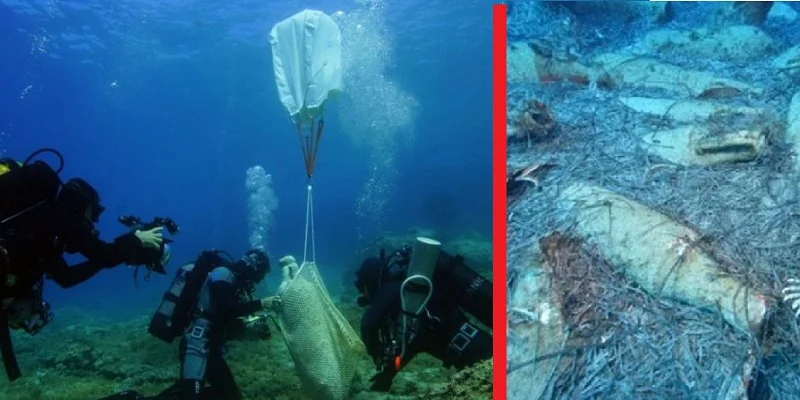
Cyprus has found its first undisturbed Roman shipwreck complete with ancient cargo off its southern coast, the antiquities department said Thursday, noting the discovery could illuminate regional trading history.

"The site is a wreck of a Roman ship, loaded with transport amphorae, most probably from Syria and Cilicia," the antiquities department said in a statement.

An amphora is a narrow necked Roman jar designed to hold liquid products including oil and wine.

"It is the first undisturbed Roman shipwreck ever found in Cyprus, the study of which is expected to shed new light on the breadth and the scale of seaborne trade between Cyprus and the rest of the Roman provinces of the eastern Mediterranean," it added.

The wreck is located off the Mediterranean island's southeast coast, near the popular beach resort of Protaras.

It was spotted by volunteer divers from a University of Cyprus archaeological research team.

The antiquities department said it had secured full funding for a preliminary investigation, which would take place as soon as possible.

The statement said a team is working on the documentation and protection of the site.

Cypriot waters have already proved rich for archaeological investigation in recent years.

A wreck dating back to late in the ancient Greek era, which sank off Mazotos on Cyprus' south coast in the middle of the 4th century BC, is thought to be one of the region's best-preserved troves.

In December last year, the antiquities department said archaeologists working on that wreck had gained intricate insights into the evolution of ancient boat-building technology in the Mediterranean.

Evidence found on that shipwreck -- where research began in 2007, and which went down carrying jars of wine -- was linked to both the Greeks and the Phoenicians, the department said.
← Ancient Greek Armour in the Philippines?Evidence for advanced architectural planning at the early prehistoric site of Dhaskalio in the Aegean →
Featured
image_2026-07-14_220335197.png
July 18, 2026
The Influence of Greek Astronomy on Later Civilizations
July 18, 2026
July 18, 2026
image_2026-07-14_220244101.png
July 18, 2026
How Ancient Greeks Created Their Own Musical Instruments
July 18, 2026
July 18, 2026
image_2026-07-14_220156501.png
July 18, 2026
The Role of Fishermen in Greek Folklore
July 18, 2026
July 18, 2026
image_2026-07-14_220107768.png
July 18, 2026
How Ancient Greeks Preserved Their Artwork and Paintings
July 18, 2026
July 18, 2026
image_2026-07-14_215859633.png
July 18, 2026
The Influence of Greek Geometric Art on Architecture
July 18, 2026
July 18, 2026
image_2026-07-14_215816876.png
July 18, 2026
The Role of Religious Amulets and Charms in Greek Life
July 18, 2026
July 18, 2026
image_2026-07-14_215739080.png
July 18, 2026
The Importance of Wool and Linen in Greek Textiles
July 18, 2026
July 18, 2026
image_2026-07-14_215710119.png
July 18, 2026
How Greek Children Learned to Read and Write
July 18, 2026
July 18, 2026
SEE MORE

Powered by ©GreeceHighDefinition / Privacy Policy