The myth of Midas, the legendary King of Phrygia, is one of the most enduring cautionary tales in classical literature. It serves as a profound meditation on the dangers of unchecked greed and the disconnect between what we desire and what actually brings us happiness.
I. The Gift of Dionysus
The story begins when the god Dionysus (Bacchus) loses his tutor, the satyr Silenus. When Silenus is found wandering in the countryside and returned to the god, Dionysus is so overjoyed that he offers Midas any reward he desires.
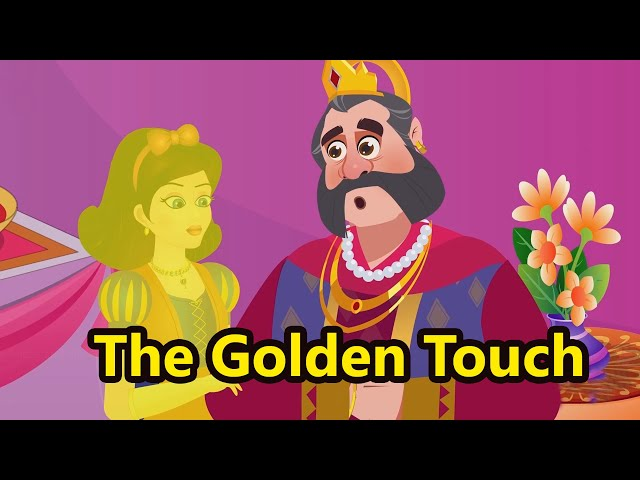
Midas, known for his love of wealth, does not hesitate. He asks that everything he touches be turned to gold. Dionysus, though dismayed by the shortsightedness of the wish, grants it.
II. The Reality of the "Gift"
At first, Midas is ecstatic. He touches his furniture, his clothes, and the walls of his palace, transforming them into solid gold. However, the true horror of his wish reveals itself the moment he attempts to eat:
The Impossible Feast: When he tries to pick up bread, it turns to solid gold. When he raises a cup of wine to his lips, it hardens into liquid metal.
The Final Agony: In many versions of the myth, his beloved daughter (or in Ovid’s account, he accidentally touches her as she tries to comfort him) is turned into a cold, motionless golden statue. Midas realizes that his greed has stripped him of everything that makes life worth living.
III. The Purification
Begging for release, Midas prays to Dionysus to take back the power. The god, amused but compassionate, instructs Midas to bathe in the headwaters of the river Pactolus. Midas does so, and the power of the "golden touch" washes away into the river. According to the Greeks, this explained why the riverbed was famously rich in gold dust.
IV. The Ass’s Ears: The Lesson of Humility
Midas’s struggle with his own ego does not end there. In a later myth, Midas acts as a judge in a musical contest between Apollo (the god of music) and Pan (the god of the wild). When Midas declares Pan the winner, Apollo, enraged by the king's lack of taste and hubris, curses him with the ears of an ass.
Midas hides his shame under a large turban. Only his barber knows the secret. The barber, unable to contain the gossip but too afraid to speak it, digs a hole in the ground and whispers the truth: "King Midas has ass's ears." He fills the hole, but reeds grow in that spot, and whenever the wind blows through them, they whisper the king's secret to the world.
V. Themes: The Wealth Paradox
The story of Midas provides a classic critique of materialism:
The Trap of Greed: The "Golden Touch" represents the idea that an obsession with acquisition turns the world into something dead, hard, and unusable. Gold is a store of value, but it is not a means of life.
The Disconnect from Humanity: Midas’s tragedy is that he treats the world as an object to be possessed rather than a life to be shared. By turning living things into inanimate gold, he effectively isolates himself from the human connections that define a king’s legitimacy.
The Failure of Wisdom: Midas fails to understand the difference between having and being. His second humiliation—the ass’s ears—further underscores his inability to perceive true "harmony" (Apollo’s music) compared to the "wild/base" (Pan’s pipes).
The myth of Midas remains the quintessential warning that the most dangerous curse is often the fulfillment of one’s own unexamined desires.