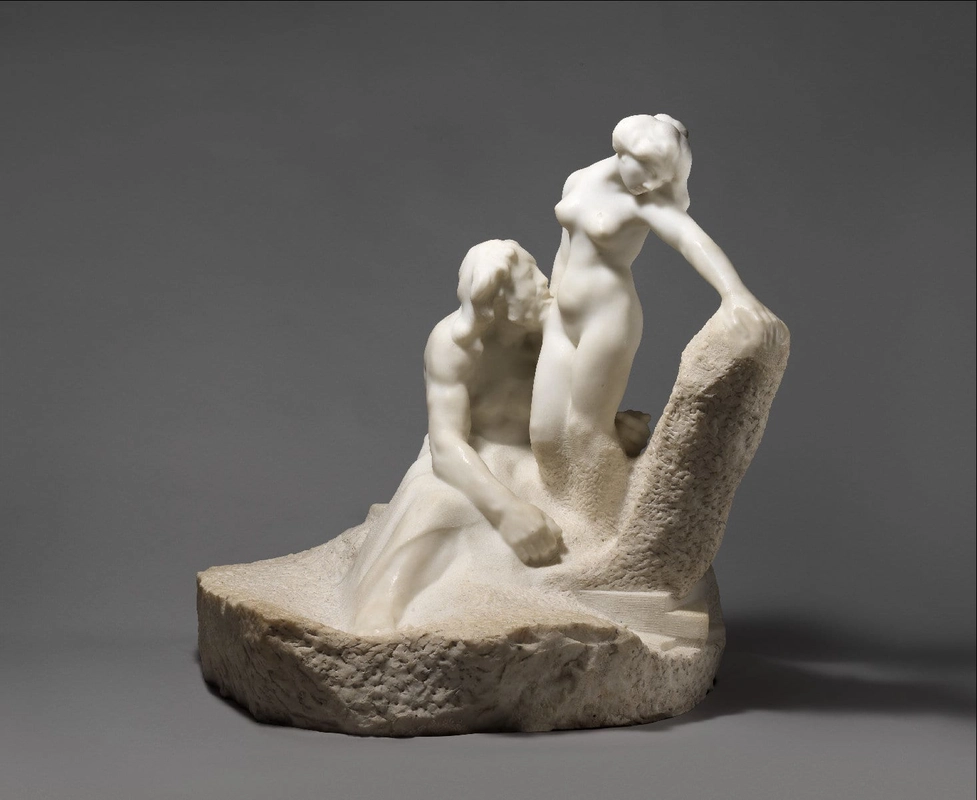
The myth of Pygmalion and Galatea is one of the most famous stories of artistic obsession and divine intervention from Ovid’s Metamorphoses. It explores the blurred lines between creative desire, idealized beauty, and the nature of reality.
I. The Sculptor’s Ideal
Pygmalion was a talented sculptor from the island of Cyprus. According to the myth, he was disillusioned with the women of his city—who he felt were morally flawed—and chose to live a life of celibate devotion to his art.
He set out to create a statue of ivory that would represent his own vision of perfect, flawless female beauty. He worked for months, obsessing over every detail of the carving, until he produced a figure so lifelike and beautiful that it appeared to be a living, breathing woman.
II. The Prayer to Aphrodite
As he finished the statue, Pygmalion’s feelings for his creation shifted from artistic pride to deep, consuming love. He would bring her gifts—sea shells, smooth stones, bright flowers, and ribbons—and dress her in fine robes and jewelry. He would talk to her and hold her, often forgetting that she was made of cold ivory.
During the festival of Aphrodite (Venus), Pygmalion went to the goddess's altar and made a humble, desperate prayer. He did not ask for a woman like his statue; he asked for a wife who would be his statue. Moved by his devotion and the purity of his desire, Aphrodite signified her favor by causing the flames on the altar to flare up three times.
III. The Transformation
Pygmalion returned home and approached his statue. As he kissed her, he felt a strange warmth against his lips. He touched her arms and cheeks, and to his astonishment, the ivory softened under his fingers.
The statue, whom later traditions named Galatea, blinked and looked into his eyes. Life had infused the ivory, and his artistic ideal had become a living, breathing woman. They were soon married under the blessing of Aphrodite and had a daughter named Paphos, from whom the city of Paphos takes its name.
IV. Philosophical and Literary Legacy
The story of Pygmalion has fascinated thinkers and artists for millennia, serving as a powerful allegory for several concepts:
The Projection of Desire: Pygmalion is the ultimate example of the artist who creates a reality that reflects his own internal desires. The myth warns of the danger of loving an "ideal" rather than a real person, though it also celebrates the transformative power of belief and devotion.
Art vs. Reality: It questions the role of the creator. Is the artist merely reflecting the world, or are they attempting to transcend nature by creating something "perfect" that nature cannot produce on its own?
The "Pygmalion Effect": In modern psychology, this term refers to the phenomenon where high expectations lead to improved performance. Just as Pygmalion’s belief in his statue’s "life" helped catalyze its transformation, the belief in the potential of others can often help them reach that potential.
Pygmalion and Galatea stands as a beautiful, albeit slightly unsettling, testament to the idea that love and focus have the power to "bring to life" that which we envision most clearly.