Many will know of the Battle of Thermopylae as it was made famous by the film 300 which depicts a small number of Greek forces under the leadership of Leonidas battling against thousands of Persian warriors. This is a great film but there is more to this battle than meets the eyes, this being said the outline of the film does depict one famous part of the battle.
Battle of Thermopylae Facts
The date of the Battle of Thermopylae is in debate with two dates under contention. The dates in question are either August 7th or September 8th to the 10th of the year 480 BC.
Battle of Thermopylae, (480 bce), battle in central Greece at the mountain pass of Thermopylae during the Persian Wars. The Greek forces, mostly Spartan, were led by Leonidas. After three days of holding their own against the Persian king Xerxes I and his vast southward-advancing army, the Greeks were betrayed, and the Persians were able to outflank them. Sending the main army in retreat, Leonidas and a small contingent remained behind to resist the advance and were defeated.
The Battle of Thermopylae’s political origins can be traced back to Xerxes’ predecessor, Darius I (the Great), who sent heralds to Greek cities in 491 bce in the hopes of persuading them to accept Persian authority. This offended the proud Greeks greatly; the Athenians went so far as to toss the Persian heralds into a pit, while the Spartans followed suit and tossed them into a well. In 480 bce Xerxes invaded Greece as a continuation of Darius’s original plan. He began the same way his predecessor had: he sent heralds to Greek cities—but he skipped over Athens and Sparta because of their previous responses. Many Greek city-states either joined Xerxes or remained neutral, while Athens and Sparta led the resistance with a number of other city-states behind them. Before invading, Xerxes implored the Spartan king Leonidas to surrender his arms. Leonidas famously replied, “Come and take them” (“Molon labe”). Xerxes intended to do just that and thus moved toward Thermopylae.
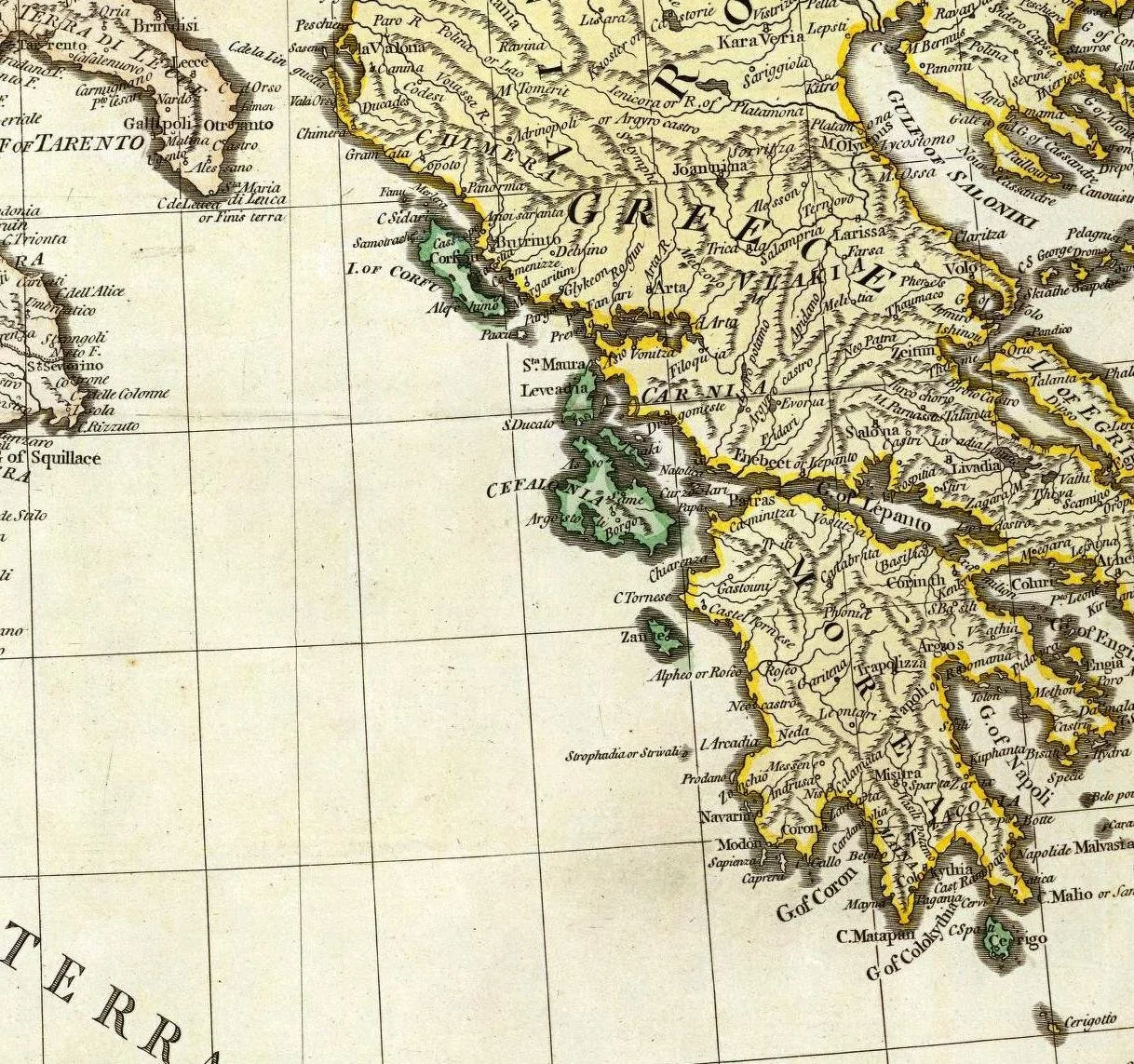
Xerxes led a vast army overland from the Dardanelles, accompanied by a substantial fleet moving along the coast. His forces quickly seized northern Greece and began moving south. The Greek resistance tried to halt Persian progress on land at the narrow pass of Thermopylae and at sea nearby in the straits of Artemisium. The Greek army was led by Leonidas, who was estimated to have had around 7,000 men. Xerxes, on the other hand, had anywhere from 70,000 to 300,000. Despite the disparity in numbers, the Greeks were able to maintain their position. Their strategy involved holding a line only a few dozen yards long between a steep hillside and the sea. This constricted the battlefield and prevented the Persians from utilizing their vast numbers. For two days the Greeks defended against Persian attacks and suffered light losses as they imposed heavy casualties on the Persian army. Only when the Greeks were betrayed did the battle take a detrimental turn for them. Ephialtes, a Greek citizen desiring reward, informed Xerxes of a path that went around Thermopylae, thus rendering the Greeks’ line useless in preventing forward advancement of the Persian army.
Xerxes took advantage of this betrayal and sent part of his army along this path, led by Ephialtes himself. After reaching the other side, the Persians attacked and destroyed a portion of the Greek army. This forced Leonidas to call a war council, at which it was decided that retreating was the best option. However, as the majority of the Greek army retreated, Leonidas, his 300 bodyguards, some helots (people enslaved by the Spartans), and 1,100 Boeotians remained behind, supposedly because retreating would defy Spartan law and custom. They held their ground against the Persians but were quickly defeated by the vast enemy army, and many (if not all; sources differ) were killed, including Leonidas. News of this defeat reached the troops at Artemisium, and Greek forces there retreated as well. The Persian victory at Thermopylae allowed for Xerxes’ passage into southern Greece, which expanded the Persian empire even further.
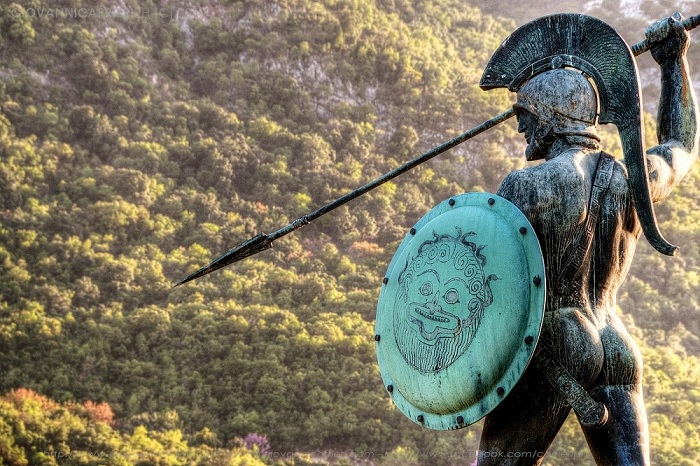
Today the Battle of Thermopylae is celebrated as an example of heroic persistence against seemingly impossible odds. Soon after the battle, the Greeks built a stone lion in honour of those who had died and specifically for the fallen king Leonidas. In 1955 a statue of Leonidas was erected by King Paul of Greece in commemoration of his and his troops’ bravery. The Battle of Thermopylae also served as the inspiration for the film 300 (2006).