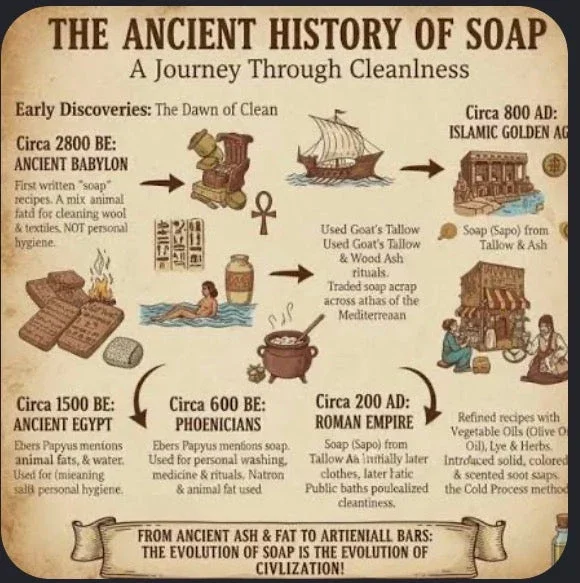
The history of cleaning is closely connected to the ways people understood water, oils, fats, plants, and the materials available in their surroundings. Long before the development of modern commercial soap, communities used a variety of substances to clean their bodies, wash textiles, remove grease, and maintain household equipment. Some methods relied on water and friction, while others involved plant extracts, mineral substances, animal fats, or alkaline materials produced from ash. Archaeologists investigating ancient cleaning practices must therefore look beyond objects that resemble modern soap and examine the chemical traces, manufacturing techniques, and contexts that may reveal how people kept themselves and their belongings clean.
Modern soap is generally produced through a chemical reaction between fats or oils and an alkali, a process known as saponification. The reaction creates soap compounds that can help remove grease and dirt when combined with water. Ancient communities did not necessarily describe or understand these processes in modern chemical terms, but they could discover effective cleaning methods through repeated experimentation. Fatty materials obtained from animals or plants could be combined with alkaline substances, including certain types of ash preparations, to produce mixtures with cleaning properties. However, not every historical or prehistoric cleaning agent was soap in the strict chemical sense, and archaeologists must avoid applying the modern definition too broadly.
Animal fats and plant oils are particularly important in the search for ancient cleaning recipes because they can leave lipid residues. Lipids are a broad group of organic compounds that includes fats, oils, waxes, and related substances. Under suitable conditions, traces of these compounds may survive in pottery, containers, soil deposits, or other archaeological materials. Their presence can provide clues about the substances that came into contact with an object, but identifying the original activity is more difficult. The same types of fats could have been used for cooking, lighting, waterproofing, medicinal preparations, cosmetics, or ritual purposes.
Ceramic vessels are especially useful for studying ancient residues because their porous surfaces can absorb organic compounds during use. When a vessel contains heated fats or oils, some of the material may penetrate the ceramic body and remain there after the vessel is emptied and cleaned. Over time, the surviving compounds may undergo chemical changes caused by heat, moisture, microorganisms, and the surrounding burial environment. Researchers can extract and analyze these residues to identify patterns in the types of lipids present. The results may help distinguish between different uses of a vessel, although the interpretation depends on the composition of the residue and the context in which the pottery was found.
One challenge is that ancient cleaning mixtures may not have left a distinctive chemical signature. If a recipe involved animal fat and an alkaline substance, the original mixture could have changed considerably during use and burial. Alkalis themselves may not survive as a clear marker of the original preparation, while fatty compounds can degrade or become mixed with residues from other activities. Even when researchers identify animal-derived lipids, they cannot automatically conclude that the vessel was used to manufacture soap. The evidence might instead indicate food preparation, grease storage, leather treatment, or another activity involving fats.
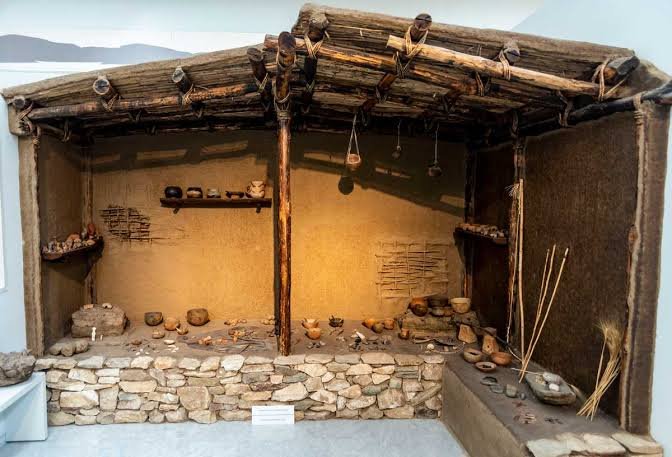
The archaeological location of a vessel can help narrow the possibilities. Containers discovered in workshops alongside specialized equipment may have been used for craft production, while vessels recovered from domestic spaces may have served several household purposes. Objects associated with textile processing, personal grooming, or bathing facilities could provide useful contextual evidence for cleaning activities. Nevertheless, no single location is definitive. Domestic workshops often served multiple functions, and ancient people frequently reused containers for different purposes over the course of their lives.
Chemical analysis can reveal more than the presence of fat alone. Researchers may examine the molecular composition of lipid residues, looking for patterns that help identify the likely source of the material. Certain fatty acid distributions can be consistent with particular animal or plant sources, although degradation and environmental conditions may complicate identification. Other analytical methods can investigate waxes, oils, or related compounds. By comparing residues with experimental samples made from known materials, researchers can assess whether an ancient residue is compatible with a proposed recipe.
Experimental archaeology offers a particularly valuable way to investigate ancient soap production. Researchers can recreate plausible mixtures using historically available fats, oils, water, and alkaline materials. They can observe how the ingredients behave during heating and mixing, then test whether the resulting substance has cleaning properties. The experimental vessels can subsequently be examined to determine which residues remain after repeated use and burial under controlled conditions. Such experiments cannot reproduce every aspect of ancient life, but they can help establish whether a proposed recipe is chemically plausible and what traces it might leave behind.
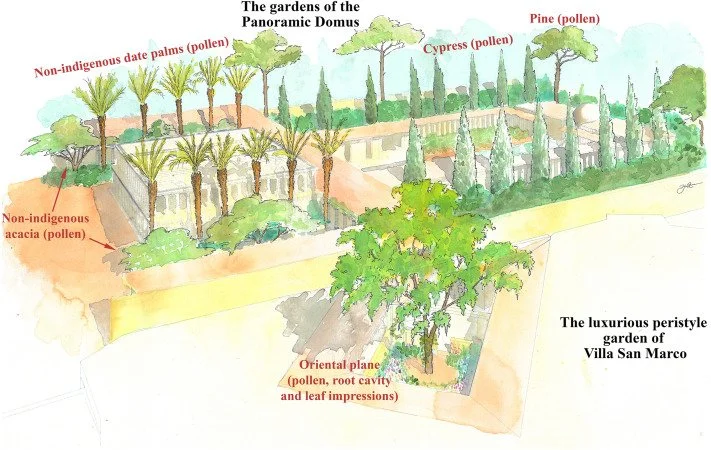
The role of plants in ancient cleaning practices deserves particular attention. Some plants contain substances that produce foam or help loosen dirt, while others were used for fragrance, skin care, or textile treatment. Plant remains may be preserved as seeds, pollen, phytoliths, or chemical residues, depending on the species and archaeological environment. Finding a plant known to have cleaning properties at an archaeological site does not prove that it was used for washing, but its presence may become significant when considered alongside suitable containers, residue evidence, and historical or ethnographic comparisons.
Cleaning practices also carried social and cultural meanings. Washing could be associated with personal comfort, health, hospitality, religious preparation, or the treatment of textiles and household objects. Different groups may have developed particular routines based on climate, available water, social expectations, and local traditions. The presence of specialized washing facilities or containers might indicate that cleaning activities were organized in particular spaces, but the archaeological record rarely preserves the complete details of everyday routines. Researchers must reconstruct these activities from fragments of evidence rather than assuming that modern habits existed unchanged in the past.
The preservation of lipid residues introduces additional difficulties. Soil microorganisms can break down organic compounds, while water movement may transport residues away from their original locations. Burial sediments can also introduce fats or other substances into porous artifacts. Contamination from handling, conservation materials, or modern storage can further complicate analysis. Researchers therefore compare samples from the artifact with surrounding soil and use careful laboratory procedures to assess whether the detected compounds are likely to be ancient.
Ancient soap recipes remain a promising subject because they connect chemistry with everyday life. Lipid residues may reveal how people processed fats, prepared household mixtures, and developed methods for cleaning their bodies and possessions. However, the strongest interpretations depend on combining molecular evidence with archaeological context and experimental testing. By distinguishing genuine chemical evidence from plausible but unverified explanations, researchers can build a more reliable understanding of the many ways ancient communities approached cleanliness long before modern soap became commonplace.