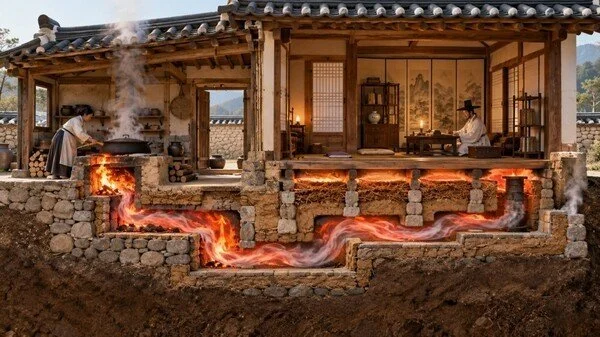
In cold climates, maintaining warmth was an essential part of everyday survival. People needed to protect themselves from low temperatures while preparing food, repairing tools, sleeping, and carrying out other domestic activities. Although large hearths and fixed fireplaces are familiar features of archaeological settlements, not every heating solution required a permanent installation. Portable heating devices made from stone or other materials may have allowed people to transport heat between activity areas, warm specific spaces, or support temporary occupations where constructing a substantial hearth was impractical. Investigating these technologies can help archaeologists understand how households adapted to seasonal conditions and managed heat in environments where fuel and shelter were important resources.
The term portable stone heater can refer to different kinds of objects and should not be treated as a single standardized ancient device. Some heated stones may have been placed inside shelters to release warmth gradually, while others may have been used in cooking or in heating water and other materials. Stone could also be incorporated into movable containers or heating arrangements. However, an ordinary stone that has been exposed to fire is not necessarily evidence of a portable heater. It may have come from a fixed hearth, a cooking area, a natural fire, or another activity involving heat. Archaeologists must therefore examine the shape, composition, surface changes, and archaeological context of each object before proposing its function.
Stone is useful for some heating applications because many types can absorb thermal energy and release it gradually as they cool. When a stone is heated near a fire, its temperature rises, and it may continue transferring heat to its surroundings after being removed from the flames. The effectiveness of this process depends on the stone's mineral composition, density, size, moisture content, and internal structure. Some stones tolerate repeated heating better than others, while certain materials may crack or break when exposed to sudden temperature changes. A stone selected for repeated heating would therefore need to suit the intended conditions, although ancient users may have learned these properties through practical experience rather than formal testing.
The possibility of moving heated stones between locations is particularly relevant to temporary camps and mobile households. A portable heat source could provide warmth in a sleeping area or work space without requiring a permanent fireplace at every location. In some settings, heated stones might have been used alongside hides, textiles, or other insulating materials to retain warmth. Yet such arrangements would depend on safe handling and the ability to control the temperature of the stones. The archaeological record rarely preserves the complete system, including any containers, insulating layers, or coverings that may have accompanied the stones.
Identifying portable heating technology requires close examination of heat-related damage. Repeated heating and cooling can create discoloration, thermal fractures, surface flaking, and changes in the structure of some stones. Microscopic analysis may reveal patterns that differ from natural weathering or damage caused by mechanical impact. Researchers can compare these features with stones recovered from known hearths and with experimental examples heated under controlled conditions. Nevertheless, heat alteration alone cannot establish portability. The location and arrangement of the stones are also important, especially if they were found away from a fixed hearth or in association with evidence of repeated movement between activity areas.
Archaeological context can help clarify the likely purpose of a stone object. A concentration of heat-altered stones in a domestic area may indicate cooking or heating, while a small number found within a temporary shelter could have served a more limited function. If similar stones occur repeatedly in different rooms or occupation layers, researchers may investigate whether the community used a consistent heating practice. Evidence of soot, charcoal, ash, and nearby fire installations can help establish where the stones were heated before use. However, the absence of a hearth does not prove that a stone was heated elsewhere, since the fire may have been cleaned away, destroyed, or located outside the excavated area.
Fuel availability would have influenced heating practices. In wooded environments, people might have relied on branches, logs, and other plant materials, while communities living in areas with limited trees could have used shrubs, grasses, animal dung, or other combustible resources. The amount of fuel required to heat a stone would have depended on its size and the desired temperature. Repeated heating could have placed additional demands on household fuel supplies, making portable stone heating more useful in some environments than others. Archaeobotanical remains and charcoal analysis can provide clues about the fuels available to a community, although the presence of a particular fuel does not establish exactly how it was used.
The safety of heated stones is another important consideration. Stones containing trapped moisture can fracture when heated rapidly, and some materials may break apart unexpectedly. Ancient people would have encountered these problems through experience and may have learned to select particular stones or heat them gradually. Modern experimental studies can investigate how different rock types respond to repeated heating and cooling. Such experiments can help determine whether the fractures found on archaeological stones are consistent with deliberate heating, although researchers must account for differences in temperature, fuel, and environmental conditions.
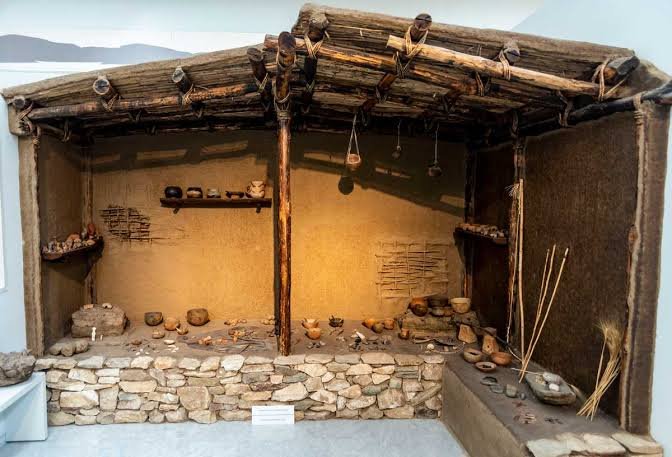
Portable heating also has implications for understanding the organization of domestic space. A fixed hearth often anchors several household activities, including cooking, warmth, and the gathering of people. A movable source of heat could allow some activities to take place away from the main fire, potentially making a shelter more flexible. In a cold environment, people might have organized sleeping, craftwork, and food preparation around different thermal needs. Archaeological evidence cannot always reconstruct these arrangements directly, but the distribution of hearths, heat-altered stones, and activity areas can help researchers consider how warmth shaped the use of a dwelling.
The preservation of portable heating objects is uneven. Stone itself often survives well, but the traces that reveal its use may become obscured through weathering, erosion, and repeated contact with other materials. Organic components associated with a heating system may disappear entirely. In some cases, the stones may have been reused for construction, discarded in refuse deposits, or incorporated into later hearths. These processes can separate an object from its original function and make the archaeological interpretation more uncertain.
Portable stone heaters offer a useful way to investigate the relationship between technology, mobility, and domestic comfort in antiquity. Their identification depends on more than finding stones that have been exposed to heat. Researchers need to examine thermal damage, placement, associated features, local resources, and experimental evidence before determining whether a stone was deliberately heated and transported. When the evidence supports such an interpretation, these objects can help reveal how people managed warmth beyond permanent fireplaces and adapted their daily routines to the demands of cold environments.