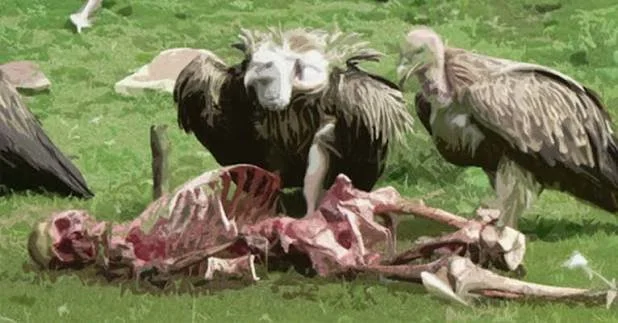
Sky burial is a funerary practice in which a deceased person's body is exposed in an outdoor location where birds and other scavengers may consume the remains. The practice is most widely associated with certain Tibetan Buddhist communities, although the treatment of the dead has varied across cultures and historical periods. Studying sky burials archaeologically requires an understanding of both cultural traditions and the natural processes that affect exposed human remains. Unlike a conventional burial, where a body is placed beneath the ground, exposure leaves the remains vulnerable to weather, scavengers, insects, and movement across the landscape. These conditions create a distinctive set of challenges for archaeologists attempting to reconstruct funerary practices from incomplete evidence.
The cultural meaning of sky burial cannot be understood through the physical condition of human remains alone. In Tibetan Buddhist traditions, the practice has been associated with religious understandings of impermanence, compassion, and the relationship between the body and the natural world. The body may be regarded as a temporary physical form rather than the enduring essence of the deceased. Offering the remains to animals can therefore carry meanings connected to generosity and the continuation of life. However, beliefs and practices vary, and it would be misleading to assume that every exposed-body burial in every culture had the same religious significance. Archaeologists must distinguish between documented cultural traditions and interpretations proposed for prehistoric or historically unfamiliar communities.
Taphonomy is central to the investigation of these practices. The term refers to the processes that affect organic remains from the time of death until their discovery and analysis. For exposed human remains, these processes can include scavenging, weathering, sun exposure, rainfall, freezing, thawing, and the movement of bones by animals. The order and intensity of these processes depend on local climate, landscape, and the amount of time the remains remain exposed. As a result, a collection of bones discovered at an outdoor site may look very different from a skeleton preserved within a grave, even when the original circumstances of death were similar.
Scavenger activity can produce patterns that help researchers understand how remains were exposed. Birds and mammals may remove soft tissue, separate skeletal elements, or carry bones away from the original location. Some bones may be scattered across a wide area, while others remain concentrated near the place where the body was initially placed. Tooth marks, fractures, and surface damage can provide evidence of animal activity, although similar modifications may also result from other processes. Researchers compare these traces with known patterns of scavenging and weathering to determine which explanations are most plausible.
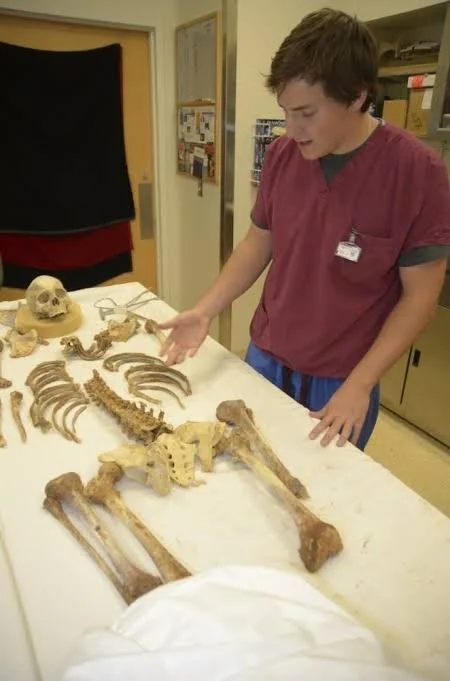
The distribution of skeletal elements is another important source of information. In a conventional burial, bones may remain relatively close to their original anatomical positions, depending on soil conditions and disturbance. In an exposed-body context, lighter elements can be moved by wind, water, or animals, while heavier bones may remain closer to the original location. However, the absence of particular bones does not necessarily mean that they were deliberately removed. Differences in bone density, environmental exposure, scavenger behavior, and later human activity can all influence which elements survive. Archaeologists therefore need to examine the complete pattern of preservation rather than drawing conclusions from a few missing or displaced bones.
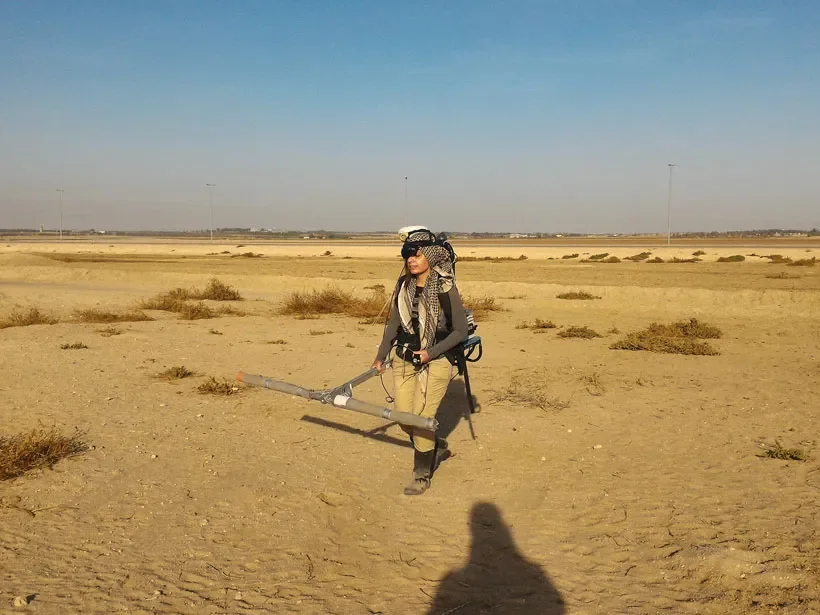
Landscape analysis can help identify locations that may have been selected for funerary activities. Elevated ground, exposed ridges, or areas with particular relationships to settlements and routes may have been important in some cultural settings. Yet a prominent location cannot automatically be identified as a sky burial site. Similar places may have served as observation points, hunting locations, temporary camps, or other activity areas. Archaeologists must combine the landscape evidence with skeletal remains, associated artifacts, historical records, and, where appropriate, knowledge shared by descendant communities.
The archaeological visibility of sky burials is often limited. Exposure can leave little material evidence compared with inhumation, especially when soft tissue and many skeletal elements disappear. Some sites may contain only scattered bones, modified stones, or traces of repeated human activity. Other locations may have been cleaned or reused over time, further reducing the evidence available to researchers. These limitations mean that sky burial cannot be identified solely through the absence of a grave or the presence of scattered human bones. A convincing interpretation requires multiple lines of evidence and careful consideration of alternative explanations.
Modern scientific methods can improve the study of exposed-body funerary practices. Detailed mapping and three-dimensional recording can document the position of surviving remains before they are moved. Microscopic examination may identify cut marks, animal damage, or surface weathering. Chemical and isotopic analyses can sometimes provide information about diet, geographic origin, or aspects of an individual's life, although these techniques do not independently establish the circumstances of burial. Radiocarbon dating may help determine the age of the remains, provided the samples are suitable and the results are interpreted within the appropriate chronological framework.
Ethical considerations are particularly important when investigating funerary sites. Human remains are not simply archaeological materials; they may hold profound spiritual and cultural significance for living communities. Research should follow applicable laws and professional standards, and consultation with relevant communities should be considered before excavation, sampling, or public presentation. In places where sky burial remains a living practice, exposing sensitive site details or publishing images without permission can cause harm. Researchers must balance the value of archaeological knowledge with respect for the deceased and the people whose traditions are connected to the site.
The study of sky burials illustrates how cultural practice and natural processes become intertwined in the archaeological record. Scavenging, weathering, and the movement of bones may obscure the original arrangement of a body, but they can also provide evidence about how remains were treated after death. Interpreting this evidence requires more than identifying unusual bone distributions. It demands a careful combination of taphonomic analysis, landscape archaeology, chronology, historical knowledge, and cultural sensitivity. Through this approach, researchers can investigate exposed-body funerary practices while avoiding assumptions that reduce diverse traditions to a single explanation.