Introduction
The sanctuary of Asklepios at Epidauros was one of the most important religious centers of ancient Greece. Located in the northeastern Peloponnese, it attracted visitors seeking healing, religious guidance, and participation in ceremonies dedicated to the god of medicine.
Its architectural remains include temples, halls, theaters, and other buildings constructed across several centuries. The surrounding landscape also contained settlements, roads, agricultural areas, and smaller religious structures.
The possibility of Archaic terracotta roofs in the outskirts of Epidauros raises questions about early building traditions before the sanctuary's major Classical and Hellenistic development.
Terracotta roofing was widely used in ancient Greece, but particular discoveries around Epidauros must be distinguished from the broader evidence for Archaic architecture.
Epidauros Before Its Monumental Development
The region of Epidauros was occupied long before the construction of its famous healing sanctuary.
Archaeological evidence from the wider area indicates settlement and religious activity during prehistoric and early historic periods.
During the Archaic period, Greek communities increasingly developed monumental temples and other public buildings. These structures often used stone foundations and architectural elements combined with wooden roof frameworks and terracotta tiles.
The later sanctuary of Asklepios grew into a major religious complex, but its development took place over time rather than through a single building campaign.
The Development of Terracotta Roofing
Terracotta roofing became increasingly important in Greek architecture during the Archaic period.
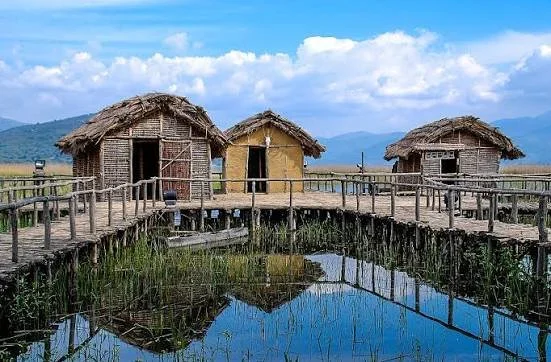
Before the widespread adoption of fired-clay tiles, many buildings used thatched or wooden roofing systems.
Clay tiles offered greater durability and improved protection from weather and fire. They could be manufactured in standardized shapes and arranged across timber frameworks.
The production of roof tiles required suitable clay, controlled firing temperatures, and skilled labor.
As monumental architecture expanded, terracotta roofing became a visible feature of temples and other important buildings.
Types of Greek Roof Tiles
Ancient Greek roofs commonly used combinations of flat pan tiles and curved cover tiles.
Pan tiles formed the main surface of the roof, while cover tiles were placed over the joints between them.
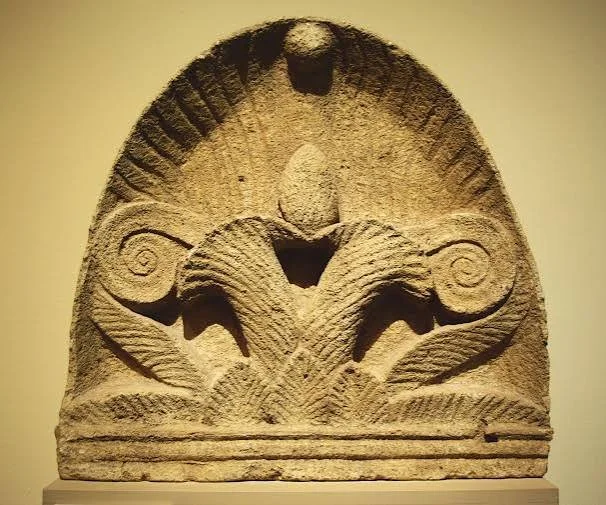
The edges of roofs could be finished with decorative elements known as antefixes. These sometimes carried floral, geometric, or other ornamental designs.
Roof systems also included ridge tiles and specially shaped components designed to protect exposed edges.
The arrangement of these elements varied according to local building traditions and the period of construction.
Archaic Architectural Decoration
Archaic terracotta roofing was not purely functional.
Architectural terracottas could be decorated with painted patterns, relief designs, and molded figures.
Colorful roof ornaments helped distinguish important buildings and communicated religious or civic identity.
Some decorative systems included mythological imagery, floral patterns, and geometric motifs.
The presence of decorated terracotta fragments can therefore provide evidence about a building's original appearance, although fragments alone may not identify its exact location or function.
The Outskirts of Epidauros
The area surrounding the major sanctuary contained a wider landscape of human activity.
Roads connected the sanctuary with nearby communities, while agricultural settlements supported the needs of visitors and local populations.
Smaller shrines, domestic buildings, workshops, and other structures may have formed part of this surrounding environment.
Terracotta roof fragments discovered outside the main sanctuary could therefore belong to a variety of buildings.
Determining whether they came from an Archaic temple, a private residence, or another structure requires careful examination of their archaeological context.
Dating Terracotta Roof Fragments
Roof tiles can provide valuable chronological information.
Researchers study their dimensions, profiles, clay composition, firing characteristics, and decorative features.
Comparisons with securely dated roof systems can help establish a probable period of manufacture.
However, roof tiles were often reused. A fragment found in a later building may have originated from an earlier structure.
Stratigraphic analysis is therefore essential. Researchers must establish whether the tiles were recovered from their original construction context, a destruction layer, or secondary deposits.
Production and Distribution
Terracotta roofing required organized production.
Clay sources needed to be identified, prepared, and processed. Tiles were then shaped using molds or other forming techniques before being dried and fired.
Large buildings required substantial quantities of roofing material, encouraging the development of specialized workshops.
Some communities produced tiles locally, while others obtained them through regional exchange.
Scientific analysis of clay composition can help investigate whether roof tiles from the Epidauros region came from local production or outside workshops.
Terracotta Roofing and Religious Architecture
Temples and sanctuaries were important centers of architectural innovation.
Their roofs needed to protect valuable interior spaces while presenting an impressive exterior appearance.
Decorative terracottas could contribute to the visual identity of a sanctuary and distinguish its buildings from ordinary domestic structures.
At Epidauros, the development of religious architecture reflected changing practices and the growing importance of the healing cult.
Early roofing fragments could therefore help researchers reconstruct the architectural history of the sanctuary and its surrounding communities.
Conservation and Archaeological Interpretation
Terracotta fragments are often durable, but they can still suffer from cracking, salt damage, erosion, and surface deterioration.
Proper documentation should record their dimensions, fabric, decoration, and recovery context.
Digital reconstruction can help researchers visualize how individual fragments might have fitted into a complete roof system.
Such reconstructions should remain cautious when only small pieces survive.
The discovery of Archaic tiles in an area does not necessarily prove the existence of a monumental Archaic building. Their interpretation must be supported by associated foundations, deposits, and other architectural evidence.
Conclusion
Archaic terracotta roofs in the outskirts of Epidauros would offer valuable information about early construction practices in the region.
Roof tiles could reveal developments in building technology, decorative traditions, craft production, and the growth of religious architecture before the sanctuary reached its greatest prominence.
The broader use of terracotta roofing in Archaic Greece provides a strong historical context for investigating such material.
Nevertheless, the identification of particular Archaic roof systems around Epidauros requires secure archaeological documentation. Their dating and interpretation depend on careful analysis of the fragments and the structures or deposits in which they were found.