Introduction
Agathonisi is a small island in the southeastern Aegean, close to the coast of modern Turkey and north of the larger island of Leros. Its remote character, rocky terrain, and sheltered coastal areas make it an interesting setting for studying religious life in the eastern Aegean.
During the Byzantine period, islands and isolated coastal locations provided opportunities for monastic retreat, prayer, and religious contemplation. Small chapels and hermitages could be established far from major settlements, allowing individuals to pursue solitary or communal devotional practices.
The possibility of Byzantine icons originating from hermitages on Agathonisi raises important questions about island spirituality, artistic traditions, and the preservation of religious objects. However, specific icon discoveries must be supported by reliable documentation before they can be treated as established archaeological facts.
Agathonisi in the Byzantine Aegean
Agathonisi occupies a position within a maritime landscape that connected the Dodecanese, the eastern Aegean, and the Anatolian coast.
During the Byzantine period, these waters remained important for transportation, commerce, communication, and religious travel.
Small islands could serve as stopping points for sailors and travelers, while their remote locations sometimes attracted religious communities seeking isolation.
The history of Agathonisi should therefore be considered within the wider development of Byzantine island settlements and monastic traditions.
Hermitages and Religious Isolation
A hermitage is a small dwelling or religious retreat associated with a hermit or a small group of religious individuals.
Unlike large monasteries, hermitages generally had limited facilities and were often established in caves, rocky slopes, or isolated coastal areas.
Their structures could include a small chapel, living space, storage area, and basic water facilities.
The physical environment played an important role in their location. Access to freshwater, protection from harsh weather, and proximity to a settlement or maritime route could influence where a hermitage was established.
The Role of Icons in Byzantine Worship
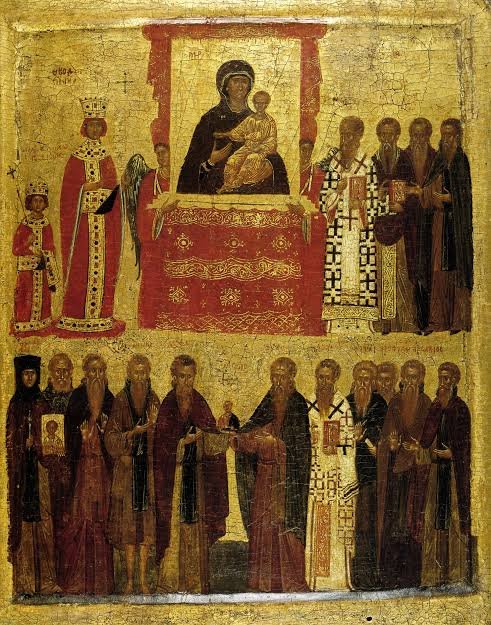
Icons were central to Byzantine religious life. They depicted Christ, the Virgin Mary, saints, angels, and important scenes from Christian tradition.
Their purpose extended beyond decoration. Icons served as objects of veneration and helped communicate religious teachings through visual representation.
They could be displayed in churches, chapels, private homes, and monastic spaces.
In a small hermitage, an icon might occupy a prominent position near an altar or within a designated prayer area.
Materials and Artistic Techniques
Traditional Byzantine icons were commonly painted on prepared wooden panels.
The wooden support was usually covered with a ground layer that provided a smooth surface for painting. Artists applied pigments and other materials to create the figures, backgrounds, inscriptions, and decorative details.
Gold leaf was sometimes used to produce luminous backgrounds or emphasize sacred elements.
Some icons also incorporated silver coverings, protective frames, or decorative metalwork.
The materials and techniques varied according to the period, region, available resources, and artistic tradition.
Local Workshops and Regional Influences
The eastern Aegean was connected to major centers of Byzantine artistic production.
Artists, religious communities, merchants, and travelers helped circulate styles and devotional objects between islands and mainland settlements.
An icon preserved on Agathonisi could therefore reflect regional artistic influences without necessarily having been painted on the island.
Stylistic comparisons can identify broad artistic relationships, but they rarely establish an object's precise origin on their own.
Inscriptions, pigment analysis, wood identification, and historical records can provide additional information.
Why Icons Might Survive in Remote Chapels
Remote religious buildings sometimes preserve objects that were moved from larger churches or protected during periods of conflict.
Icons could be relocated because of warfare, changes in settlement patterns, religious reform, or the deterioration of an original building.
Some objects may also have been inherited or donated by individuals with connections to neighboring islands.
However, an icon found in a hermitage is not necessarily Byzantine. Later post-Byzantine works may preserve earlier artistic traditions while belonging to a much later period.
Accurate dating is therefore essential.
Conservation Challenges
Icons are vulnerable to humidity, temperature fluctuations, insects, smoke, dust, and structural deterioration.
Wooden panels may warp or crack, while painted surfaces can detach from their support.
Salt exposure is a particular concern in coastal environments. Moisture can carry salts into wooden structures and painted layers, accelerating deterioration.
Conservation specialists use controlled environmental conditions, scientific imaging, and careful stabilization techniques to protect these objects.
Cleaning and restoration should not be attempted without professional assessment because inappropriate intervention can permanently damage original paint layers.
Conclusion
Byzantine icons associated with Agathonisi's hermitages would provide a valuable perspective on the island's religious history and its connections with the wider eastern Aegean.
Their study could reveal devotional practices, artistic influences, and the movement of sacred objects between isolated communities. Nevertheless, the specific claim of a documented collection of Byzantine icons from Agathonisi hermitages requires verification through conservation records, historical documentation, and secure provenance.
The wider subject highlights how even small and remote religious spaces can preserve important evidence of Byzantine artistic and spiritual traditions.