Introduction
The Malian Gulf, located along the eastern coast of central Greece, forms part of a landscape where coastal resources, river systems, fertile plains, and mountain routes meet. Its sheltered waters and surrounding lowlands would have offered opportunities for prehistoric communities to exploit both terrestrial and aquatic environments.
One of the most informative archaeological features in prehistoric settlements is the hearth. These simple installations preserve evidence of cooking, heating, craft activities, and the organization of domestic space.
The study of Neolithic hearths in settlements around the Malian Gulf can therefore contribute to understanding how early farming communities adapted to the region. However, individual hearth discoveries must be tied to documented excavation sites rather than assumed to represent a single established archaeological assemblage.
The Neolithic Transformation in Central Greece
The Neolithic period brought major changes to the communities of southeastern Europe. Farming, animal husbandry, permanent or semi-permanent settlements, and new forms of material culture gradually transformed patterns of daily life.
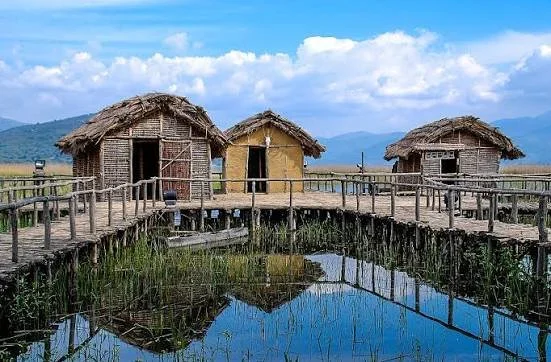
In central Greece, communities occupied locations that offered access to cultivable land, water, and natural routes. Coastal environments also provided fish, shellfish, and other resources that supplemented agricultural production.
The Malian Gulf was particularly suitable for examining the relationship between inland farming and coastal subsistence. Its geography connected communities across the surrounding plains and maritime landscape.
What Archaeologists Learn from Hearths
A hearth is more than a place where fire was maintained. Its construction, location, and surrounding deposits can reveal how people organized their homes and performed daily activities.
Some hearths were simple shallow pits, while others incorporated prepared clay surfaces, stone arrangements, or raised edges. Their designs depended on local building traditions and the activities for which they were used.
A hearth located near food-processing equipment may indicate cooking or food preparation. One associated with craft debris could suggest heating activities connected with pottery production or other technologies.
The interpretation depends on the full archaeological context rather than the feature's appearance alone.
Cooking and Food Preparation
Neolithic communities relied on a varied food supply that included cultivated cereals, legumes, domesticated animals, and wild resources. Hearths provided the heat necessary for roasting, boiling, drying, and other preparation methods.
Pottery vessels expanded cooking possibilities because they allowed food to be heated with water and prepared over sustained periods. Burn marks and residues on ceramic surfaces can help researchers investigate how containers were used.
Animal bones, plant remains, and microscopic residues can provide additional information about diet. When these materials are recovered from deposits associated with a hearth, they may help reconstruct specific cooking and consumption practices.
Domestic Architecture and Household Organization
Hearth placement can reveal how rooms and activity areas were organized. A central hearth may have served several household members, while smaller installations could have supported specialized tasks.
The relationship between hearths, storage pits, walls, and working surfaces helps archaeologists reconstruct the layout of prehistoric buildings.
Repeated rebuilding can also reveal changes in household organization. A hearth that was replaced or moved may indicate modifications to a building, changes in the number of occupants, or a shift in domestic activities.
Environmental Evidence Around the Gulf
The Malian Gulf's coastal environment has changed significantly since the Neolithic period. Sedimentation, shoreline movement, river activity, and changes in sea level have altered the relationship between settlements and the coast.
Environmental reconstruction is therefore essential when investigating prehistoric communities in the area.
Pollen, charcoal, seeds, animal remains, and sediment samples can provide evidence of vegetation, land use, and local climate. Charcoal from hearths can sometimes be identified to species, helping researchers understand which kinds of wood people collected for fuel.
Such analysis can also reveal whether communities relied on nearby woodland, shrubs, or transported timber.
Fire, Technology, and Craft Production
Fire was central to several Neolithic technologies. It was used in cooking, pottery firing, and certain forms of material processing.
However, not every hearth should be interpreted as a specialized workshop. Evidence such as unusually high temperatures, repeated firing surfaces, production waste, or distinctive residues would be needed to support a craft-related interpretation.
The study of burnt clay, ash layers, and associated artifacts can help distinguish domestic hearths from installations used for other purposes.
Archaeological Challenges in Coastal Settlements
Coastal archaeological sites are vulnerable to erosion, flooding, sediment movement, and modern construction. Ancient deposits may be buried beneath later alluvial layers or disturbed by changes in land use.
Organic materials can survive poorly in some environments, while waterlogged conditions may preserve plant remains and wooden objects exceptionally well.
Archaeologists must therefore use careful excavation methods and environmental sampling. Recording the position of each hearth and its associated deposits is crucial because even small differences in stratigraphy can change the interpretation.
Conclusion
Neolithic hearths in settlements around the Malian Gulf offer a valuable perspective on domestic life, food preparation, environmental adaptation, and technological development in prehistoric central Greece.
Their study becomes especially powerful when architectural evidence is combined with botanical remains, animal bones, pottery, and scientific analysis of burnt materials. Although the precise claim of a single established assemblage of hearths across Malian Gulf settlements requires site-specific documentation, the region provides an important landscape for investigating the daily lives of early farming communities.