Introduction
Alonissos is part of the Northern Sporades, an island group in the northwestern Aegean known for its rugged landscapes, sheltered bays, and maritime connections.
Its elevated interior contains ridges and walking routes that overlook the surrounding sea. Such locations can provide important opportunities for studying how ancient communities used prominent natural features for religious, defensive, or practical purposes.
Hellenistic altars associated with mountain routes would be particularly interesting because they could reveal connections between religious activity and movement through the landscape. However, the identification of an altar requires archaeological evidence beyond the presence of stones or a convenient stopping place along a trail.
Alonissos in the Ancient Aegean
Alonissos belongs to a region that connected mainland Greece, the Northern Sporades, and the wider Aegean.
The island's coastal settlements and maritime routes supported fishing, trade, and communication with neighboring communities.
The ancient settlement history of the island is part of a wider regional pattern in which small islands served as economic and strategic links between larger centers.
Its elevated terrain also offered natural viewpoints and routes between different parts of the island.
The Hellenistic Period
The Hellenistic period began in 323 BCE following the death of Alexander the Great and continued until the Roman conquest of the major eastern Mediterranean kingdoms.
During this period, religious practices continued to develop across the Greek world.
Sanctuaries, temples, altars, and smaller sacred installations formed part of both urban and rural landscapes.
Local communities maintained traditional cults while also participating in wider religious networks influenced by political change, migration, and commercial exchange.
What Was a Hellenistic Altar?
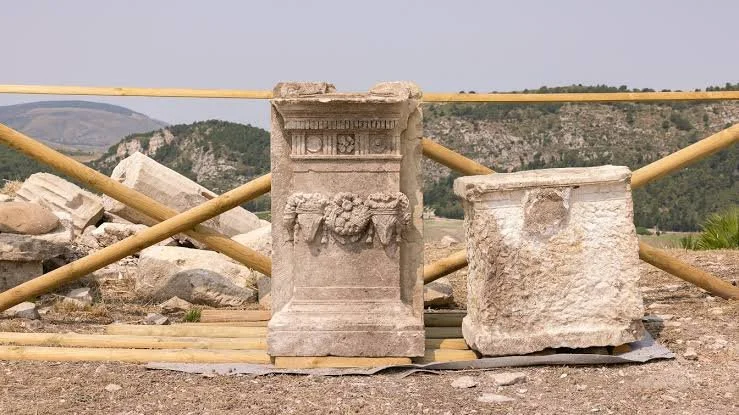
An altar was a structure or designated surface used for religious offerings and sacrifices.
Ancient Greek altars varied greatly in size and design. Some were simple stone installations, while others were monumental structures decorated with reliefs and inscriptions.
Altars could be located inside temples, within sanctuary courtyards, beside roads, or at natural landmarks.
The form depended on the deity, ritual requirements, available materials, and local traditions.
A group of arranged stones on a mountain trail cannot automatically be identified as an altar. Evidence of deliberate construction, votive deposits, inscriptions, or associated religious material is necessary.
Sacred Landscapes and Mountain Routes
Mountains and elevated locations held religious significance in many ancient Mediterranean cultures.
A prominent summit could be associated with a deity, a local foundation myth, or a community's understanding of its territory.
Mountain paths also connected settlements with agricultural land, pastures, and coastal areas.
A small altar near a route might have provided a place for travelers to make offerings or seek protection before continuing their journey.
Nevertheless, this interpretation would require supporting evidence. An ancient route marker, boundary stone, or practical structure could occupy a similar position.
Ritual Offerings and Archaeological Evidence
Small sanctuaries often contained offerings that were less elaborate than those found in major urban temples.
These might include pottery fragments, miniature vessels, figurines, coins, and inscribed objects.
The distribution of such material can help identify areas of repeated ritual activity.
An altar may also preserve traces of burning or deposits associated with offerings, although these features must be interpreted carefully because fire was used for many non-religious purposes.
A secure archaeological context is particularly important when identifying a rural or mountain sanctuary.
Hellenistic Architecture and Local Materials
Hellenistic builders used a wide range of architectural forms and materials.
Stone altars could be constructed from local limestone or marble, depending on availability and the resources of the community.
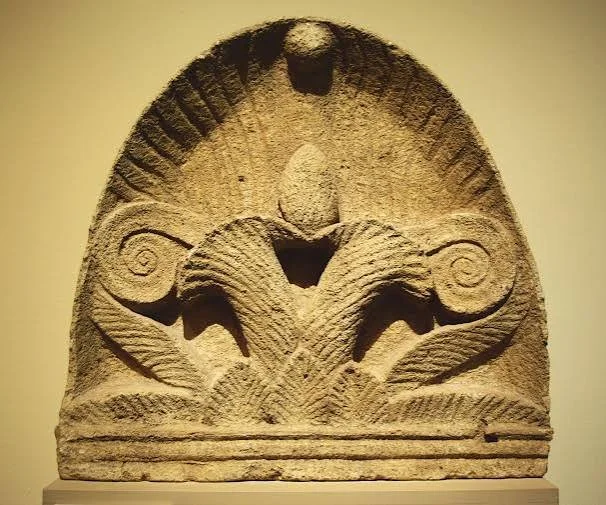
Some included moldings, carved inscriptions, or decorative elements that help establish their date.
Smaller installations might have been built with relatively simple masonry and could resemble ordinary stone platforms.
Architectural comparison with securely dated altars from other Greek regions may help researchers develop a chronological interpretation.
The Importance of Landscape Survey
Investigating possible altars along Alonissos' peak trails requires systematic fieldwork.
Archaeologists can map visible structures, examine surface pottery, and document the relationship between potential sacred sites and nearby settlements.
Geographic information systems can help reconstruct ancient routes and assess visibility across the island.
The presence of several installations along a connected route might suggest a broader ritual landscape, but each feature must first be independently identified.
Preservation and Responsible Access
Mountain archaeological sites can be damaged by erosion, vegetation, trail construction, and unauthorized stone removal.
Modern walking routes may cross ancient features, making careful mapping essential.
Visitors should avoid moving stones or collecting pottery fragments. Even small objects can provide important information about the site's chronology and function.
Conservation efforts should protect both the physical remains and the surrounding landscape that gives them historical meaning.
Conclusion
Hellenistic altars along Alonissos' peak trails would provide an opportunity to investigate how ancient religious activity extended beyond major urban sanctuaries.
Their study could reveal connections between ritual practices, travel routes, and the island's natural landscape. However, the specific existence of a documented group of Hellenistic altars on these trails requires archaeological confirmation.
The broader subject highlights how small religious installations could make mountains, pathways, and prominent natural features part of the sacred geography of the ancient Aegean.