Introduction
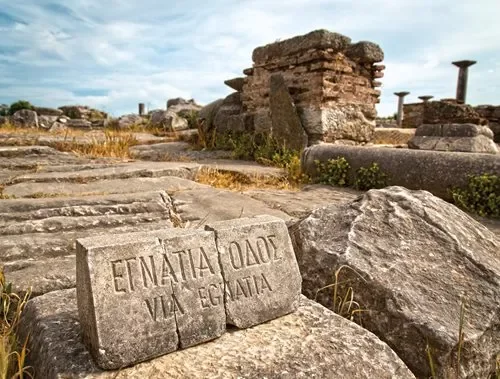
Argos was one of the oldest and most historically significant cities in the Peloponnese. Its strategic position in the Argolid connected it with important agricultural territories, coastal routes, and neighboring Greek communities.
During the Hellenistic period, coinage remained essential to commerce, taxation, military payments, and civic identity. The possibility of coin molds associated with workshops in Argos raises questions about local metalworking, monetary production, and the organization of ancient craft industries.
However, the identification of specific Hellenistic coin molds from Argos workshops requires archaeological documentation. The subject can be explored through the broader history of Greek coin production and the evidence needed to identify ancient minting activities.
Argos During the Hellenistic Period
Argos remained an important political and economic center after the campaigns of Alexander the Great.
The city experienced changing alliances and political circumstances as Hellenistic kingdoms competed for influence in Greece.
Its location provided access to agricultural production and regional trade. Workshops and marketplaces supported the movement of manufactured goods and commercial transactions.
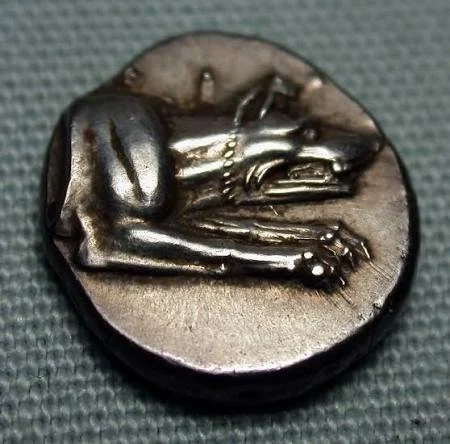
Coinage played an important role in this economy. Local and regional currencies helped facilitate payments and represented the authority of the issuing city or political power.
The Purpose of Ancient Coinage
Coins served several functions in the ancient world.
They facilitated everyday transactions, supported long-distance commerce, and allowed governments to pay soldiers and officials.
Coins also communicated political messages. Images of deities, rulers, animals, and civic symbols helped establish the identity of the issuing authority.
For a city such as Argos, coin designs could express local religious traditions and political status.
How Greek Coins Were Manufactured
Most ancient Greek coins were produced through striking rather than casting.
Metal was prepared into small blanks, often called flans. These were heated or otherwise prepared before being placed between engraved dies.
A hammer strike transferred the designs from the dies onto the metal.
The process required skilled engravers, metalworkers, and workers responsible for preparing blanks and managing production.
Because dies were expensive and required specialized labor, they were valuable components of a mint's operation.
The Question of Coin Molds
The term coin mold can refer to several different objects associated with ancient metalworking.
Some molds were used to cast metal blanks before striking. Others were connected with the production of metal objects that resembled coins but were not necessarily official currency.
A group of molds might therefore indicate preparation of blanks, small-scale metalworking, or another casting activity.
It is important not to assume that every circular mold was used to manufacture coins.
Archaeologists examine the shape, dimensions, material, wear, and manufacturing traces before assigning a specific function.
Workshops in Ancient Argos
Ancient workshops were often located near areas where craftsmen could obtain materials, transport finished products, and access customers.
Metalworking facilities might contain furnaces, crucibles, slag, tools, molds, and fragments of unfinished objects.
The presence of such materials could indicate specialized production.
However, a metalworking workshop was not automatically a mint. A mint required a more specific combination of equipment, administrative organization, and evidence of monetary production.
Identifying a Hellenistic Mint
A secure identification would require several forms of evidence.
Researchers would examine the archaeological context, including the building's layout and associated objects.
Coin blanks, engraved dies, metalworking tools, and production waste could provide useful clues.
The chronology would need to be established through stratigraphy and associated artifacts.
Comparisons with known Hellenistic coin types from Argos and neighboring cities could help determine whether the material was connected to local currency production.
Scientific Analysis
Modern laboratory techniques can reveal details about ancient coin production.
Metallurgical analysis can identify the composition of copper alloys, silver, and other metals.
Microscopy can reveal casting marks and surface modifications.
X-ray imaging may expose internal features or manufacturing defects without damaging fragile objects.
Chemical analysis can also help compare metal objects, although matching compositions do not necessarily prove that they came from the same workshop.
Coinage and Civic Identity
Hellenistic coinage was more than a financial instrument.
Images and inscriptions connected money with political authority, religious traditions, and civic identity.
A coin could circulate far beyond the city that produced it, carrying its symbols into distant markets.
For this reason, the study of coin production can reveal relationships between local economies and wider Hellenistic networks.
Conservation and Interpretation
Coin molds and other workshop materials require careful conservation.
Clay molds may be fragile, while metal objects can suffer from corrosion and mineral deposits.
Researchers should document surfaces and manufacturing traces before cleaning.
Digital imaging and three-dimensional scanning can help compare mold cavities with surviving coins and other casting equipment.
Any reconstruction of a mint should clearly distinguish excavated evidence from hypothetical arrangements.
Conclusion
Hellenistic coin molds associated with Argos workshops would provide valuable evidence for the city's economic and industrial history.
They could help researchers investigate how metal blanks were prepared, how specialized crafts were organized, and how monetary production supported civic life.
Nevertheless, the specific identification of coin molds from Argos requires secure archaeological evidence. Distinguishing blank-production equipment from molds used for other metal objects is essential to understanding the material accurately.