Introduction
Mantineia was one of the important ancient cities of Arcadia, located in the fertile plains of the central Peloponnese. Its history involved political rivalries, military conflicts, and cultural development that shaped the wider region.
Among the most valuable archaeological sources for understanding ancient Greek society are grave stelai. These upright stone monuments marked burials and commemorated the dead through inscriptions, portraits, and decorative scenes.
Hellenistic grave stelai associated with Mantineia's funerary landscape offer an opportunity to investigate changing artistic styles, family identity, and attitudes toward death. Their study can reveal how communities remembered individuals and expressed social relationships through funerary monuments.
Mantineia and Its Funerary Landscape
Ancient Mantineia occupied an important position within the Arcadian plain. Its agricultural surroundings supported a substantial population, while its location connected it with routes leading toward other Peloponnesian communities.
Like many Greek cities, Mantineia had burial areas outside its inhabited center. These necropoleis contained graves of different types and periods, reflecting changes in funerary customs over time.
Burial locations could include individual graves, family plots, and more elaborate monuments. Their arrangement sometimes reflected social distinctions, although not every elaborate tomb belonged to a wealthy or politically influential individual.
The Hellenistic Period
The Hellenistic period began in 323 BCE following the death of Alexander the Great and continued until the Roman conquest of the major eastern Mediterranean kingdoms.
This era witnessed significant developments in sculpture, portraiture, urban design, and funerary art.
Greek communities continued to maintain traditional burial customs while incorporating new artistic preferences.
Funerary monuments increasingly displayed individualized portraits, emotional gestures, and scenes representing family relationships or personal achievements.
These changes reflected a broader interest in human experience and individual identity.
What Were Grave Stelai?
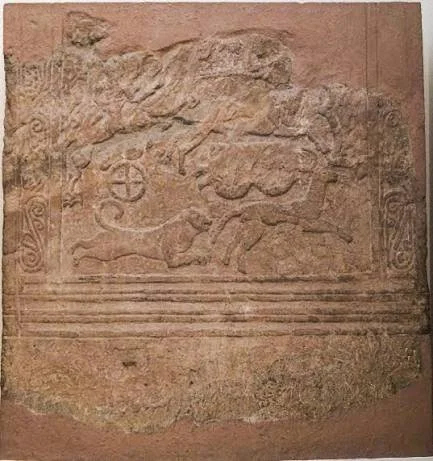
A stele was an upright stone slab that could serve as a funerary marker, commemorative monument, or public inscription.
Grave stelai were often made from marble or limestone. Their surfaces could be decorated with carved figures, architectural frames, inscriptions, and symbolic objects.
Some represented the deceased standing or seated, while others depicted family members, attendants, or objects associated with the individual's identity.
The inscription might include the person's name, family connection, or other commemorative information.
Hellenistic Artistic Characteristics
Hellenistic funerary sculpture often emphasized movement, emotional expression, and individualized representation.
Figures could be shown in naturalistic poses, with detailed clothing, hairstyles, and facial features.
Architectural elements such as columns, pediments, and decorative borders framed the central scene.
These characteristics varied across regions and workshops. A stele from Arcadia might share general Hellenistic conventions with monuments from Athens or the islands while retaining local artistic features.
Family Identity and Social Memory
Grave stelai were more than decorative objects. They helped preserve the memory of individuals and their relationships with surviving family members.
An inscription naming parents, spouses, or children could communicate a person's place within a family network.
Scenes showing two or more individuals might represent kinship, affection, or social obligations.
Some monuments emphasized age, occupation, or status through clothing and associated objects.
The decision to commission a stone monument could also reflect the resources available to a family and its desire to maintain a visible presence within the community.
Inscriptions and Historical Evidence
Inscriptions are among the most important sources for interpreting funerary stelai.
Names and family relationships can help researchers reconstruct patterns of naming and kinship. Linguistic features may also provide clues about regional identity and chronological development.
The form of lettering, spelling conventions, and language can contribute to dating.
However, inscriptions do not always provide complete biographical information. A short epitaph may preserve a person's name while leaving their occupation, social position, and life history unknown.
Stoneworking and Workshop Traditions
The production of a grave stele required access to stone, skilled sculptors, and specialized tools.
Artisans first prepared the slab and then established the composition before carving the figures and decorative elements.
Surface finishing could involve smoothing, polishing, and the application of paint.
Scientific examination of stone can sometimes identify its geological source. This may help researchers determine whether a monument was produced locally or transported from another region.
Stylistic comparisons can also reveal relationships between workshops.
Archaeological Context and Preservation
The interpretation of a grave stele depends on its original location and relationship with the burial.
A monument discovered near a grave may have been displaced during later construction or reused as building material.
The exact position, orientation, and associated deposits should therefore be recorded whenever possible.
Weathering, biological growth, and erosion can gradually damage carved surfaces. Conservation specialists use controlled cleaning and stabilization techniques to preserve inscriptions and sculptural details.
Conclusion
Hellenistic grave stelai associated with Mantineia's necropolis provide an important framework for understanding funerary art and social memory in ancient Arcadia.
Their inscriptions and sculptural scenes can reveal family relationships, artistic preferences, and the ways individuals were commemorated during the Hellenistic period.
However, specific stelai should only be attributed to Mantineia's necropolis when their archaeological provenance is documented. The broader study of these monuments demonstrates how funerary sculpture connects personal remembrance with the social and cultural history of ancient Greek communities.