Introduction
Mystras, located on the slopes of Mount Taygetus near modern Sparta, is one of the most remarkable surviving medieval settlements in Greece. Its churches, palaces, monasteries, and fortified structures preserve evidence of Byzantine political, religious, and urban life.
Water management was essential to the settlement's development. Built on a steep hillside, Mystras faced practical challenges in supplying households, religious institutions, gardens, and public spaces with reliable water.
Aqueducts and distribution channels were important components of Byzantine water engineering. Their relationship with fountains provides an opportunity to investigate how medieval communities adapted hydraulic systems to difficult terrain.
Mystras and Its Urban Development
Mystras developed into a major Byzantine center after the establishment of the Frankish fortress in the thirteenth century and its subsequent transfer to Byzantine control.
It became the capital of the Byzantine Despotate of the Morea and grew into an important administrative, religious, and cultural center.
The settlement occupied a steep hillside beneath a fortified citadel. Its buildings were arranged across different levels, creating a complex urban environment.
The terrain offered defensive advantages but made transportation and water distribution challenging.
The Importance of Water in Byzantine Settlements
Water was necessary for drinking, cooking, cleaning, agriculture, religious ceremonies, and craft production.
A growing settlement needed systems capable of collecting and distributing water to different areas.
In Byzantine towns, water could be obtained from springs, wells, cisterns, and aqueducts.
The choice of system depended on local geography, population size, available resources, and the distance between water sources and inhabited areas.
Religious institutions often required dependable supplies for daily monastic activities and ritual purposes.
Aqueducts and Hydraulic Engineering
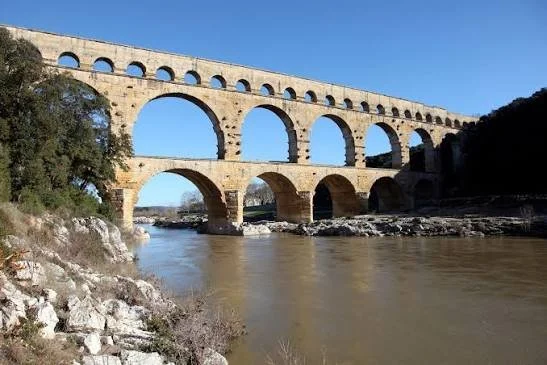
An aqueduct is a structure or system designed to transport water from a source to a destination.
Although Roman aqueducts are particularly famous for their monumental bridges, Byzantine water systems often used a combination of underground conduits, covered channels, pipes, and smaller surface structures.
Water generally moved through carefully designed channels using gravity.
The gradient had to be controlled to maintain a steady flow without causing excessive erosion or sediment accumulation.
Maintenance was equally important because blockages, structural damage, and leaks could interrupt the supply.
Supplying Fountains
Fountains served practical and sometimes ceremonial purposes in Byzantine settlements.
They provided accessible water for residents and visitors while also contributing to the appearance of public and religious spaces.
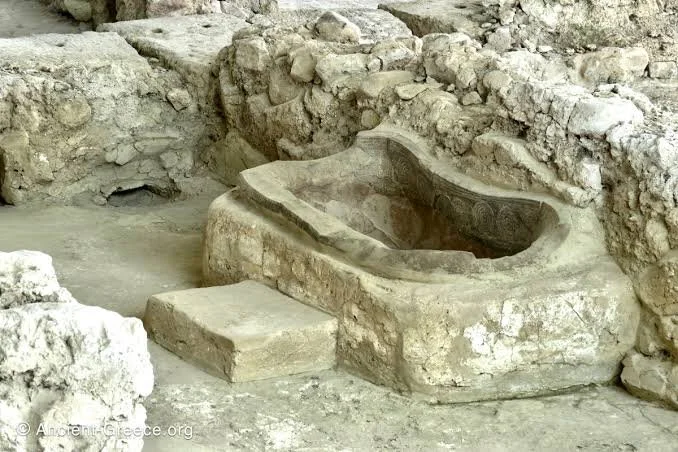
In monasteries, fountains could be associated with courtyards, gardens, and areas used for washing before religious activities.
A fountain required more than a decorative basin. It depended on a reliable source, a delivery channel, and a method for controlling the flow and removing excess water.
The design of these installations varied according to the building's function and available resources.
Mystras and the Challenges of Steep Terrain
The hillside location of Mystras influenced the design of its water infrastructure.
Water had to be delivered across different elevations and distributed among buildings positioned on uneven ground.
Gravity could assist movement where the source was higher than the destination, but the steep landscape required careful management of channels and conduits.
Retaining walls, covered passages, and cisterns could help integrate water systems into the settlement.
The relationship between these features and the surrounding architecture is important for reconstructing the medieval water network.
Identifying Byzantine Construction Phases
Water installations at Mystras may have been constructed, repaired, or modified over several centuries.
A surviving channel might contain Byzantine foundations and later repairs, while a fountain could have been reconstructed using materials from an earlier installation.
Researchers examine masonry techniques, mortar, ceramic pipes, architectural connections, and associated artifacts to establish construction phases.
Historical descriptions and archaeological surveys may provide additional evidence about the development of water infrastructure.
It is important not to assume that every surviving channel or fountain belongs to the same period.
Water Management in Monasteries and Palaces
Mystras contained religious and administrative buildings that required different levels of water supply.
Monasteries needed water for cooking, cleaning, gardens, and religious activities. Palatial buildings and other elite residences required supplies for domestic and ceremonial functions.
The distribution of water can therefore provide clues about the organization of the settlement.
A large cistern or fountain near a major building may indicate the importance of that location, although its function must be established through archaeological context.
Conservation of Hydraulic Remains
Ancient and medieval water systems are vulnerable to vegetation growth, erosion, blocked channels, and structural collapse.
Water infiltration can damage masonry and cause instability on steep slopes.
Conservation requires careful documentation of channels, reservoirs, and fountains as connected elements rather than isolated structures.
Archaeologists and engineers can use measured surveys, photogrammetry, and hydraulic modeling to reconstruct how the system may have operated.
Conclusion
Byzantine aqueducts and water channels associated with Mystras' fountains provide an important subject for understanding medieval urban engineering.
Their study can reveal how residents managed water in a steep settlement and how infrastructure supported religious, domestic, and administrative life.
The specific routes and construction dates of individual aqueducts feeding Mystras' fountains should be established through archaeological and architectural evidence. Nevertheless, the settlement's geography makes water management a central part of its historical development.