Introduction
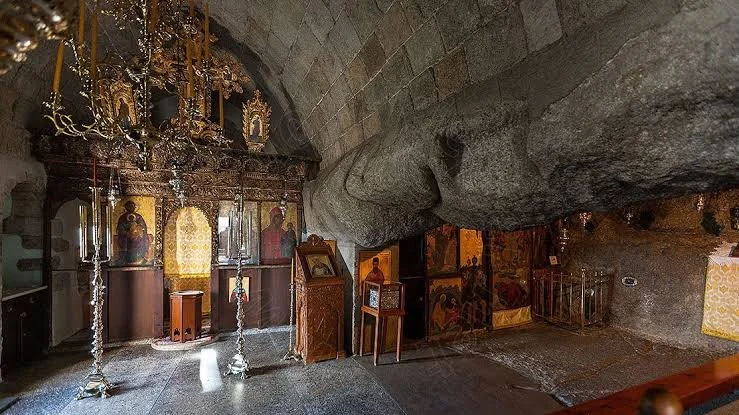
Sikinos, a small island in the southern Cyclades, preserves a landscape shaped by maritime connections, religious traditions, and centuries of settlement. Like other Aegean islands, it contains churches, chapels, caves, and rock-cut spaces that reflect the interaction between natural geography and human devotion.
The possibility of frescoes concealed within cave chapels raises fascinating questions about the island's religious history. Wall paintings in small religious spaces can reveal artistic traditions, devotional practices, and connections between island communities and the wider Byzantine and post-Byzantine world.
Nevertheless, the specific claim that hidden Cycladic frescoes survive in Sikinos cave chapels should be treated as a research possibility rather than a confirmed discovery unless supported by documented conservation or archaeological records.
Sikinos in the Cycladic World
Sikinos occupies a position among the southern Cycladic islands, within a maritime landscape that connected communities through trade, travel, and religious exchange.
Its terrain is characterized by hills, rocky slopes, and coastal settlements. These natural features influenced where people built homes, agricultural terraces, monasteries, and religious structures.
The island's historical architecture reflects the broader development of the Cyclades, where local communities adapted architectural forms and artistic practices to limited space and available materials.
Cave Chapels and Sacred Landscapes
Caves and rock shelters have long attracted religious use in different parts of the Mediterranean. Their enclosed spaces can create an atmosphere of isolation and contemplation, making them suitable for hermitages, small chapels, and places of pilgrimage.
A cave chapel may be entirely natural, partially modified, or constructed within an existing rock formation. Some incorporate masonry entrances, plastered walls, built altars, and small openings for light and ventilation.
The presence of a religious structure in a cave does not necessarily indicate that it was used continuously from antiquity. Its date and function must be established through architectural analysis, inscriptions, and associated material evidence.
The Artistic Language of Byzantine Frescoes
Byzantine fresco painting developed a rich visual vocabulary involving sacred figures, narrative scenes, ornamental borders, and symbolic compositions.
Church interiors often included images of Christ, the Virgin Mary, saints, angels, and scenes from biblical narratives. Their placement was not random: the organization of images reflected religious hierarchy and the liturgical function of the building.
In smaller chapels, available wall space could limit the number of figures and scenes. Artists adapted established conventions to the dimensions and architecture of each interior.
Why Frescoes May Remain Concealed
Wall paintings can be obscured by later layers of limewash, plaster, soot, dust, or structural repairs. In some buildings, successive generations altered interior decoration according to changing religious preferences.
A painting may also survive only in fragments beneath damaged plaster. Moisture, salt crystallization, and biological growth can gradually weaken the painted surface.
In a cave environment, changes in humidity and temperature can be especially damaging. Water entering through cracks may cause plaster to detach, while salts carried through the rock can crystallize near the surface.
Identifying Paintings Beneath Later Layers
Conservators use several methods to investigate possible hidden paintings. Close visual examination under controlled lighting may reveal differences in texture and pigment.
Infrared photography, ultraviolet examination, and other imaging methods can sometimes help identify features that are difficult to see under ordinary illumination. These techniques do not guarantee that a complete painting will be present, but they can guide further investigation.
Where appropriate, conservators may examine tiny samples of plaster or pigment to understand the materials used. Any intervention must be carefully controlled to avoid damaging the artwork.
Religious Networks Across the Aegean
Sikinos was part of a wider Aegean religious environment. Islands were connected through maritime travel, monastic institutions, pilgrimage, and the movement of clergy and artisans.
Artists could travel between islands or work within regional workshops, spreading techniques and stylistic preferences. Similarities between frescoes on different islands may therefore reflect shared artistic traditions.
However, visual resemblance alone cannot establish that two chapels were decorated by the same painter. Inscriptions, construction dates, pigment analysis, and stylistic comparison are needed to build a stronger argument.
Preservation and Cultural Heritage
Small cave chapels can be difficult to conserve because of their remote locations and vulnerable interiors. Uncontrolled visitation, candle smoke, humidity, and inappropriate cleaning can damage historic surfaces.
Documentation should begin with non-invasive recording, including photography, measured drawings, and environmental monitoring.
If previously unknown paintings are identified, conservation specialists should assess their condition before any attempt is made to remove later coatings or expose the underlying surface.
Conclusion
The idea of hidden frescoes in Sikinos' cave chapels offers a compelling way to explore the island's religious and artistic heritage. Such paintings, if documented, could provide evidence of local devotion, regional artistic exchange, and the adaptation of Byzantine visual traditions to small sacred spaces.
At present, the specific claim of undiscovered frescoes in Sikinos cave chapels requires verification. The broader study of cave architecture and island religious art nevertheless demonstrates why even modest chapels can hold important clues to the cultural history of the Cyclades.