Introduction
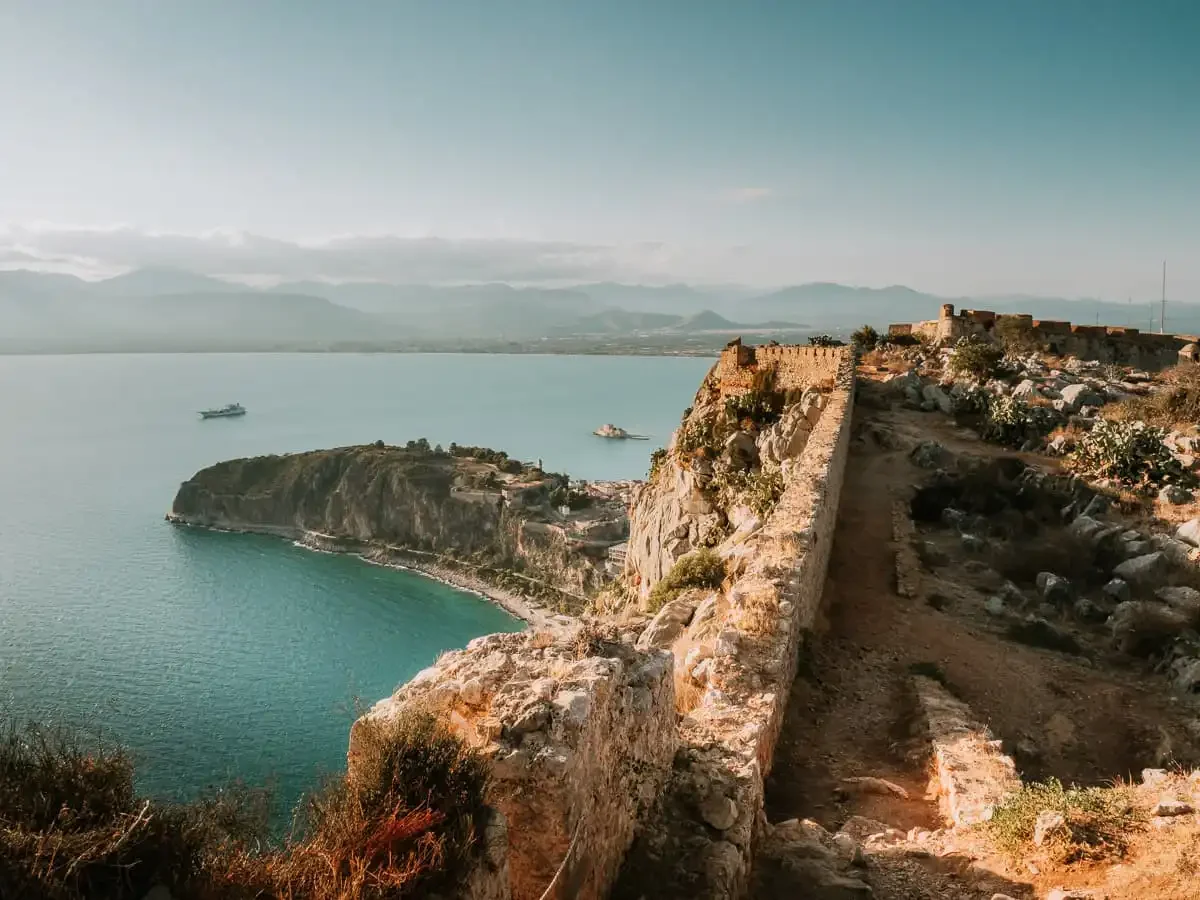
Nafplio, located on the northeastern coast of the Peloponnese, is one of Greece's most historically significant fortified cities. Its natural harbor, surrounding cliffs, and elevated defensive positions made it an important strategic center during successive periods of Venetian and Ottoman control.
Gunpowder transformed warfare across the Mediterranean, creating a need for specialized facilities where ammunition and explosive materials could be stored securely.
Ottoman powder magazines in the cliffs around Nafplio provide an intriguing subject for investigating military logistics, fortress architecture, and the development of gunpowder warfare. Their study would help explain how fortified settlements protected dangerous supplies while maintaining access to defensive positions.
Nafplio's Strategic Geography
Nafplio occupies a naturally protected coastal setting in the Argolic Gulf.
The city's historic fortifications include the Palamidi fortress overlooking the settlement, the smaller Akronafplia complex, and the fortified island of Bourtzi.
These structures controlled access to important coastal approaches and provided defensive positions overlooking the harbor.
The surrounding cliffs and elevated terrain offered advantages for observation and defense, but they also created logistical challenges for moving supplies and equipment.
Ottoman Rule and Military Organization
The Ottoman Empire controlled Nafplio during several periods, including a lengthy phase between the sixteenth and seventeenth centuries and again during the eighteenth century.
The city's military importance reflected its position within the wider defensive network of the Peloponnese.
Ottoman authorities maintained and modified fortifications according to changing military requirements.
Artillery, firearms, and ammunition required organized supply systems. Fortresses needed storage facilities capable of protecting military materials from weather, theft, accidental ignition, and enemy attack.
What Was a Powder Magazine?
A powder magazine was a specialized building or chamber used to store gunpowder and other military supplies.
Because gunpowder was highly combustible, storage facilities required careful design.
They were commonly constructed using substantial masonry, controlled ventilation, and limited openings.
Their interiors were intended to remain relatively dry, since moisture could damage powder and reduce its effectiveness.
Some magazines were located within fortresses, while others were positioned separately to reduce the risk of catastrophic explosions near occupied buildings.
Why Build Magazines Near Cliffs?
Cliffside locations could provide defensive advantages and help isolate dangerous storage facilities from densely populated areas.
A chamber cut into rock or built against a substantial rock face might benefit from natural protection and reduced exposure to direct attack.
However, rock-cut storage was not automatically safer. Moisture, poor drainage, and limited ventilation could create serious problems for gunpowder storage.
The exact placement of a magazine depended on the fortress's defensive layout, the availability of space, and the practical requirements of transporting ammunition.
Identifying Ottoman Powder Magazines
A suspected powder magazine must be distinguished from cisterns, storage rooms, tunnels, and other military structures.
Researchers examine its dimensions, entrance arrangement, wall construction, ventilation features, and relationship with surrounding defensive works.
Historical plans and military records may identify particular storage buildings or provide evidence of repairs.
Inscriptions and architectural details can also help establish a construction date.
Because Nafplio's fortifications underwent repeated modifications, an installation may contain several building phases.
Gunpowder Logistics and Fortress Defense
A fortified city required a reliable supply of ammunition during periods of conflict.
Gunpowder had to be transported from storage facilities to artillery positions and firearm units without exposing it to unnecessary danger.
This process required disciplined handling, trained personnel, and clear procedures.
The location of magazines influenced how quickly ammunition could reach defensive positions.
A well-planned system also reduced the risk that an enemy attack or accidental explosion would destroy a large quantity of supplies.
Safety and Construction Techniques
Powder magazines were designed with safety in mind, although historical standards differed from modern requirements.
Thick walls could provide some protection against external attack and help contain structural damage.
Buildings might include raised floors, ventilation channels, or other features intended to reduce moisture.
The use of timber inside magazines was often restricted because of the risk of sparks and fire.
Researchers examining an alleged Ottoman magazine should look for evidence of these practical design choices rather than relying on the structure's military appearance alone.
Archaeological and Historical Investigation
The study of Nafplio's possible powder magazines requires a combination of architectural survey and documentary research.
Historical maps can reveal how military installations were positioned relative to walls, gates, artillery platforms, and harbor facilities.
Ottoman administrative documents and military accounts may provide information about storage capacity, construction, repairs, and ammunition supply.
Archaeological examination can establish whether a building's physical characteristics correspond to the descriptions found in historical sources.
Preservation of Cliffside Military Structures
Cliffside structures are vulnerable to rock movement, water infiltration, salt exposure, and erosion.
Their entrances may be blocked by debris or altered through later construction.
Conservation should consider both the structure and the surrounding geological environment.
Three-dimensional surveys and detailed architectural records can help preserve information about fragile chambers and their relationship with the fortress.
Conclusion
Ottoman powder magazines in Nafplio's cliffs would provide valuable evidence of the city's military infrastructure and the practical challenges of gunpowder warfare.
Their design could reveal how Ottoman engineers managed ammunition storage within a complex coastal fortress landscape.
However, specific cliffside chambers should only be identified as Ottoman powder magazines when supported by architectural evidence and reliable historical documentation. Nafplio's layered defensive history makes careful identification especially important, since structures may have been reused and modified by successive military authorities.