Introduction
Bassae, located in the mountainous region of Arcadia, is home to the Temple of Apollo Epicurius, one of the most remarkable monuments of ancient Greek architecture. The temple is particularly famous for its unusual combination of architectural features and its sculptural decoration.
The site's architectural and artistic importance makes it an interesting setting for investigating the relationship between animal imagery and religious symbolism in Archaic and Classical Greek art.
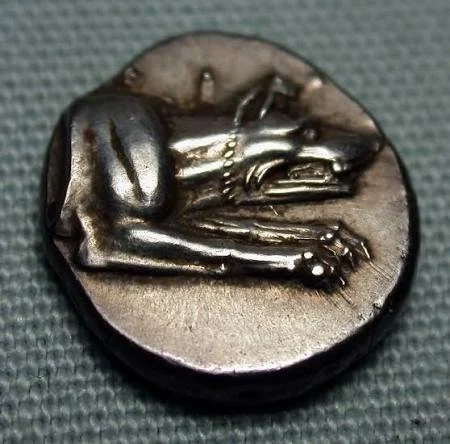
Lion statuettes and lion imagery were widely used throughout the ancient Mediterranean. They appeared in religious settings, funerary monuments, decorative objects, and architectural sculpture.
However, the title's reference to Archaic lion statuettes from the Bassae frieze requires a chronological and archaeological distinction: the surviving temple and its famous sculptural frieze belong to a later period than the Archaic age.
Bassae and the Temple of Apollo Epicurius
The Temple of Apollo Epicurius stands in a remote mountainous area of Arcadia, near the ancient settlement of Phigaleia.
Its construction is generally dated to the fifth century BCE, during the Classical period. The temple is associated with the architect Iktinos, who is also traditionally connected with the Parthenon in Athens.
The building is distinctive for its unusual architectural arrangement, including elements that combine Doric, Ionic, and Corinthian features.
Its remote location and remarkable preservation have made it one of the most important monuments of ancient Greek architecture.
The Sculptural Frieze
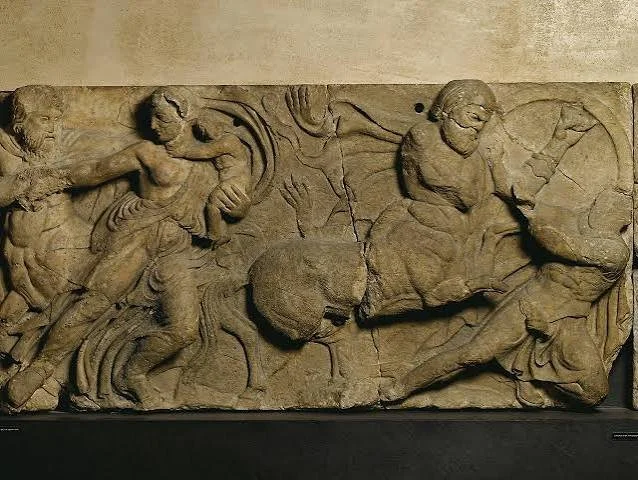
The temple's sculptural decoration included a celebrated Ionic frieze depicting battles between Greeks and Amazons and between Lapiths and Centaurs.
These mythological scenes expressed themes of conflict, order, civilization, and the struggle against disorder.
The frieze was composed of individual marble slabs positioned within the temple's interior architectural system.
Its reliefs demonstrate the sophistication of Classical Greek sculptural production.
The surviving frieze is not an Archaic collection of small lion statuettes. This distinction is essential when interpreting the title's proposed artifacts.
Lions in Ancient Greek Art
Lions were powerful symbols throughout the ancient Mediterranean.
Their strength and predatory behavior made them suitable representations of authority, protection, courage, and danger.
In Greek art, lions appeared in sculpture, pottery decoration, architectural ornament, jewelry, and other objects.
They could serve as guardians at entrances or symbolize the power of a deity or elite individual.
Lion imagery was also influenced by artistic traditions from the Near East and other regions where the animal held important symbolic associations.
Statuettes and Architectural Sculpture
A statuette is a small three-dimensional representation, often produced from bronze, terracotta, stone, or another material.
Architectural relief sculpture is different because it forms part of a building's decorative system.
A lion statuette found near a temple could have been a votive offering, a decorative object, or part of a separate monument.
Its presence at a sanctuary does not automatically mean that it belonged to the temple's frieze.
Archaeologists must establish the object's original function through its material, dimensions, manufacturing technique, and archaeological context.
Chronology: Archaic and Classical Art
The Archaic period preceded the Classical period and is generally associated with the development of monumental Greek sculpture and distinctive artistic conventions.
Archaic animal sculpture often displays stylized forms, carefully arranged patterns, and strong attention to symmetry.
Classical sculpture increasingly emphasized naturalistic proportions, movement, and anatomical detail.
These differences can help specialists establish approximate dates, although regional styles sometimes overlap.
An object found at Bassae could be older than the temple itself if it originated from an earlier sanctuary or was reused during later construction.
The Possibility of Earlier Sacred Activity
The construction of a major temple does not necessarily mark the beginning of religious activity at a location.
Sanctuaries could develop over generations, with earlier offerings and structures preceding monumental architecture.
If Archaic lion statuettes were found at Bassae, they might indicate an earlier phase of worship at the site.
Such an interpretation would require secure archaeological deposits and evidence that the objects were associated with the sanctuary rather than transported from elsewhere.
Archaeological Documentation and Attribution
To establish the origin of a lion statuette, researchers would examine its excavation history, material, style, and physical condition.
Inscriptions and associated deposits could provide additional chronological information.
If an object is described as coming from the temple frieze, its architectural relationship should be documented. A detached architectural fragment must be distinguished from an independent statuette.
Museum records and excavation publications are particularly important for tracing the provenance of sculptures.
Conservation of the Bassae Sculptures
The Temple of Apollo Epicurius has faced conservation challenges due to its exposed mountain location and changing environmental conditions.
The surviving architecture and sculptural elements require protection from moisture, temperature fluctuations, and structural movement.
The temple has been covered by a protective shelter during conservation efforts, reflecting the difficulty of preserving ancient stone in a vulnerable environment.
Detailed documentation helps researchers monitor the condition of the monument and understand its original construction.
Conclusion
Lion imagery associated with Bassae would provide an interesting subject for exploring the relationship between animal symbolism, religious offerings, and ancient Greek sculpture.
However, the specific claim of Archaic lion statuettes from the temple's famous frieze is chronologically problematic. The surviving frieze belongs to the Classical Temple of Apollo Epicurius, while any earlier lion statuettes would need to be established as separate archaeological objects from an earlier phase of activity.
This distinction does not diminish the site's importance. Instead, it demonstrates why careful attention to archaeological context and chronology is essential when reconstructing the artistic history of ancient sanctuaries.