Introduction
Tegea was one of the most important ancient cities of Arcadia in the central Peloponnese. Its political, religious, and economic history extended across many centuries, and its urban center contained public buildings, sanctuaries, and spaces dedicated to civic activity.
Water infrastructure was essential to the functioning of Roman cities. Aqueducts, wells, fountains, drains, and pipelines supported households, public baths, workshops, and other urban facilities.
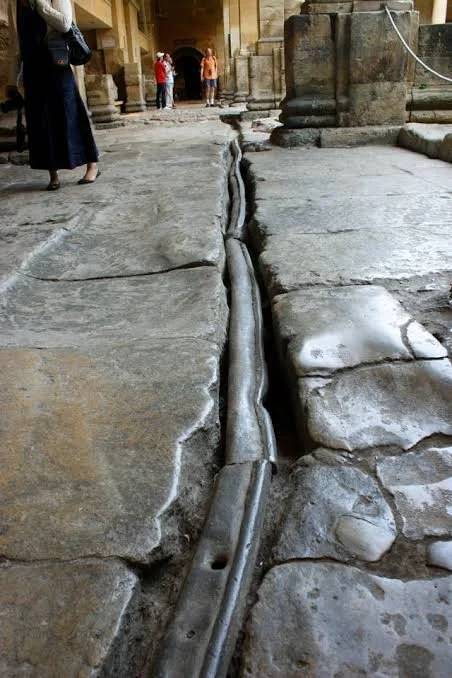
The possibility of Roman lead pipes beneath Tegea's agora offers an opportunity to investigate how the city managed water during the Roman period. Such installations could reveal the organization of urban infrastructure and the relationship between public spaces and water distribution.
Tegea as an Ancient Urban Center
Tegea developed into a significant political and cultural center in ancient Arcadia. Its strategic position connected settlements across the Peloponnese and provided access to routes leading toward other parts of Greece.
The city was known for its sanctuary of Athena Alea, one of the region's important religious institutions.
Its agora served as a central space for civic, commercial, and social activity. Public buildings and streets helped organize the urban environment, while water infrastructure supported the daily needs of its population.
The city continued to experience changes during the Hellenistic and Roman periods, leaving archaeological remains from different phases of occupation.
Roman Water Engineering
Roman engineers developed extensive systems for collecting, transporting, and distributing water.
Aqueducts carried water from springs and other sources, sometimes across considerable distances. Once it reached a settlement, water could be directed into reservoirs, public fountains, baths, and other installations.
Pipelines were used where enclosed water transport was necessary. Their materials varied according to local conditions and the available technology.
Lead pipes were among the materials used in some Roman water systems, although stone channels, ceramic pipes, and wooden conduits were also common.
Lead Pipes and Their Construction
Roman lead pipes were commonly produced by shaping sheets of lead and joining their edges to form a cylindrical or tubular conduit.
The resulting pipe could be connected to other sections using joints and fittings.
Lead was relatively easy to work and could be formed into pipes of different sizes. Its weight and durability made it useful for certain installations.
Some pipes carried inscriptions identifying manufacturers, owners, or officials responsible for their production. These markings can provide valuable information about infrastructure management.
Water Distribution Beneath the Agora
An agora required reliable access to water for several activities.
Public fountains provided drinking water, while nearby workshops and commercial establishments needed supplies for cleaning, food preparation, and production.
Water could also be directed toward drainage systems that removed wastewater and surface runoff.
If lead pipes were discovered beneath Tegea's agora, their route could reveal how water was distributed through the civic center.
The relationship between pipelines, reservoirs, fountains, and surrounding buildings would be essential for determining their function.
Archaeological Identification and Dating
A lead pipe discovered underground is not automatically Roman. Similar materials and construction methods continued to be used in later periods.
Researchers examine the pipe's dimensions, manufacturing technique, fittings, and any inscriptions or associated artifacts.
The archaeological layer in which it was found is particularly important. A pipe recovered from a sealed Roman deposit provides stronger chronological evidence than one found in disturbed soil.
The relationship between the pipe and nearby structures can also reveal whether it belonged to an original installation or a later repair.
Health and Environmental Questions
The use of lead in ancient water systems has attracted considerable modern attention because lead can be harmful to human health.
However, the actual exposure experienced by ancient populations depended on several factors, including water chemistry, pipe conditions, flow rates, and the presence of mineral deposits.
Scale could sometimes form inside pipes, reducing direct contact between water and the lead surface.
This does not mean that Roman lead plumbing was harmless. Rather, the health consequences must be assessed in relation to the specific environmental and technical conditions of each system.
Archaeological evidence alone cannot establish the level of lead exposure experienced by residents of Tegea.
Water Management and Urban Organization
Water infrastructure reflects the administrative and economic capacity of a city.
Large systems required planning, construction labor, maintenance, and decisions about the allocation of water.
Public fountains and baths could serve as important civic facilities, while private connections might indicate differences in wealth and access.
Mapping pipelines across the agora could help researchers understand the relationship between public investment and private consumption.
Conservation and Archaeological Research
Lead pipes are vulnerable to corrosion and deformation, particularly when exposed to changes in moisture and soil chemistry.
Their removal must be carefully planned because joints and fittings may contain important information about construction techniques.
Researchers can use imaging and material analysis to investigate inscriptions, manufacturing marks, and corrosion products.
Preserving the pipe's original position is particularly important when its relationship with surrounding buildings is central to the interpretation.
Conclusion
Roman lead pipes beneath Tegea's agora would offer valuable evidence of urban water management in ancient Arcadia.
Their study could reveal how water reached public spaces, commercial areas, and surrounding buildings, while also contributing to broader research on Roman engineering.
The specific claim of a documented lead-pipe network beneath the agora requires confirmation through excavation records and secure dating. Nevertheless, Tegea's history as a major urban center makes the investigation of its water infrastructure an important avenue for understanding daily life in Roman Greece.